
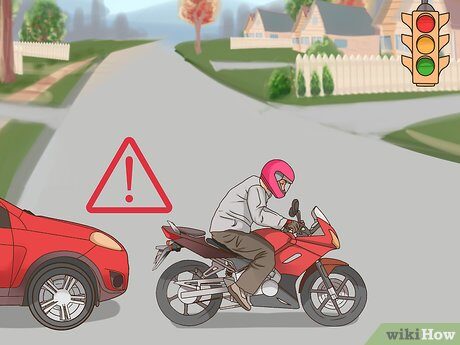
An upsetting and distressing experience might result from a motorbike accident. Emotions are often running high in the moments after a collision, and many riders feel under pressure to explain what went wrong. On the other hand, statements made just after an accident may have a long-term effect on insurance claims, court cases, and settlement results.
While assisting law enforcement and emergency personnel is crucial, motorcyclists should exercise caution when making remarks that can be misconstrued or used against them in the future. Knowing what not to say may assist in safeguarding your rights and guarantee that the accident’s facts are appropriately assessed.
Refrain From Taking Responsibility At The Scene
Admitting mistakes is one of the most crucial things motorcyclists should avoid. Many individuals automatically apologize after an accident, even if they weren’t at fault. Though they may seem kind, statements like “I’m sorry” or “It was my fault” might be seen as an admission of responsibility.
In actuality, an accident’s cause is often more intricate than it first seems. Traffic infractions, car flaws, road conditions, and other drivers’ behavior might all be factors. Assumptions formed at the scene should not be used to determine culpability; instead, investigators, insurance companies, and legal experts should be consulted.
Avoid Speculating On What Transpired
Motorcycle riders may be questioned by witnesses, insurance agents, or other drivers after an accident. Although it is normal to desire to provide solutions, conjecture might lead to issues down the road.
Remarks like “Maybe I didn’t see the other vehicle” or “I think I was going too fast” might be taken out of context and used as evidence against a claim. It is preferable to explain just what you know for sure and refrain from speculating about the crash’s circumstances if you are unclear about any elements.
Don’t Talk About Injuries Too Soon
Adrenaline may cover up pain and symptoms just after an injury. “I’m fine” or “I don’t think I’m hurt” are common statements made by riders prior to a medical assessment.
Sadly, certain injuries, such as internal injuries, soft tissue injuries, and concussions, may not show symptoms for hours or even days. Making claims that downplay injuries might make future claims more difficult if health problems develop later. Rather, get medical help and let medical experts assess the severity of any injuries.
Avoid Fighting With Other People
Particularly when there are serious injuries or substantial property damage, accident scenes may be emotionally charged. Arguments with other drivers, however, seldom result in favorable conclusions.
Conflicting accounts may be submitted to police authorities or insurance companies as a consequence of arguments, which may intensify tensions. The best course of action is usually to remain composed and concentrated on sharing the relevant facts. Allow investigators to examine the facts and ascertain what happened.
When Communicating With Insurance Adjusters, Use Caution
Accident victims are often contacted by insurance firms soon after a collision. Riders should use caution when revealing specifics of the accident without fully knowing their rights, even if collaboration is crucial.
Adjusters may pose inquiries intended to learn more about damages, injuries, or culpability. Sometimes casual comments might be taken in a manner that diminishes the significance of an assertion. To make sure their rights are upheld throughout the claims procedure, many motorcyclists decide to see a motorcycle accident attorney in Denver before making thorough recorded testimonies.
Don’t Share Information On Social Media
Many individuals post life events online practically instantly in today’s digital age. Posting about a motorbike accident, however, may lead to unforeseen issues.
Insurance companies or other parties may check photos, comments, and changes. Even apparently innocuous remarks might be misconstrued or utilized to refute claims pertaining to damages or injuries. Until the issue has been handled, it is often advisable to refrain from publicly discussing the accident.
Conclusion
The time after a motorbike accident may have a big impact on how insurance claims and court cases turn out. Riders should refrain from taking responsibility, making assumptions about what happened, downplaying injuries, disputing with others, or disclosing needless information to social media users and insurance providers.
By being cautious and methodical, significant legal rights are safeguarded while the facts are allowed to speak for themselves. Riders may better navigate the aftermath of a collision, comprehend their choices, and steer clear of typical pitfalls that might compromise their ability to seek just compensation by working with a motorcycle accident attorney in Denver.
READ MORE : DTF Printer for Shirts: Comprehensive Guide for Custom Apparel
