
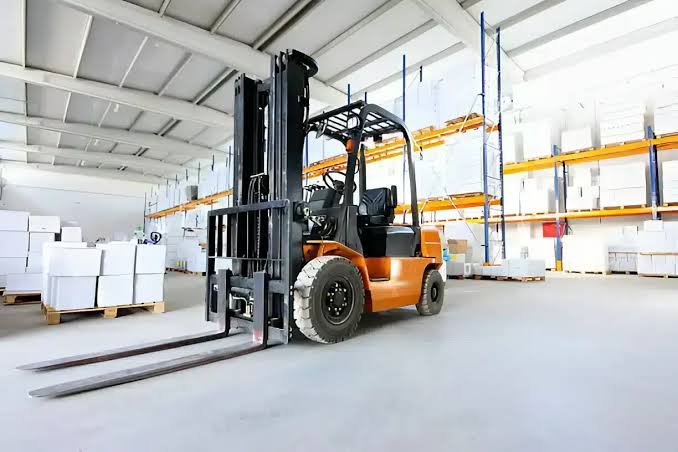
In a busy warehouse, a forklift can appear to be just one part of a much larger operation. In reality, it often plays a central role in keeping goods moving between receiving bays, storage locations, picking areas and dispatch points. When that equipment stops working, the impact can extend far beyond the machine itself.
A forklift breakdown can delay orders, create safety risks, increase labour costs and place pressure on every stage of the operation. For that reason, warehouse managers should view forklift reliability as a productivity issue, not simply a maintenance concern.
The real cost of a forklift breakdown
The most obvious consequence of a breakdown is downtime. A forklift that cannot operate may leave pallets waiting in an aisle, prevent a delivery from being unloaded or interrupt replenishment to picking stations. Even a relatively short stoppage can create a backlog that takes much longer to clear.
The wider cost is often less visible. If one forklift is unavailable, operators may need to share other vehicles or complete tasks manually. This can lead to:
- Longer travel and waiting times
- Delayed loading and unloading
- Overtime to recover lost productivity
- Disruption to scheduled deliveries
- Increased risk of rushed or unsafe working
In a warehouse with tight delivery windows, these delays can have a knock-on effect across the supply chain. A late inbound vehicle may affect production or stock availability, while a missed outbound collection can cause customer service issues and additional transport costs.
How breakdowns affect warehouse flow
Warehouses depend on predictable movement. Stock needs to arrive, be checked, stored, picked and dispatched in a coordinated sequence. Forklifts often connect these stages, so a fault in one area can quickly create congestion elsewhere.
Receiving and put-away delays
If a forklift fails during goods-in operations, pallets may remain in temporary staging areas for longer than planned. This reduces available space and can make it harder for staff to identify, inspect and process incoming stock.
Congested receiving areas also create avoidable hazards. Pedestrians may need to work around stored pallets, while operators may have less room to manoeuvre equipment. What began as a mechanical failure can therefore become a problem involving traffic management and workplace safety.
Picking and replenishment interruptions
A breakdown in a storage or picking zone can be particularly disruptive. If stock cannot be retrieved from racking, pickers may be forced to wait or work around unavailable inventory. In high-volume operations, even a small interruption can affect order accuracy and dispatch schedules.
Replenishment is another critical point. When fast-moving products are not brought forward in time, pick faces can become empty even though stock is available elsewhere in the building. This creates the frustrating situation of having inventory in the warehouse but being unable to fulfil orders efficiently.
Dispatch bottlenecks
The final stage of the process is often under intense time pressure. Forklift issues around loading bays can delay pallet staging, vehicle loading and paperwork checks. Drivers may be left waiting, and warehouse teams may feel compelled to speed up once the equipment is operational again. That pressure can increase the likelihood of handling mistakes or unsafe decisions.
Why reactive repairs are rarely enough
Responding to a forklift only when it fails may appear economical, particularly when budgets are under pressure. However, reactive maintenance makes costs less predictable and provides little control over when disruption occurs.
A minor warning sign, such as unusual steering, reduced braking performance or a hydraulic leak, can develop into a more serious fault if it is ignored. The eventual repair may be more expensive, while the resulting downtime may occur during a peak period or at the worst possible point in the working day.
A planned approach to preventative lifting equipment maintenance helps businesses identify wear before it becomes an operational emergency. Servicing does not eliminate every possible failure, but it improves the opportunity to detect developing problems and schedule remedial work at a less disruptive time.
Building a more reliable maintenance strategy
A strong maintenance programme should combine professional servicing with consistent daily checks. Operators are often the first people to notice changes in how a forklift sounds, feels or performs, so their observations are valuable.
Make pre-use checks routine
Pre-use inspections should cover essential areas such as:
- Tyres, forks and mast components
- Brakes, steering and warning systems
- Hydraulic hoses and visible fluid leaks
- Battery condition, charging connections or fuel systems
- Seat belts, guards and operator controls
These checks should be practical and easy to complete. They are not a substitute for servicing by a competent technician, but they can help identify obvious defects before equipment is put into operation.
Track faults and recurring issues
A maintenance log should record reported faults, repairs, service dates and any repeat problems. This information can reveal patterns that are not obvious when issues are handled individually.
For example, repeated battery problems may indicate unsuitable charging practices or an ageing power source. Frequent tyre damage might point to poor floor conditions, excessive loads or inadequate traffic management. Looking at the pattern, rather than just the individual repair, allows managers to address the underlying cause.
Plan around operational demands
Maintenance schedules should reflect how each forklift is used. A vehicle operating continuously across multiple shifts will experience different demands from one used occasionally for light-duty work. Load weights, operating surfaces, travel distances and environmental conditions all influence wear.
Where possible, servicing should be arranged during planned downtime, quieter shifts or scheduled breaks in production. Keeping suitable backup arrangements in place can also reduce the disruption caused when a vehicle needs to be taken out of service.
Reliability supports safety as well as productivity
Productivity should never be separated from safety. A forklift with defective brakes, poor visibility, steering problems or hydraulic faults can expose operators, pedestrians and stock to unnecessary risk. Continuing to use it simply to avoid delays may lead to an incident that causes far greater disruption.
A well-maintained fleet supports safer working because equipment is more likely to perform as expected. It also reinforces a culture in which reporting faults is encouraged rather than treated as an inconvenience.
Turning maintenance into a competitive advantage
Warehouse productivity depends on consistency. Fast equipment is useful, but dependable equipment is often more valuable. A forklift that is available, safe and fit for purpose helps teams plan confidently and maintain a steady flow of work.
The most effective approach is not to wait for breakdowns and then calculate their cost. It is to combine operator checks, planned servicing, accurate records and sensible fleet planning before failure occurs. By treating maintenance as part of warehouse management, businesses can reduce avoidable downtime, protect employees and make better use of the equipment they already own.
In an industry where delivery expectations continue to rise, reliability is not a minor operational detail. It is one of the foundations on which productive warehouse performance is built.
