
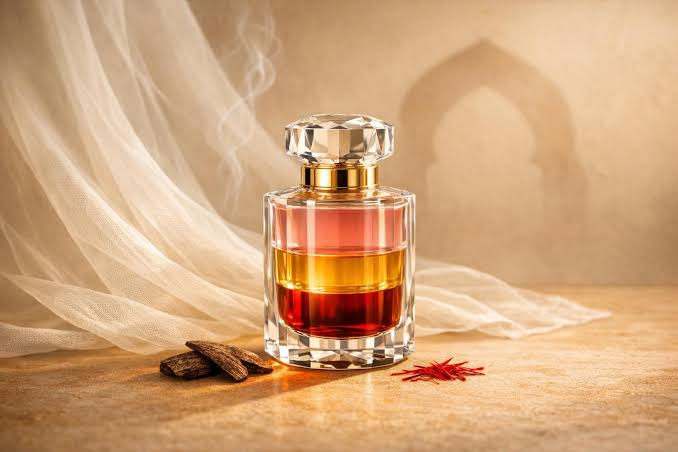
The world of women’s fragrances is undergoing an interesting transformation. While familiar floral and fruity perfumes remain popular, more women are discovering compositions that challenge conventional expectations. Middle Eastern perfumery has become an important part of this development, introducing distinctive ingredients, unusual combinations and alternative ways of experiencing scent.
Arabic fragrances have a character shaped by generations of craftsmanship. Their appeal extends beyond individual ingredients to the traditions surrounding their creation and use. From concentrated perfume oils to elaborate compositions inspired by regional customs, these fragrances offer an interesting perspective on how scent can become part of everyday beauty.
The Tradition of Perfuming Hair and Clothing
One distinctive aspect of Middle Eastern fragrance culture is that perfume has traditionally been used on more than just the skin.
In many households, aromatic smoke from burning incense or bakhoor is used to scent rooms, clothing and sometimes hair. Bakhoor typically consists of wood chips or other aromatic materials infused with fragrant oils and resins.
The resulting smoke releases a rich aroma that can linger on fabrics and in the surrounding environment.
This practice has influenced the development of regional perfume preferences. Fragrances featuring incense, woods and resinous ingredients can evoke the atmosphere associated with these traditional rituals.
Modern consumers can draw inspiration from these customs without necessarily adopting every traditional practice. For example, applying a fragrance designed specifically for hair can introduce another dimension to a beauty routine.
However, conventional perfumes containing alcohol should not automatically be treated as hair products, since frequent application may cause dryness. Products formulated for the intended purpose are generally more appropriate.
Why White Musk Holds a Special Place
Among the many ingredients associated with Arabic perfumery, white musk has developed a particularly recognizable identity.
Unlike heavier woody or smoky compositions, white musk fragrances are often characterized by their soft, clean and slightly powdery qualities.
They may evoke freshly washed fabrics, gentle warmth or the subtle aroma of skincare products.
This makes white musk an interesting option for women who prefer fragrances that do not dominate their surroundings.
It also works well in compositions featuring rose, vanilla or delicate floral accords. Depending on the formulation, the resulting fragrance may feel fresh, creamy or subtly sweet.
White musk is particularly associated with understated elegance, demonstrating that Middle Eastern perfumery is not exclusively about powerful or intensely aromatic compositions.
Exploring Different Styles of Arabic Women’s Perfumes
The contemporary Arabic fragrance market includes a remarkable range of products, from traditional concentrated oils to modern eau de parfum collections.
Women interested in discovering new scent profiles can explore Arabic Perfumes for Women to compare different fragrance styles and find compositions that appeal to their preferences.
One particularly interesting category is the modern gourmand fragrance. These perfumes incorporate accords reminiscent of desserts, confectionery or comforting foods.
Notes such as vanilla, praline, caramel and creamy coconut can create compositions with a warm, inviting character.
Another category combines floral ingredients with deeper aromatic elements. Rose and jasmine, for example, may be accompanied by woods, spices or resinous accords, producing fragrances that differ considerably from conventional floral perfumes.
There are also contemporary interpretations of fresh fragrances, where citrus, green notes and soft musk create lighter compositions suitable for a variety of settings.
This diversity allows women to explore Middle Eastern perfumery without assuming that every Arabic fragrance will have the same intensity or aromatic character.
Understanding the Difference Between Perfume Oils and Sprays
The distinction between concentrated perfume oils and conventional sprays is particularly relevant when exploring Arabic fragrances.
Perfume oils are generally applied directly to the skin using a rollerball, applicator or a small amount placed on the fingertips.
Because these products typically contain little or no alcohol, their application can feel different from that of traditional sprays.
Some oil-based fragrances remain relatively close to the skin, while others produce a more noticeable aromatic presence. Their performance depends on the formulation rather than the application format alone.
Spray perfumes distribute fragrance across a wider area and can be convenient for everyday use.
Neither format is inherently superior. The appropriate choice depends on personal preferences, the desired application method and the specific product.
Some fragrance enthusiasts enjoy using both formats, choosing perfume oils for particular situations and sprays for others.
The Growing Popularity of Sweet Oriental Fragrances
Sweet fragrances have become an important part of contemporary perfume culture, and Middle Eastern brands offer numerous interpretations of this category.
What distinguishes many sweet oriental compositions is the contrast between gourmand accords and more traditional aromatic materials.
Vanilla may be combined with amber, while caramel-like sweetness can be balanced by woods or spices.
These combinations can prevent a fragrance from feeling one-dimensional, introducing contrasting elements that develop as the perfume is worn.
The popularity of sweet compositions also reflects changing consumer preferences. Fragrances inspired by familiar desserts or comforting aromas can feel approachable, even when they incorporate less familiar Middle Eastern ingredients.
For someone beginning to explore Arabic perfumery, this category can provide an accessible introduction to more elaborate compositions.
How to Preserve Your Fragrance Collection
Proper storage is an often-overlooked aspect of perfume ownership.
Fragrance formulations can be affected by prolonged exposure to heat, sunlight and significant temperature changes. Keeping bottles in a cool, dry location away from direct sunlight can help maintain their original characteristics.
A bedroom drawer or enclosed cabinet is often more suitable than a bathroom shelf, where humidity and temperature may fluctuate regularly.
It is also advisable to close bottles securely after use and avoid unnecessarily transferring perfume between containers.
These simple practices are particularly useful for collectors who own several fragrances and may take months or years to finish individual bottles.
A New Perspective on Everyday Beauty
The growing interest in Arabic women’s perfumes reflects a broader appreciation for fragrance traditions that have developed outside conventional Western markets.
Middle Eastern perfumery introduces consumers to distinctive application methods, culturally significant ingredients and compositions that combine established traditions with contemporary preferences.
Its diversity also demonstrates that women’s fragrances cannot be reduced to a narrow selection of floral or sweet scents.
From the subtle character of white musk to the richness of modern gourmand compositions, Arabic perfumery offers a wide spectrum of aromatic experiences.
For women interested in expanding their understanding of fragrance, exploring these traditions can reveal new possibilities while encouraging a more thoughtful appreciation of the craftsmanship behind every bottle.
