
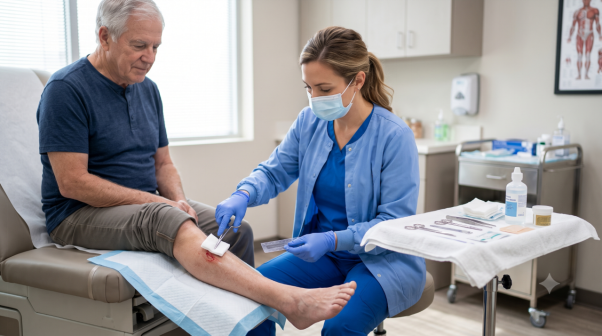
Choosing between CPT 97597 and CPT 11042 can be confusing because both codes involve wound debridement. The difference is not simply how serious the wound looks or how deep the wound extends. The correct code depends largely on the type and depth of tissue actually removed during the procedure.
In simple terms, CPT 97597 is used for selective debridement involving skin-level tissue, while CPT 11042 is used for surgical debridement that reaches and removes subcutaneous tissue.
That distinction is important for wound care providers, coders, and billing teams. Using a deeper debridement code just because the wound extends deeper can result in coding errors, denials, or requests for medical records. CMS specifically instructs providers to select debridement codes based on the tissue actually debrided rather than the overall depth or grade of the wound.
What Is CPT Code 97597?
The 97597 CPT code is used to report selective debridement of the first 20 square centimeters or less of wound surface area. It applies when the debridement involves epidermal and dermal tissue rather than deeper subcutaneous tissue.
Selective debridement focuses on removing targeted devitalized or unhealthy tissue while preserving healthy tissue around the wound.
The 97597 CPT code description generally covers selective wound debridement involving skin-level tissue and may involve instruments such as forceps, scissors, or a scalpel, depending on the clinical situation.
When considering CPT code 97597, documentation should establish that active debridement actually occurred. Simply examining the wound, changing the dressing, or cleaning the wound does not automatically support reporting 97597. CMS specifically states that 97597 and 97598 should not be billed when only a simple dressing change is performed without an active wound procedure.
What Is CPT Code 11042?
CPT 11042 is used for surgical debridement involving subcutaneous tissue, including the epidermis and dermis when those layers are removed as part of the procedure. The base code covers the first 20 square centimeters or less.
The critical word is subcutaneous.
The provider must actually debride tissue at the subcutaneous level. It is not enough for the wound itself to extend into subcutaneous tissue.
CMS gives an important example: even if a wound extends as deep as the bone, CPT 11042 can still be the appropriate surgical debridement code when only necrotic subcutaneous tissue is removed. The code represents the tissue removed, not the maximum depth of the wound.
That same rule works in the opposite direction. If a wound extends into subcutaneous tissue but the provider performs only selective skin-level debridement, the documentation may support 97597 CPT code rather than 11042.
CPT 97597 vs. 11042: What Is the Difference?
The easiest way to distinguish these codes is to ask:
What was the deepest tissue actually removed during debridement?
For CPT 97597:
- The service is selective debridement.
- The debridement involves skin-level tissue.
- The base code applies to the first 20 sq cm or less.
- Documentation should identify the tissue and area treated.
For CPT 11042:
- The service is surgical debridement.
- Subcutaneous tissue is actually removed.
- The base code applies to the first 20 sq cm or less.
- Documentation should clearly establish the depth of tissue debrided.
CMS guidance confirms that the code selected should represent the level of debrided tissue rather than the depth, extent, or grade of the wound itself.
Example of When CPT 97597 May Be Appropriate
Consider a patient with a chronic foot ulcer that extends into the subcutaneous layer.
During today’s encounter, the clinician removes devitalized epidermal and dermal tissue but does not remove subcutaneous tissue.
The wound may be deeper anatomically, but the procedure performed during that encounter was superficial. Based on the documented service, CPT 97597 may be appropriate.
The documentation should include details such as:
- Location of the wound
- Wound measurements
- Tissue present before debridement
- Tissue actually removed
- Method used for debridement
- Area debrided
- Patient response when relevant
This is why coders should avoid selecting a debridement code from the wound diagnosis alone.
Example of When CPT 11042 May Be Appropriate
Now consider a patient with a lower-leg ulcer containing necrotic tissue extending into the subcutaneous layer.
The provider performs surgical debridement and documents removal of devitalized epidermis, dermis, and subcutaneous tissue.
Because subcutaneous tissue was actually removed, CPT 11042 may be appropriate for the first 20 sq cm or less.
If the procedure reaches deeper structures and muscle or bone is actually debrided, other codes in the 11042–11047 family may need to be considered.
The important point remains the same: code what was debrided, not simply what was exposed.
Why Wound Depth Alone Does Not Determine the Code
This is one of the most important concepts in wound care coding.
Suppose a wound extends down to muscle. A coder should not automatically select a muscle-level surgical debridement code.
If the clinician removes only surface biofilm or superficial tissue, the coding should reflect the tissue actually treated. CMS provides a similar example, explaining that surface debridement of a muscular ulceration can support 97597–97598, whereas removal of actual muscle substance moves the service into the appropriate surgical debridement code family.
For the same reason, a wound with exposed subcutaneous tissue does not automatically support CPT 11042.
The procedure note must show that the tissue was actually removed.
Is CPT 97597 an Irrigation and Debridement CPT Code?
Providers sometimes search for an irrigation and debridement CPT code when documentation mentions wound irrigation, cleansing, or removal of debris.
However, irrigation and active debridement should not automatically be treated as the same service.
Washing or cleansing a wound does not necessarily meet the requirements for selective or surgical debridement. CMS specifically notes that certain cleaning services do not support surgical debridement codes, and a simple dressing change without an active wound procedure does not support 97597 or 97598.
Before choosing a code, review exactly what was performed.
Was the tissue removed? What tissue was removed? How deep did the actual debridement go? How much surface area was treated?
Those details matter more than simply seeing the word irrigation in the procedure note.
Documentation Requirements for CPT 97597 and 11042
Clear documentation is essential for supporting either a selective debridement CPT code or a surgical debridement code.
A strong wound debridement note should clearly document:
- Wound location
- Wound size and characteristics
- Type of tissue present
- Type of tissue removed
- Depth of debridement
- Method or instruments used
- Surface area actually debrided
- Relevant clinical reason for the procedure
Surface area also matters.
For surgical debridement codes, CMS explains that when only part of the wound is debrided, the reported measurement should reflect the area actually debrided. When multiple wounds are treated at the same depth, their surface areas may be combined according to applicable coding rules.
This level of documentation also makes it easier for internal billing teams or Woundcare billing services to match the procedure note with the appropriate code without relying on assumptions.
Can CPT 97597 and 11042 Be Billed Together?
For the same wound, providers should not simply report both codes because different tissue layers are involved.
CMS states that CPT 97597, 97598, and 97602 should not be reported together with CPT 11042–11047 for the same wound. The depth actually debrided determines the appropriate coding pathway.
For a single wound treated at different depths, surgical debridement coding generally follows the deepest tissue actually removed.
Multiple wounds require more careful review because different wounds may be treated at different depths. Each wound should therefore be clearly identified in the medical record.
Common Mistakes With CPT 97597 and 11042
Even experienced wound care teams can run into problems when documentation does not clearly separate wound depth from debridement depth.
Common mistakes include:
- Reporting 11042 simply because subcutaneous tissue is visible
- Using 97597 for a routine dressing change
- Selecting the code based only on the wound diagnosis
- Failing to document what tissue was actually removed
- Reporting the entire wound area when only part was debrided
- Using surgical debridement codes for simple wound cleansing
- Reporting selective and surgical debridement codes incorrectly for the same wound
A good rule is to review the procedure note before looking at the diagnosis code. The note should establish what the clinician actually did.
FAQs
Can 11042 be billed if subcutaneous tissue is exposed?
Exposure alone is not enough. The documentation should establish that subcutaneous tissue was actually debrided. CMS states that debridement codes should reflect the level of tissue removed.
Can CPT code 97597 be billed for wound irrigation?
Not simply because irrigation was performed. The medical record must support an active debridement service that meets the requirements of the code. Routine cleansing or dressing changes alone do not support 97597.
Can CPT 97597 and 11042 be reported for the same wound?
Generally, they should not be reported together for the same wound. CMS directs providers to use the appropriate code based on the depth of tissue actually debrided.
Conclusion
The difference between CPT 97597 vs. 11042 depends on the tissue actually debrided. The 97597 CPT code is used for selective debridement of skin-level tissue, while CPT 11042 applies when subcutaneous tissue is surgically removed.
Coding should follow the documented debridement depth, method, and treated surface area, not just the overall wound depth. Clear documentation helps reduce denials, downcoding, and payer review issues.
