
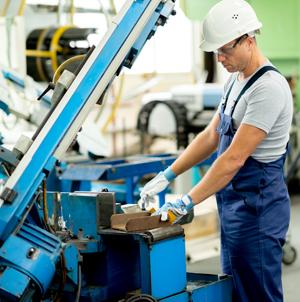
Every manufactured product begins with an idea, but turning that idea into a reliable physical component takes much more than simply choosing a shape and sending it into production. Even relatively simple parts must pass through several stages before they are ready for repeated use. Design decisions, material selection, prototyping, tooling, production methods, and quality checks become especially important in industrial production of small parts, where precision and consistency can directly affect how well the finished component performs.
Understanding this process can help product designers make better decisions early, avoid costly revisions, and create parts that are easier to manufacture consistently.
Starting With a Functional Design
The first stage is translating an idea into a design that can actually be produced. A component may look straightforward on paper while presenting unexpected challenges once manufacturing begins.
Dimensions, wall thickness, curves, openings, connection points, and tolerances all need careful consideration. A small design feature can affect how easily a part can be formed, removed from a mold, assembled with another component, or used under real-world conditions.
Designing with manufacturing in mind from the beginning can prevent unnecessary complexity. It can also reduce material waste, simplify tooling, and improve consistency between finished parts.
Testing the Idea With a Prototype
Before committing to large-scale production, creating a prototype can reveal problems that are difficult to spot in a digital model.
A prototype gives designers the opportunity to evaluate the size, shape, fit, strength, and general function of a component. If the part connects with other pieces, those relationships can also be tested before the final manufacturing process begins.
Changes made during this stage are usually much easier than changes made after production tooling has already been completed. Adjusting a dimension or changing a design feature early can prevent hundreds or thousands of unsuitable parts from being produced later.
Prototyping also allows the design to evolve through real-world testing rather than assumptions alone.
Choosing a Material That Fits the Job
Material selection affects far more than appearance. Different plastics and other manufacturing materials respond differently to heat, pressure, chemicals, impact, repeated movement, and environmental exposure.
A lightweight component used inside a protected device may have very different requirements from a part expected to withstand constant mechanical stress.
Designers therefore need to consider characteristics such as flexibility, rigidity, temperature resistance, durability, weight, and surface finish. Cost matters as well, but selecting a material simply because it is inexpensive can create larger problems if it cannot perform reliably.
The most suitable material is usually the one that balances performance, manufacturability, longevity, and overall production cost.
Selecting the Right Manufacturing Method
Once the design and material have been established, the next question is how the component should be produced.
There are many manufacturing methods available, and the right choice depends on factors such as geometry, production volume, tolerance requirements, material, and budget. Some processes work especially well for prototypes or small batches, while others become much more efficient when thousands of identical pieces are needed.
Plastic injection molding, for example, can be particularly useful when a design needs to be reproduced consistently at higher volumes. Molten material is introduced into a carefully designed mold, where it forms the required shape before cooling.
Once appropriate tooling is in place, the process can produce complex components with strong repeatability while keeping individual production cycles relatively efficient.
Fun fact: Injection molding can create surprisingly detailed parts in a single production cycle. Features such as ribs, textured surfaces, fastening points, and complex contours can sometimes be incorporated directly into the molded design, reducing the need for additional assembly or machining.
Creating Accurate Production Tooling
For molded components, the quality of the tooling has a major influence on the quality of the finished part.
The mold must account for the shape of the component as well as how the material behaves during heating, filling, cooling, and removal. Factors such as shrinkage and flow can affect final dimensions, which means tooling requires careful planning.
Good tooling is not simply a negative copy of the desired component. It is an engineered production system designed to create the same result repeatedly.
Moving Into Consistent Production
After testing is complete and the tooling is ready, production can begin. At this stage, consistency becomes one of the most important goals.
Manufacturing parameters must remain controlled so that individual parts do not vary significantly from one production cycle to another. Temperature, pressure, cooling time, and material handling can all influence the final result.
Efficient production is also about minimizing unnecessary waste. A well-planned design and process can reduce rejected parts, shorten production cycles, and make better use of materials.
Quality Control Completes the Process
Production does not end when a component leaves the manufacturing equipment. Finished parts still need to be checked against the original specifications.
Dimensions, appearance, fit, strength, and surface quality may all be examined depending on how the component will be used. Consistent inspection helps identify manufacturing problems before affected parts move further into assembly or distribution.
Ultimately, producing a custom component is a connected process rather than a single manufacturing step. Strong results come from combining thoughtful design, practical prototyping, appropriate materials, efficient production, and dependable quality control. When each stage supports the next, an initial idea can become a reliable component that performs exactly as intended.
