
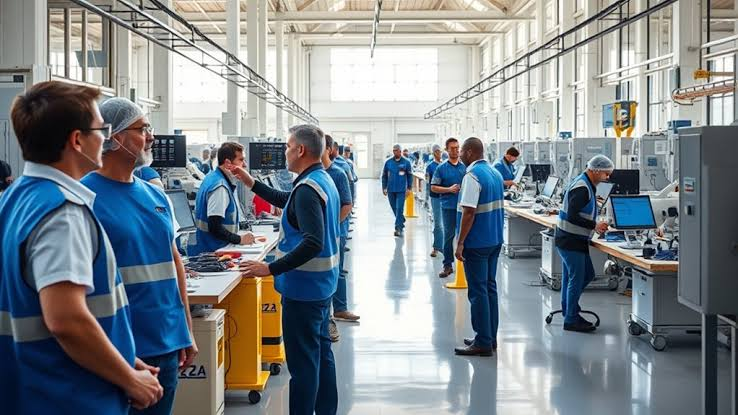
Manufacturing operations depend on more than equipment, materials, and production targets. Behind every successful shift is a workforce that needs to be scheduled, paid, trained, tracked, and supported properly, while accounting support for supply chain businesses helps keep financial processes aligned with the demands of day-to-day operations. When those processes work together, production tends to feel organized and predictable. When they do not, even small administrative problems can quickly create delays on the floor.
Better workforce management is not simply an HR concern. It affects productivity, labor costs, employee satisfaction, compliance, and the ability to respond when something unexpected happens. For busy manufacturing environments, having clear processes in place can make the difference between constantly fixing problems and preventing many of them in the first place.
Smarter scheduling keeps production moving
Shift scheduling can become complicated quickly. Production demands change, employees call out, overtime limits need to be considered, and certain tasks may require workers with specific skills or certifications.
A well-organized scheduling process gives managers a clearer view of who is available and where labor is needed most. It can also reduce situations where one shift is understaffed while another relies too heavily on overtime.
Better scheduling does not mean eliminating flexibility. In fact, the opposite is often true. When workforce information is accurate and easy to access, managers can make faster adjustments without relying on guesswork.
Accurate time tracking supports better decisions
Timekeeping might seem like a basic administrative task, but inaccurate records can create problems throughout an operation.
If employee hours are not recorded correctly, payroll may be affected. Overtime can become harder to monitor, labor costs may be difficult to measure, and managers can lose visibility into how much staffing is actually required to meet production goals.
Reliable time tracking gives operations teams useful information beyond simply knowing when someone clocked in or out. Over time, those records can help identify patterns in overtime, absenteeism, staffing requirements, and labor expenses.
That makes time data useful not only for payroll, but also for planning.
Payroll accuracy builds employee trust
Few workforce issues become personal as quickly as an incorrect paycheck.
Manufacturing employees may work different shifts, earn different rates, receive overtime, or qualify for additional forms of compensation depending on their schedules. That creates more opportunities for payroll errors when information is spread across different systems or entered manually.
Accurate payroll processes help ensure that hours, rates, and other relevant information are recorded consistently. They can also reduce the amount of time managers and administrative teams spend correcting avoidable mistakes.
Employees are more likely to trust workplace processes when they know their time and pay are being handled carefully.
Organized employee records reduce unnecessary confusion
Workforce management also involves maintaining accurate employee information.
Training records, certifications, attendance information, job assignments, payroll data, and other employment documents can all become important at different points in an employee’s time with an organization.
Keeping this information organized makes everyday administration easier, but it can become especially valuable when questions arise unexpectedly.
Instead of searching through emails, spreadsheets, paper files, and separate systems, managers can work from a clearer picture of an employee’s history and current status.
When workplace incidents disrupt operations
Manufacturing environments can involve physical tasks, machinery, repetitive movements, heavy materials, and other occupational risks. Even when safety procedures are taken seriously, workplace incidents can still happen.
When an employee is injured, the situation can quickly involve more than arranging coverage for a missed shift. Accurate incident records, employment information, time records, medical documentation, and communication may all become relevant as the situation develops.
Employees may also need to understand the process involved in filing a workers’ compensation claim, what information they are expected to provide, and when representation at administrative hearings may become necessary if a dispute arises. From an operational perspective, having clear internal procedures can reduce confusion at a time when both the worker and management are already dealing with disruption.
The goal is not to turn workforce management into a legal process. It is to make sure important information is organized, incidents are documented appropriately, and employees know where to find the guidance they need rather than trying to reconstruct events weeks later.
Better compliance starts with better records
Compliance becomes much harder when workforce information is incomplete or inconsistent.
Accurate records can help managers monitor working hours, training requirements, employee classifications, certifications, and internal policies more effectively. They also make it easier to identify gaps before those gaps become larger problems.
Good compliance practices are often less about reacting to an issue and more about maintaining reliable systems every day.
Fun Fact: In many manufacturing environments, workforce data can reveal operational patterns that are easy to miss on the production floor. Changes in overtime, absenteeism, or staffing levels may highlight bottlenecks before they become obvious through production numbers alone.
A smoother operation starts with the workforce
Efficient manufacturing requires coordination between people, processes, and production demands. Workforce management connects many of those moving parts.
When scheduling is organized, time records are accurate, payroll runs smoothly, employee information is accessible, and compliance processes are clearly documented, managers can spend less time fixing administrative problems and more time improving operations.
The result is not simply a better HR process. It is a more stable, responsive, and well-organized manufacturing environment.
