
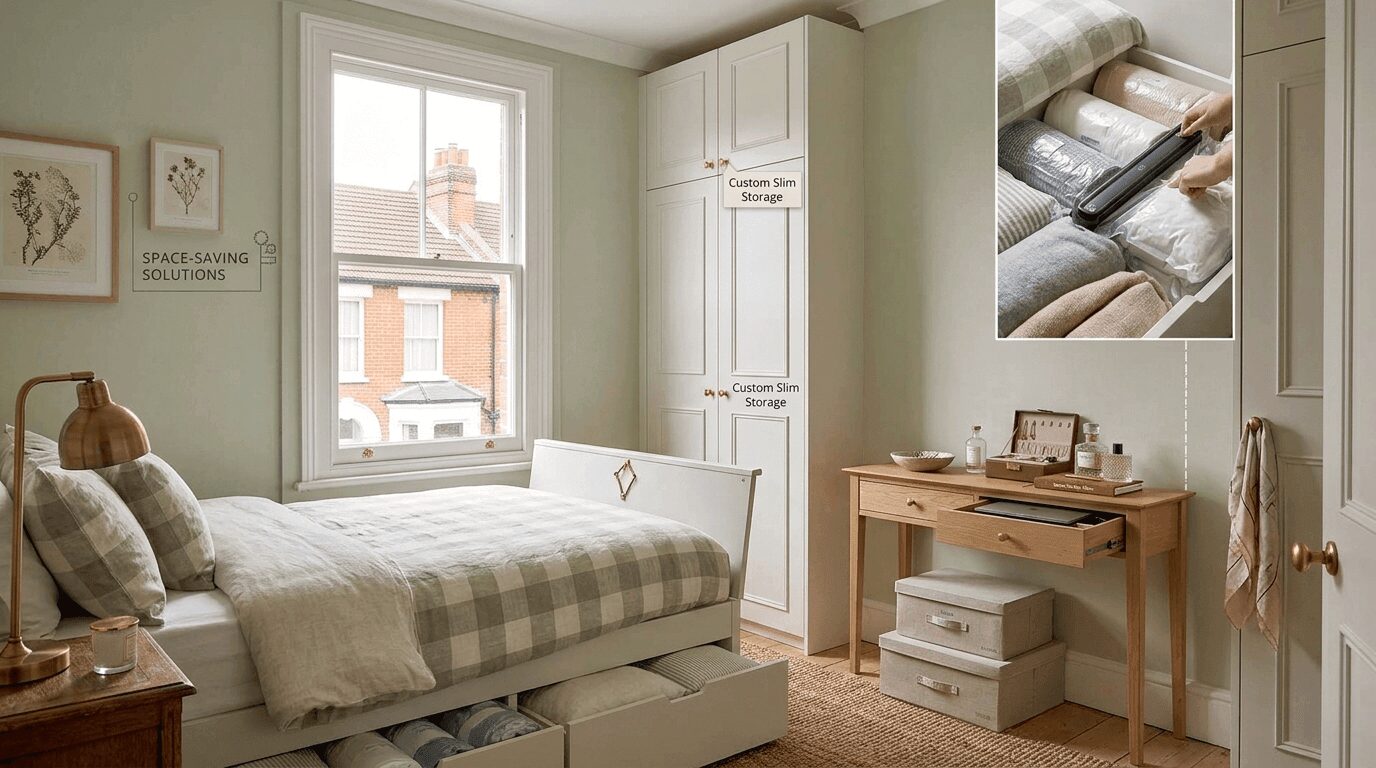
Living in a small home is a bit of a puzzle. You have all your stuff, but nowhere near enough room for it.
This is a familiar story across the UK. Flats are smaller than they used to be, and many homes come with one box room that barely fits a bed. Whatever your set-up, the furniture you choose really does change how the place feels day to day.
Pick well, and a small room feels calm. Pick badly, and it feels like the walls are closing in. A handful of clever choices is all it takes to tip things the right way. So let me walk you through the ones that genuinely help.
Why Space-Saving Furniture Matters in Small Homes
In a big house, nobody notices a chunky sofa or a wide wardrobe. Squeeze that same piece into a small UK flat, and it swallows half the room.
Space-saving furniture just means furniture that does more with less. Some pieces hide storage inside. Some fold away when you are done. Some are simply slim enough to let you walk past without turning sideways.
The point is not to fit more things in. The point is to keep the room easy to live in. A small space you can move around in will always beat a bigger one you have to shuffle through.
Start by Measuring Before You Buy
Most people skip this bit. Then the delivery turns up, and the thing will not go through the door.
So grab a tape measure before you shop. Here is what to check:
- The wall where the piece will sit.
- Every doorway it has to travel through.
- The stairs, plus that awkward turn at the top.
- The lift, if your block has one.
Jot the numbers down and keep them on your phone. Something that looks just right on a website can be way too big once it lands in your hallway. This matters even more in older UK homes, where doorways and staircases are often narrow. Five minutes with a tape measure saves you a very costly mistake.
Make the Most of Vertical Space
When you run out of floor, look up. Those bare walls are the most wasted space in most small homes.
Tall furniture uses height instead of width, and height is the thing you are not short of. A tall, narrow bookcase holds just as much as a wide one, but it only touches half the floor. Wardrobes are the same. Go tall, and you get loads of hanging room without the thing sprawling across your wall.
Do not forget the strip above doors and windows either. It nearly always sits empty. Pop a shelf up there for books or baskets you only reach for now and then.
Choose Furniture That Does Two Jobs
The smartest move in a small home is one piece doing the work of two. This kind of thinking suits UK homes perfectly, where floor space is often tight.
Take a storage bed. You get somewhere to sleep, and the drawers underneath swallow your spare bedding or off-season clothes. A dressing table with a flat top turns into a desk when you need one, which is handy in UK flats where a separate office is a luxury. A bench by the front door hides shoes inside and gives you somewhere to sit while you tie your laces.
This is really the whole idea behind good bedroom furnishing in a small UK room. When each piece pulls double duty, you simply need fewer of them. And fewer pieces leave you more room to breathe
Keep an eye out for these hidden extras when you shop:
- A drawer tucked into a stool.
- A lift-up lid on an ottoman.
- A mirror that swings open to reveal shelves.
- Drawers built into the base of a bed.
Every one of them is a second piece of furniture you now do not have to buy.
Keep the Entrance Clear
The way in sets the tone for the whole home. A messy doorway makes even a spotless flat feel chaotic.
Shoes are almost always the culprit. They gather by the door and creep across the floor. A slim shoe cabinet sorts that out fast. Plenty of them are only a few inches deep, so they slot along a narrow hallway wall where nothing else would ever fit.
A skinny console table earns its place here too. Somewhere to drop your keys and post without getting in your way. Add a few hooks on the wall for coats and bags, and suddenly the entrance stays tidy on its own.
Pick Slim, Freestanding Pieces
In a small home, how deep a piece is matters as much as how wide. A slim unit against the wall gives you back precious walking room.
Hunt for furniture with a shallow depth. A narrow chest of drawers still holds heaps but pokes out far less. A slimline desk hands you a work surface without eating the whole room.
Freestanding pieces have one more thing going for them. They come with you. This is a big deal if you rent, and lots of people in the UK do. Built-in furniture stays put when you move out. Freestanding stuff comes apart, travels to the next place, and goes back together again. You pay once and keep it for years.
Here is an easy way to weigh the two up:
| Freestanding | Built-in | |
| Moves with you | Yes | No |
| Good for renters | Yes | No |
| Fits tight doorways | Yes, comes apart | Often a struggle |
| Stays when you leave | No, you keep it | Yes, left behind |
| Cost over time | Buy once, reuse | Pay each move again |
Use Hidden and Under-Bed Storage
The gap under your bed is massive, and most of us let it go to waste.
Flat boxes slide right under and hold off-season clothes, spare duvets, or shoes. Look for ones with wheels or handles so you can drag them out without a fight. Clear boxes are handy too, since you can spot what is inside without opening every single one.
Baskets are another quiet little helper. A woven one by the sofa keeps your throws tidy. Another in the bedroom hides the laundry. They sit happily in corners and use up space that would otherwise do nothing.
The rule is dead simple. Every bit of hidden storage is one more thing off your surfaces.
Stick to Light Colours and Clean Lines
Saving space is not only about storage. The way a room looks changes how big it feels too.
Light colours open a room right up. White, cream, and soft grey all bounce daylight around. This helps a lot in the UK, where the days are short and grey for months on end. Dark colours do the reverse. They drink up the light and pull the walls in closer.
Simple shapes help as well. Furniture covered in fussy detail and heavy trim looks bulky and busy. Flat fronts and straight edges look calm and take up less room for your eye to trip over. A glossy finish pushes this further, since the shine throws light back like a soft mirror.
Matching your colours does its bit too. When everything matches, your eye reads one smooth space instead of a jumble of separate blocks. And that makes the whole room feel bigger than it is.
Declutter Before You Decorate
Here is something no furniture shop will ever tell you. Sometimes the fix is less stuff, not more storage.
Before you buy a single thing, go through what you already own. Be honest with yourself about what you actually use. The clothes you never wear. The gadget you forgot you had. The box you have not opened since you moved in. Let it go.
A home with less in it needs less furniture to start with. You might even find that extra unit you were about to order is not needed at all. Clear the clutter first, then buy only for what is genuinely left.
This one habit saves you money and space in the same go.
Final Word
A small home is not a problem to fix. It is just a space to use well.
Measure before you buy. Pick pieces that work twice. Look up at your walls and down under your bed. Keep the colours light and the shapes simple. Do those few things, and even the tiniest UK flat can feel open, calm, and properly yours.
FAQs
What furniture saves the most space in a small UK home?
Pieces that do two jobs win every time. Storage beds, ottomans with room inside, and tables that turn into desks all pack two uses into the space of one.
How do I make a small room look bigger?
Go for light colours, keep your furniture slim, and match your pieces. Mirrors and glossy tops bounce light about and push the walls apart.
Is freestanding or built-in furniture better for small UK flats?
For most renters, freestanding wins. It moves with you, comes apart for tight doorways, and never gets left behind.
Where should I start when furnishing a small home?
Declutter first, then measure your space. Only after that should you shop, so everything you buy actually fits.
Are UK flats really smaller than they used to be?
Yes, newer flats tend to be tighter on space than older homes. That is exactly why slim, clever, dual-purpose furniture has become so popular here.
read more : 7 Expert Tips for Enjoying PG Slot Games Responsibly
