
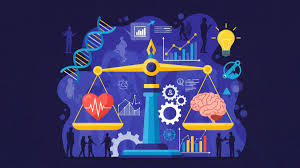
The landscape of the modern classroom has shifted more in the last five years than it did in the previous fifty. We have moved from heavy backpacks filled with printed textbooks to slim tablets that hold the sum of human knowledge. This digital revolution is, for the most part, a blessing. It has democratized information and made learning accessible to people regardless of their geography. However, with this rapid innovation comes a complex set of ethical questions. How do we embrace the power of technology without losing the soul of education?
At its core, education is about more than just memorizing facts; it is about developing the ability to think critically and act with integrity. As we integrate artificial intelligence, automated tools, and instant information into the curriculum, we must ensure these tools serve as a bridge to deeper understanding rather than a shortcut that bypasses the learning process entirely.
The Double-Edged Sword of Digital Tools
Technology in schools is often viewed through two lenses. On one side, you have the “innovators” who believe that every new tool is a step toward progress. On the other, you have the “traditionalists” who fear that technology is making students lazy. The reality, as is usually the case, lies somewhere in the middle.
Digital tools allow for personalized learning. If a student struggles with a specific math concept, an app can provide targeted practice. If a writer is stuck on how to structure a complex argument, they might look for essay help to understand the foundational requirements of a persuasive piece. These resources are invaluable when used to supplement a student’s own effort. The ethical line is crossed only when the tool replaces the student’s voice, leading to a loss of original thought.
Redefining Academic Integrity in the AI Age
In the past, academic integrity was a simple concept: don’t cheat on tests and don’t copy someone else’s work. Today, the definition is much blurrier. Is it “cheating” to use an AI to brainstorm an outline? Is it “dishonest” to use software to fix your grammar?
To maintain integrity, students must be transparent about their process. The goal of any assignment is to demonstrate what you have learned. If a digital tool does 90% of the work, the grade no longer reflects the student’s competence. We must shift the focus from the final grade to the journey of discovery. Integrity today means using technology to enhance your skills, not to hide your weaknesses.
The Human Element: Why Craft Matters
Despite the rise of sophisticated algorithms, the human element remains the most critical component of a great education. There is a specific nuance to human writing—a blend of emotion, personal experience, and cultural context—that technology cannot replicate. When a student pours their thoughts onto a page, they are doing more than completing a task; they are refining their identity.
Many students find that while they can generate ideas quickly, the “polishing” phase is where they learn the most about clarity and tone. Seeking out a professional online essay editing service can be a brilliant way to learn this craft. By seeing how an expert refines their original thoughts, a student learns how to communicate more effectively in the future. This is a collaborative form of innovation that respects the student’s original intent while striving for excellence.
Privacy and the Digital Footprint
Ethics in modern education also extends to how student data is handled. Every time a student logs into a learning platform, they leave a digital footprint. There is a growing concern about how this data is used, who owns it, and whether it could be used to pigeonhole students based on their past performance.
Schools and educational tech companies have a moral obligation to protect student privacy. Innovation should never come at the cost of personal security. As we move forward, teaching “digital literacy” must include lessons on data privacy, ensuring students understand that their online presence is a permanent part of their professional and personal history.
Bridging the Global Divide
One of the most profound ethical challenges of digital innovation is the “digital divide.” While students in well-funded districts might have high-speed internet and the latest laptops, millions of others around the world lack basic access. If we rely too heavily on digital-first education without addressing this gap, we risk creating a two-tiered society where innovation only benefits the privileged.
True progress in education means ensuring that technology is a tool for equity. This involves investing in infrastructure and creating low-bandwidth educational resources that can work on older devices. Innovation is only truly successful if it is inclusive.
The Role of Educators in an Automated World
Teachers are no longer just “fountains of knowledge.” In a world where Google has all the answers, the role of the teacher has evolved into that of a mentor and a moral guide. Educators are now responsible for teaching students how to navigate the sea of information—how to spot “fake news,” how to cite sources correctly, and how to use AI ethically.
The relationship between student and teacher is the ultimate safeguard of academic integrity. When a teacher knows a student’s unique voice and perspective, it becomes much easier to identify when that student has leaned too heavily on external tools. This connection fosters an environment where students feel safe to fail, learn, and grow authentically.
Conclusion
The future of education is undeniably digital, but its foundation must remain ethical. We should not fear innovation; we should embrace it with a critical eye. By prioritizing honesty, transparency, and human connection, we can create a learning environment that uses the best of technology to bring out the best in people.
Balancing integrity with innovation is a daily choice. It is about choosing the hard work of learning over the easy path of automation. As we look toward 2026 and beyond, let’s ensure that our classrooms—whether physical or virtual—remain places where the human spirit is encouraged to soar, supported by the best tools the digital age has to offer.
