
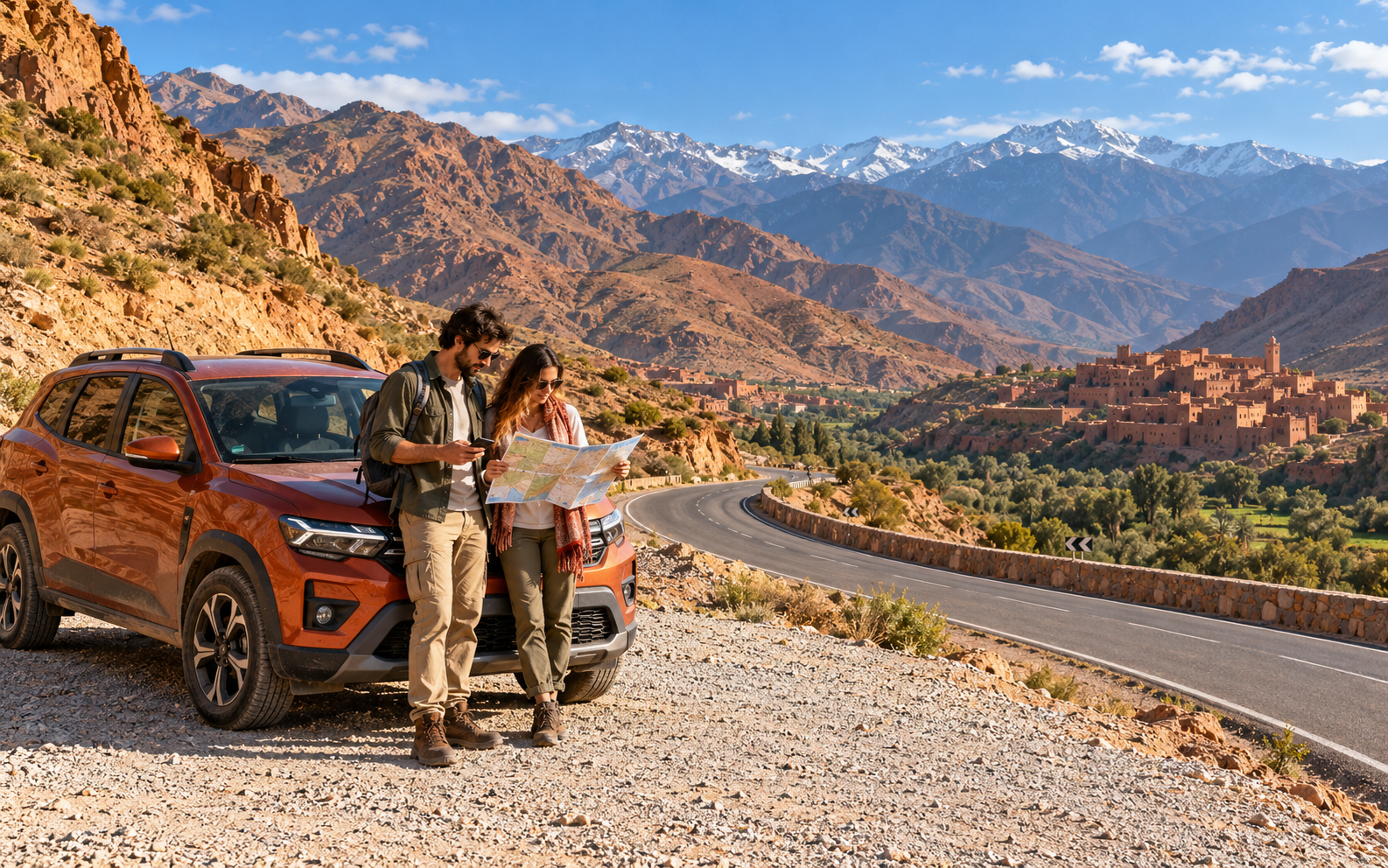
Morocco forgives most travel mistakes gently. Miss a train and another comes; overpay in a souk and you still own a nice lamp. The road trip, though, keeps a shortlist of errors that actually cost something, a wasted first day, a blown budget, a holiday argument at a rental counter, and the frustrating part is that every one of them is famous. Ask anyone who has driven the kingdom twice and they will recite the same five or six traps they fell into the first time. This guide simply collects them in advance, in the order a trip meets them, so your first Morocco drive runs like a second one.
The earliest mistake happens before the flight is even booked, and it is the assumption that the car gets sorted on arrival. The market for cars for rent in Morocco has moved decisively online, verified suppliers across Casablanca, Marrakech, Tangier, Rabat, Agadir, and Fes compared on one screen at OneClickDrive with real photos and transparent dirham pricing, city cars from around 200 dirhams a day and SUVs from about 400, and the travellers still improvising at arrival-hall counters are choosing the thinnest selection at the weakest moment. The assisted booking model exists precisely to close this gap: the team confirms the exact car and terms for your dates, a small advance of around ten percent secures it, and the balance settles directly with the supplier at a handover timed to your flight, ferry, or train. Ten minutes from the sofa, and the trip’s biggest variable is retired before packing starts.
With that one fixed, here are the rest, trap by trap.
The Gearbox Trap, and Its Cousins at the Counter
The single most repeated Morocco rental story is the automatic-gearbox surprise. Manual is the national default, automatics exist in smaller numbers at a premium, and their fleet empties first in every busy season, the summer diaspora return and the winter sun months alike. Drivers who need an automatic and mention it at the counter instead of at booking either pay heavily, wait, or spend a holiday relearning a clutch in Casablanca traffic. The fix costs one sentence in your first booking message, and no sentence in Moroccan travel pays better.
Two cousins live beside it. The first is the unexamined excess: collision and theft cover is included on essentially every rental, but the amount that stays your responsibility varies widely and goes unasked by most first-timers until it matters, so request the figure by name and price the reduction option against your nerves. The second is the mileage mismatch, because Moroccan days devour kilometres, Marrakech to Essaouira and back is 380 of them, the Tizi n’Tichka round trip more, and a cheap headline rate with a tight cap loses to a fair rate with a generous allowance by day three. Count the itinerary honestly, then book the terms that match it, including the one-way drop-off, arranged in advance for a fee, that saves the route from ever doubling back.
The last counter-stage error is the skipped walkaround. Two minutes of slow filming at handover, every panel, each wheel, the spare, the triangle, the vest, kept until the keys go back, settles every condition conversation before it starts. Veterans never skip it; first-timers who do occasionally fund the lesson.
The Road Traps: Speed, Sand, and the Medina
On the move, three misjudgements account for nearly all first-timer grief. The first is treating posted limits as suggestions, a habit imported from gentler camera regimes; Morocco’s radar is frequent and literal, its gendarmerie checkpoints are routine thirty-second courtesies with documents ready, and the traveller who drives the number on the sign simply never meets the system’s unfriendly side. The second is the sand temptation. Rental SUVs look ready for the pistes and the dunes, and standard insurance covers precisely none of it, so off-tarmac damage lands entirely on the renter; the desert is magnificent and belongs to the guided excursions built for it, while the rental owns a tarmac network that is, almost everywhere, genuinely excellent. The third is the night-drive miscalculation on rural roads, where unlit carts, wandering livestock, and the end of the scenery all argue the same case: do the between-town kilometres in daylight and give the evenings to dinner.
The small customs round out the road education, and they charm once understood rather than resisted. Parking runs on blue zones and on the vested guardians who watch cars for a few dirhams, so coins live permanently in the console beside the autoroute toll money. Fuel is full service and frequent. And the medinas, the error travellers make exactly once, are entered on foot, always, the car parked contentedly at the gates among the guardians, because a thousand-year-old lane network was never a parking opportunity, whatever the navigation app implies.
The Planning Traps: Seasons, Gateways, and the Route Itself
The quieter mistakes happen at the itinerary stage. Travellers under-rate the seasons, booking August’s packed roads and emptied fleets when May and October offer the same country in kinder light at softer prices, and they under-rate the gateways, assuming every trip must start in Casablanca or Marrakech when the kingdom has five or six excellent front doors. The north is the most instructive example, because its logistics are the most particular: ferries from Tarifa land at Tangier Ville beside the medina while Algeciras crossings dock at Tanger Med forty minutes east, flights arrive at Ibn Battuta south of town, and the Tangier car rentals on OneClickDrive solve exactly this puzzle by timing the handover to the specific ticket, city cars from around 150 to 250 dirhams a day, the gearbox and excess confirmed before the crossing, and the whole northern arc, Cap Spartel, painted Asilah, blue Chefchaouen two green hours into the Rif, unfolding from the correct gate on the correct hour. First-timers who start the trip at the wrong terminal lose half a day to the mistake; the one explicit line in the booking thread costs nothing.
The last planning trap is overstuffing, the ten-city week that turns the road trip into a transfer schedule. Morocco rewards the opposite shape, two or three bases with day-trip spokes, and the travellers who learn it on the first visit are rare enough to deserve congratulation.
Read back, the whole list reduces to a single principle: Morocco’s road trip punishes improvisation mildly and rewards preparation extravagantly, and the preparation totals about one evening, a booking thread with the gearbox declared, the excess named, the mileage matched, the handover point fixed, plus a pocket of coins and a two-minute video at the kerb. Every mistake in this guide was made so you would not have to, mostly by people now planning their third trip. The kingdom’s roads are ready, and forewarned, so are you.
