
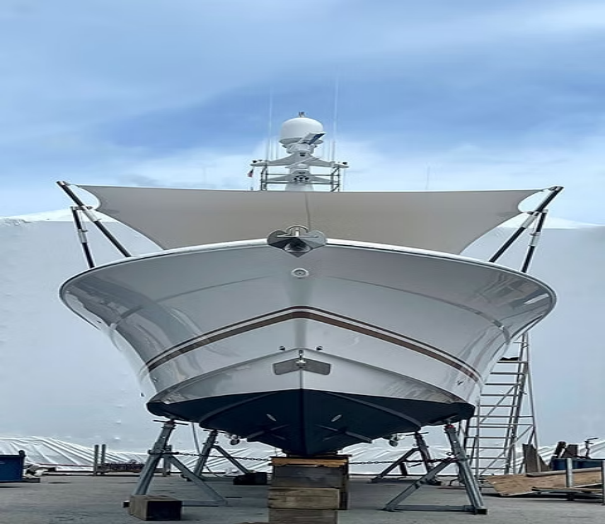
A center console boat gives anglers and passengers plenty of open space, but that same layout leaves large portions of the deck exposed to direct sunlight. The helm may have overhead protection from a T-top, while bow seating, casting areas, and other sections remain uncovered.
A suitable center console sun shade can provide additional protection without turning an open deck into a crowded space. The most useful setup balances coverage with rod-tip clearance, casting access, walkaround space, installation requirements, and storage.
For boat owners comparing shade configurations, a center console sun shade can provide targeted coverage while preserving the open layout that makes center console boats practical for fishing and recreation.
What Is a Center Console Sun Shade?
A center console sun shade is a fabric-based shade system designed to protect exposed areas of a center console boat from direct sunlight. Depending on the configuration, the shade can cover the bow, cockpit, passenger seating, or other open sections.
The supporting structure can range from permanent framing to removable poles that use existing boat hardware.
How Center Console Shade Systems Work
A typical system uses fabric stretched between supporting points. The poles or other supports determine the height, width, and shape of the shaded area.
The fabric needs appropriate tension to remain stable and maintain useful coverage. Pole placement also affects how easily passengers can move around the deck and how much room anglers have for casting.
Why Open-Deck Boats Need Flexible Shade
Center console boats are designed around open movement. Anglers may fish from the bow, stern, or sides, while passengers need clear paths between seating and the console.
A shade system that permanently occupies these areas can interfere with those activities. Flexible designs allow owners to add coverage when needed without permanently changing the boat’s open configuration.
Removable vs Permanent Shade Systems
Permanent shade structures can provide consistent coverage and may suit boats that require shade throughout most outings. Removable systems provide greater flexibility because they can be installed for specific activities and taken down when the deck needs to remain completely open.
For fishing boats, removability can also simplify access to rods, tackle, coolers, and other equipment.
Why Is Sun Protection Important on a Center Console?
Direct sunlight affects both people and the boat itself. A properly positioned shade system can create a more comfortable area without requiring complete coverage of the vessel.
Creating More Comfortable Seating Areas
Bow and cockpit seating can become uncomfortable under prolonged direct sunlight. A shaded seating section gives passengers a place to rest while keeping them close to the activity on the water.
The amount of fabric required depends on the number and location of seating areas. Targeted shade can be more practical than covering the entire deck.
Providing Shade During Fishing Trips
Fishing can require extended periods outdoors. Anglers may need a shaded area for breaks, organizing tackle, checking equipment, or simply getting out of direct sunlight.
The shade should not block casting lanes or interfere with rod handling. Coverage should support the way the boat is used rather than restrict it.
Protecting Interior Boat Surfaces
Upholstery, cushions, flooring, and other surfaces are exposed to sunlight during open-water use. Shade can reduce direct exposure over frequently used areas.
A shade system does not replace proper cleaning, protective treatments, or storage covers, but it can form part of a broader approach to boat care.
What Are the Main Center Console Sun Shade Options?
Several shade configurations are available, and each has different implications for coverage and deck access.
Bimini Tops
Bimini tops use a framed structure to support fabric over a section of the boat. They are widely used and can provide substantial overhead coverage.
Their frame, however, remains part of the boat’s layout and may affect overhead clearance or movement. Owners should consider how the frame interacts with fishing positions and equipment.
T-Top Extensions
A T-top already protects the helm, but additional fabric can extend coverage toward exposed areas. This can be useful for center consoles where passengers or anglers need more protection forward of the console.
The extension should be planned around the existing T-top structure and the boat’s casting and walkaround areas.
Shade Sails
Shade sails use tensioned fabric connected between multiple points. They can provide broad coverage without the appearance of a conventional framed canopy.
The attachment points and tensioning requirements need careful consideration, particularly on boats where equipment and movement are concentrated around the deck.
Rod-Holder Shade Poles
Rod-holder shade poles use existing rod holders as support points for the shade. This can reduce the need for permanent hardware and may allow the system to be removed after use.
For anglers, the arrangement can provide shade while leaving more of the deck available for fishing and movement.
How Can You Add Shade Without Losing Fishing Access?
A good center console shade needs to fit the fishing environment. Coverage alone does not determine whether the system is practical.
Maintaining Rod Tip Clearance
Rod tips need sufficient space to move without striking fabric or support poles. The height and position of the shade should account for normal rod movement.
A shade structure positioned too low over active fishing areas can become an obstruction, particularly during casting or when moving a rod around the boat.
Keeping Casting Areas Open
Casting zones should remain as clear as possible. Poles should be positioned away from areas where anglers regularly cast, retrieve, or handle fish.
A removable system can be taken down when complete open access is preferred.
Preserving Walkaround Space
Center consoles depend on clear paths around the helm. Passengers and anglers may need to move quickly between the bow, stern, and sides of the boat.
The shade should cover useful areas without narrowing these paths or creating unnecessary obstacles.
Avoiding Permanent Modifications
A no-drill boat shade can appeal to owners who do not want to add holes or permanent mounting hardware. Systems that use existing rod holders or compatible attachment points can reduce the need for structural changes.
The mounting method should always be checked against the boat and shade system specifications before installation.
How Do Center Console Shade Poles Work?
Pole-based systems use strategically placed supports to hold the shade fabric above the deck.
Using Existing Rod Holders
Some center console shade poles are designed to fit into existing rod holders. This approach makes use of hardware already present on many fishing boats.
For a secure fit, the rod holder’s size, depth, angle, and location need to match the pole system’s requirements. The supporting point should also be structurally appropriate for the intended application.
Connecting the Shade Fabric
The shade fabric attaches to the poles and other designated points. The arrangement determines how far the shade extends and which portions of the deck remain protected.
Fabric should be positioned according to the manufacturer’s instructions to avoid unnecessary stress on attachment points.
Tensioning the Shade
Proper tension helps the fabric maintain its shape and reduces unwanted movement. Tensioning components should be secured without creating excessive strain.
Wind conditions also need to be considered. Shade systems should only be operated within their specified conditions.
Removing and Storing the Poles
Once the shade is no longer needed, the poles can be removed and stored with the fabric. A removable design can make it easier to restore the boat’s original fishing configuration.
Poles should be stored where they will not be bent, scratched, or exposed unnecessarily to damaging conditions.
Carbon Fiber or Aluminum: Which Is Better?
Pole material influences weight, handling, rigidity, and long-term use.
Carbon Fiber Construction
Carbon fiber is valued for its high strength-to-weight characteristics. For a removable shade system, lightweight poles can make installation and removal less demanding.
Its rigidity can also help support the shade fabric while maintaining a relatively light overall structure.
Aluminum Construction
Aluminum is a common marine construction material and offers useful strength and durability. It is familiar across many boat components and shade structures.
The suitability of aluminum depends on the design, dimensions, fittings, and intended use of the shade system.
Weight and Handling
Weight becomes especially relevant when the shade needs to be installed and removed frequently. Lighter components can be easier to carry, position, and store.
The overall system weight includes the poles, fabric, fittings, and other hardware, so these components should be considered together.
Marine Durability
Saltwater, moisture, sunlight, and repeated handling can affect boat equipment. Pole material is only one part of durability.
Regular inspection, appropriate cleaning, secure storage, and care of fittings and fabric can help maintain the system.
How to Choose a Center Console Sun Shade
The best configuration depends on the boat’s physical layout and how the owner intends to use the shaded space.
Determine the Area You Want to Cover
Start by identifying the seating or deck area that requires protection. Measure the available space and determine the desired coverage without extending unnecessarily into fishing lanes.
A smaller targeted shade can sometimes provide sufficient protection while maintaining more open deck space.
Check Rod Holder Size and Placement
Owners considering center console shade poles should verify the dimensions and placement of their rod holders. Sunfly’s center console setup is designed around fixed-length poles that fit standard 1.5-inch rod holders, with configurations intended for center consoles in the 23 to 40 ft range.
Compatibility should always be confirmed for the specific boat and shade arrangement before installation.
Consider Boat Length and Layout
A 23-foot center console and a larger offshore boat can have significantly different deck dimensions and equipment arrangements. The shade size and pole configuration should correspond to the available space.
Console position, bow seating, rod holders, T-top dimensions, and walkways can all affect the final setup.
Consider Installation and Storage
A shade system should be practical to use repeatedly. Consider how long installation takes, where the poles will be stored, and whether the fabric can be packed without unnecessary creasing or damage.
Removable systems can provide greater flexibility for owners who alternate between shaded and fully open deck configurations.
Sunfly Poles offers removable boat shade pole systems intended for open-deck applications where usable space and shade coverage both matter.
Center Console Sun Shade Maintenance Tips
Routine care helps keep the shade system ready for use and allows potential problems to be identified early.
Inspect Poles and Fittings
Check poles, connections, mounting points, and fittings before use. Look for visible damage, looseness, corrosion, or unusual wear.
Any component that appears compromised should be addressed before operating the shade.
Check Tensioning Components
Tensioning lines, attachment points, and related hardware should remain secure. Uneven tension can affect the fabric’s position and place additional stress on certain connections.
Inspect these components regularly, especially after repeated installation and removal.
Clean and Store the System Properly
Follow the fabric manufacturer’s cleaning recommendations. Avoid storing wet fabric for extended periods when the material requires drying before storage.
Keep poles in a dry, protected location where they will not be subjected to unnecessary bending or impact.
For specifications, compatibility questions, or additional product information, contact the supplier directly.
Frequently Asked Questions About Center Console Sun Shades
What is the best shade for a center console boat?
The right shade depends on the boat’s layout and the amount of coverage required. Bimini tops provide established overhead coverage, while removable pole systems can provide targeted shade while preserving open deck space.
Can a center console sun shade be installed without drilling?
Some systems can be installed without drilling by using existing rod holders or other compatible mounting points. The specific mounting requirements should be checked before installation.
Can boat shade poles fit standard rod holders?
Some pole systems are specifically designed for standard rod holders. Compatibility depends on the pole diameter, rod holder dimensions, depth, position, and manufacturer’s specifications.
How much of a center console can a shade system cover?
Coverage varies according to fabric size, pole configuration, boat dimensions, and attachment points. A system can be designed to cover a specific section such as the bow or a larger portion of the open deck.
Are removable shade systems suitable for fishing boats?
Yes. Removable systems can be useful for fishing boats because the shade can be installed when protection is needed and removed when maximum casting and walkaround space is preferred.
