
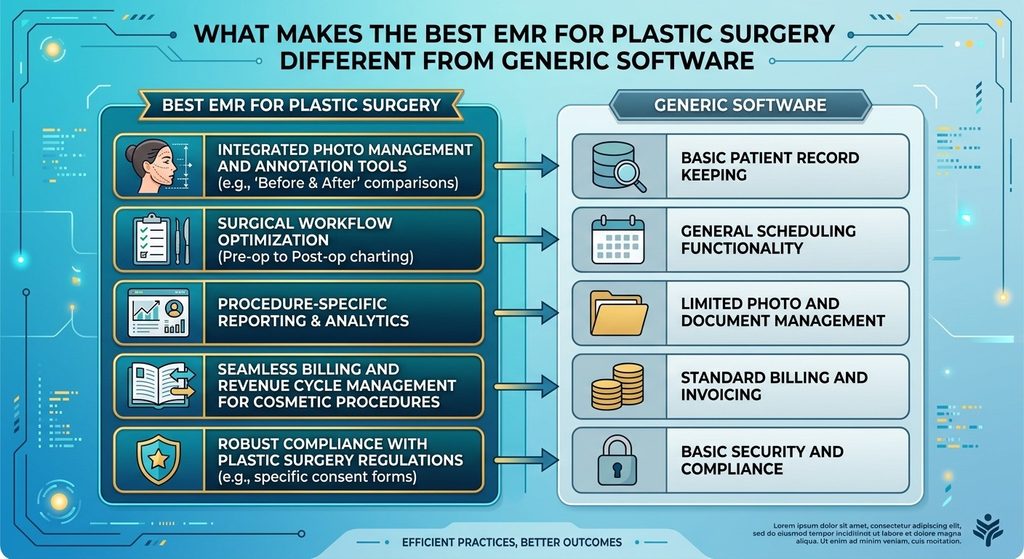
Operating a modern plastic surgery practice or aesthetic clinic requires a delicate balance between high-level surgical expertise, intricate patient care, and polished commercial business operations. Unlike traditional primary care offices or general outpatient clinics that primarily focus on disease management, insurance claims, and standard diagnostic coding, plastic surgery practices navigate a completely different operational landscape. They combine elective cosmetic procedures, complex surgical interventions, non-invasive injectable treatments, aesthetic retail products, and long-term client retention strategies.
Using generic Electronic Medical Record (EMR) software in an aesthetic environment often creates frustrating operational bottlenecks. Traditional medical software is rarely designed to support specialized clinical charting, high-definition before-and-after photo management, custom cosmetic quoting, or flexible consumer-style appointment booking. To build a smooth practice workflow, elevate the client journey, and increase overall practice profitability, aesthetic medical professionals require software purpose-built for their unique clinical and operational needs.
How Medspa Software Supports the Unique Needs of Plastic Surgery Practices
Plastic surgery practices and medical spas share a fundamental goal: delivering exceptional aesthetic outcomes while providing a high-end, comfortable client experience. However, achieving this requires tools that go far beyond standard digital charting. Specialized medspa software provides a comprehensive framework tailored directly to cosmetic consultations, procedure charting, and specialized patient communication. When a practice transitions from rigid, traditional medical software to purpose-built aesthetic systems, daily operations become significantly more efficient and organized.
Plastic surgery procedures demand precise visual documentation, detailed consent processes, and tailored treatment tracking. A generic health system expects standardized primary care entries, whereas a plastic surgeon needs specialized visual mapping, facial injection tracking templates, and seamless photo management. Implementing a dedicated aesthetic solution allows practices to streamline complex workflows while maintaining strict medical compliance.
Key ways specialized aesthetic platforms support plastic surgery teams include:
- Integrated Before-and-After Photo Management: High-quality visual documentation is essential in plastic surgery and medical aesthetics. Specialized platforms allow providers to capture, store, align, and compare high-resolution photos directly within patient records without exporting files to insecure third-party tools.
- Customizable Cosmetic Procedure Charting: Providers can utilize pre-built or custom templates tailored for rhinoplasty, breast augmentation, neurotoxins, dermal fillers, and laser therapies. This ensures consistent, rapid charting while capturing precise dosage and injection sites.
- Seamless Quote and Package Management: Cosmetic consultations frequently involve multi-stage treatment plans or surgical packages. Purpose-built systems generate clear, professional quotes that outline surgical fees, anesthesia, facility costs, and post-care products effortlessly.
- Digital Intake and Specialized Consent Forms: Patients can complete comprehensive health histories and procedure-specific consent forms on their own devices before their visit. This eliminates paper clutter, shortens waiting room times, and ensures all legal documentation is securely logged.
By selecting the best medspa software available, surgical and non-surgical aesthetic practices eliminate disconnected software subscriptions and manual data entry errors. Platforms like EmilyEMR demonstrate how unifying clinical charting, integrated photo capture, patient scheduling, and billing into a single interface simplifies practice management and elevates patient satisfaction.
What Spa Software Reviews Reveal About Features and User Experience
When practice managers and medical directors evaluate potential software options, studying verified spa software reviews offers invaluable real-world insight. While every software vendor claims to offer the ultimate solution, actual user feedback highlights what works smoothly during busy clinic hours and what creates technical friction. Reviews consistently emphasize that ease of use, system speed, and intuitive navigation are just as critical as clinical functionality.
A major theme in industry feedback is the frustration caused by “bloated” or overly complex legacy EMRs. When staff members have to click through dozens of unnecessary menus to record simple consultation notes or process a payment, client check-out stalls and daily appointment schedules fall behind. Modern aesthetic practices demand streamlined interfaces that administrative staff, nurses, and surgeons can master with minimal training.
Key insights frequently highlighted across spa software reviews include:
- User Interface Simplicity and Navigation: Staff members praise platforms that feature clean, modern dashboards where appointment calendars, client profiles, and billing histories can be accessed in just a few clicks.
- Reliability of Mobile and Tablet Access: Providers value the ability to review client charts, inspect photo galleries, and complete treatment notes directly from an iPad or tablet while moving between consultation rooms.
- Quality of Customer Support: Technology transitions can be challenging. Reviews consistently rank dedicated, responsive technical support and comprehensive onboarding assistance as top factors in long-term platform satisfaction.
- All-in-One Capabilities vs. Fragmented Tools: Practices strongly favor platforms that unify scheduling, charting, marketing, and point-of-sale features, eliminating the need to pay for and maintain multiple separate subscriptions.
Investing time in reading authentic feedback helps practices avoid software that looks impressive during a sales demonstration but fails to deliver under real clinical pressure. Choosing modern medspa software verified by industry peers ensures your team receives a reliable tool that actively supports daily growth.
Why Clinical Management Software Matters for Efficient Practice Operations
Behind every thriving plastic surgery clinic or medical aesthetic center is a robust operational framework. While consumer-facing features like online booking draw clients through the door, reliable clinical management software keeps the internal engine running smoothly. From managing medical supply inventory to ensuring strict HIPAA compliance, clinical software touches every single aspect of practice operations.
In elective aesthetic medicine, inventory management alone can make or break practice margins. High-value supplies such as neurotoxins, dermal fillers, skincare products, and surgical consumables represent significant overhead. Generic software cannot track batch lot numbers, expiration dates, or unit usage tied directly to patient charts. Advanced clinical systems automate these tasks seamlessly, protecting profits and patient safety simultaneously.
Essential operational advantages provided by comprehensive clinical management systems include:
- Real-Time Inventory Tracking and Auto-Deduction: When a provider documents a treatment, such as injecting 30 units of toxin, the system automatically updates stock counts in real time, tracks lot numbers, and alerts managers when supplies run low.
- Automated HIPAA Compliance and Data Security: Safeguarding sensitive medical histories and cosmetic treatment photos is non-negotiable. Modern clinical systems offer encrypted data storage, secure role-based access controls, and full regulatory compliance.
- Integrated Billing and Point-of-Sale (POS): Combining medical billing with retail sales allows practices to process deposits, treatment packages, gift cards, and post-procedure skincare purchases in a single transaction.
- Comprehensive Practice Analytics and Financial Reporting: Detailed reporting dashboards provide clear visibility into revenue per provider, popular treatments, patient retention rates, and inventory profitability.
When a practice relies on dedicated clinical management software, administrative confusion disappears. Clinical teams can focus their full attention on delivering exceptional surgical and aesthetic care, knowing that backend administrative processes are fully automated and secure.
How Med Spa Booking Software Improves Scheduling and Patient Experience
In the competitive world of aesthetic medicine and plastic surgery, client experience begins long before a patient steps into the consultation room. First impressions are frequently made online when a prospective client attempts to schedule a consultation or treatment. Implementing intuitive, modern med spa booking software transforms scheduling from a potential pain point into a seamless, welcoming gateway.
Key features of sophisticated aesthetic booking systems that elevate patient experience include:
- 24/7 Intelligent Online Self-Booking: Clients can browse services, select their preferred provider, and book appointments at their convenience, capturing bookings outside standard office hours without overwhelming front-desk staff.
- Automated Multi-Channel Reminders: Sending automated, custom SMS and email reminders significantly reduces costly no-shows, keeping the practice calendar full and predictable.
- Integrated Deposit and Cancellation Enforcement: Booking platforms can require credit card holds or non-refundable deposits for high-demand appointments and surgical consultations, protecting provider time and practice revenue.
- Resource and Treatment Room Allocation: Advanced calendars automatically manage provider availability alongside specialized procedure rooms and equipment (such as laser devices), ensuring necessary resources are never double-booked.
Adopting specialized med spa booking software bridges the gap between client convenience and operational control. By removing booking friction, practices attract higher client volume, improve retention, and present a polished, professional image from day one.
What to Look for When Choosing the Best Medspa Software
Selecting a new software platform is one of the most critical business decisions a plastic surgery or aesthetic clinic owner will make. The right technology acts as a silent business partner that fuels long-term expansion, while the wrong platform leads to staff frustration, lost revenue, and fragmented patient records. Identifying the best medspa software for your practice requires evaluating both immediate clinical needs and long-term business goals.
Essential evaluation criteria to guide your software selection process include:
- Specialized Aesthetic Functionality: Ensure the platform includes purpose-built features like side-by-side photo comparison tools, custom cosmetic consent forms, package tracking, and injectable mapping templates.
- All-in-One System Integration: Look for platforms that consolidate charting, scheduling, inventory, marketing automation, and payment processing into a unified system, eliminating software redundancies.
- Cloud Architecture and Mobile Accessibility: Choose modern cloud-based software that allows providers and managers to securely access charts, schedules, and reports from any device, anywhere.
- Transparent Pricing and Value: Evaluate total pricing structures carefully, watching for hidden fees attached to credit card processing, extra user licenses, or essential software integrations.
- Vendor Reputation and Support Quality: Review current spa software reviews to confirm that the software provider offers reliable onboarding, continuous updates, and prompt customer support.
Ultimately, transitioning to specialized medspa software transforms daily clinic operations. By prioritizing platforms equipped with intuitive clinical management software tools and client-friendly med spa booking software, plastic surgeons and medical aesthetic providers position their practice for lasting efficiency, elevated care, and sustainable revenue growth.
