
Choosing flooring for a commercial property involves more than selecting a surface that looks attractive. A business floor needs to cope with regular foot traffic, cleaning, equipment movement, spills, and the demands of everyday operations. It should also support the visual character of the property without creating unnecessary maintenance requirements.
For businesses considering concrete polishing Brisbane South, polished concrete can be an option worth evaluating. The process mechanically refines an existing concrete slab to create a smooth, durable, and visually refined surface. Depending on the condition of the slab and the desired result, businesses can select different levels of aggregate exposure, surface refinement, and sheen.
However, polished concrete is not automatically suitable for every commercial environment. The existing slab, intended use, traffic levels, finish requirements, safety considerations, project schedule, and maintenance expectations should all be assessed before work begins.
Why Consider Concrete Polishing for a Commercial Property?
Commercial properties often need flooring that can handle consistent use without requiring complicated daily maintenance. Polished concrete can meet these requirements in suitable applications because the finished surface is created through mechanical grinding and polishing rather than simply covering the slab with a decorative layer.
A properly prepared polished concrete floor can provide a hard-wearing surface with a clean and professional appearance. Its seamless visual character can also complement contemporary commercial interiors.
Maintenance is another consideration. Regular removal of dust, grit, and spills can help preserve the appearance of the surface. For businesses with large floor areas, having a practical cleaning routine can make ongoing floor care easier to manage.
The visual flexibility of polished concrete is also useful. Businesses can consider different exposure levels and gloss finishes according to the character and function of the property. A showroom may have different aesthetic priorities from a warehouse or workshop, even though both may use polished concrete.
What Commercial Spaces Can Use Polished Concrete?
The suitability of polished concrete depends on the environment and the requirements placed on the floor. Different commercial spaces may require different preparation methods and finish specifications.
Retail and Customer-Facing Areas
Retail stores, showrooms, reception areas, and display spaces often need flooring that contributes to the overall presentation of the business.
Polished concrete can provide a contemporary surface that works with different interior styles. Its continuous appearance can help create visual consistency across open areas, while the available sheen levels provide flexibility in design.
In customer-facing areas, factors such as lighting, pedestrian traffic, cleaning frequency, and the visibility of marks should be considered when selecting the final finish.
Work and Operational Areas
Offices, workshops, warehouses, and other commercial facilities can have different functional requirements. These spaces may experience equipment movement, heavier foot traffic, storage activity, or regular exposure to dust and debris.
The selected polishing system should therefore reflect the demands of the environment. A finish that is appropriate for a low-traffic office may not be the most practical specification for a busy operational area.
How Does Commercial Concrete Polishing Work?
A commercial polishing project generally begins with an assessment of the existing concrete. This allows the flooring professional to understand the slab condition, identify potential preparation requirements, and discuss the expected finished appearance.
Surface preparation is an important part of the process. Existing coatings, adhesives, contamination, repairs, cracks, and uneven areas may need to be addressed before mechanical polishing begins.
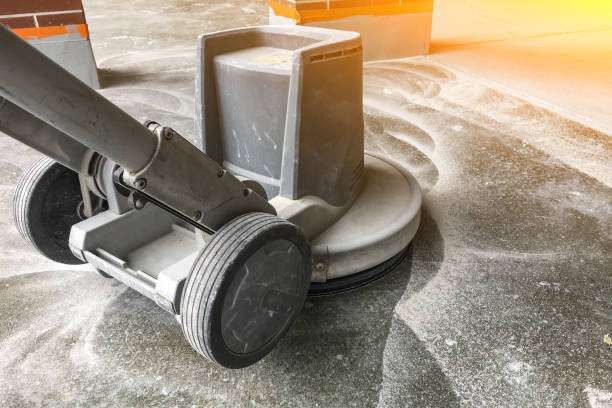
Concrete grinding is then performed using diamond tooling. The grinding stage refines the surface and can determine how much aggregate is exposed. The required depth depends on the desired appearance and the characteristics of the existing slab.
Once the required grinding has been completed, progressively finer abrasives are used for honing and polishing. This refines the surface and develops the selected level of sheen.
Additional treatments may form part of the system depending on the project’s requirements. The final process should be established according to the concrete condition, intended use, traffic levels, and desired finish.
What Should Businesses Know About Existing Concrete?
The condition of an existing slab can significantly influence both the project scope and the final appearance. Polishing does not completely conceal the characteristics of the underlying concrete. Instead, the process can reveal and refine them.
Cracks and previous repairs should be identified during the assessment. While some imperfections can be repaired or improved, the final appearance may still show variations depending on the condition of the slab.
Existing coatings can also affect preparation requirements. Adhesives, paint, sealers, or other surface treatments may need to be removed before polishing can proceed effectively.
Surface contamination is another consideration. Oil, chemicals, dirt, or other substances that have penetrated the concrete may require specific preparation.
Level variations can affect the amount of grinding required, while moisture conditions may also need to be assessed depending on the property and flooring requirements.
For this reason, businesses should avoid assuming that every concrete floor will require the same preparation process. A proper site inspection provides a more realistic understanding of what is involved.
Which Finish Is Best for a Commercial Environment?
There is no single polished concrete finish that is appropriate for every commercial property. The right choice should balance appearance, traffic, maintenance, safety, and practical use.
Aggregate exposure is one of the main visual considerations. Minimal exposure provides a relatively subtle concrete appearance, while deeper grinding can reveal more of the aggregate within the slab.
Gloss level also affects the character of the finished floor. Matte and satin finishes provide a more restrained appearance, while higher-gloss surfaces create stronger light reflection.
Commercial spaces with substantial foot traffic should consider how the selected finish will look between cleaning cycles. Dust, grit, traffic paths, and spills may be more noticeable on certain high-sheen surfaces.
Surface texture and slip considerations should also be evaluated according to the intended application. A finish should not be selected based solely on appearance when the floor will be exposed to moisture or demanding traffic conditions.
Businesses should discuss their operational requirements with the polishing professional before selecting the final finish. The best specification is one that supports the way the space will actually be used.
How Can Polished Concrete Support Commercial Maintenance?
Commercial floors need predictable maintenance routines. A polished concrete surface can be relatively straightforward to care for when an appropriate system has been selected and a suitable maintenance plan is followed.
Routine dust and debris removal is important because grit can act as an abrasive under repeated foot traffic. Regular sweeping or suitable mechanical cleaning can help reduce the accumulation of abrasive particles.
Damp mopping can help remove surface contamination, while spills should be addressed promptly. Cleaning products should be compatible with the flooring system rather than selected solely for their general cleaning strength.
Businesses should also consider areas that receive concentrated traffic. Entryways, corridors, checkout areas, and other frequently used paths may require more frequent cleaning than lower-traffic sections.
A practical maintenance schedule should be established after installation. The frequency of cleaning and periodic maintenance can then be adjusted according to the property’s actual use.
What Safety Factors Should Be Considered?
Commercial flooring needs to support safe movement as well as visual and functional requirements. Slip resistance should therefore form part of the flooring discussion, particularly in areas where moisture may be present.
The selected finish, surface texture, cleaning procedures, traffic levels, and environmental conditions can all influence how a floor performs.
Wet entry points, service areas, food-related environments, and spaces exposed to outdoor moisture may require additional consideration. The appropriate finish should be selected according to the specific conditions rather than applying the same specification throughout every part of a property without assessment.
Cleaning also plays a role in floor safety. Accumulated spills, dust, grease, or other contaminants can change surface conditions. A suitable cleaning routine should therefore be treated as part of the overall flooring management strategy.
Where safety requirements are particularly important, businesses should obtain professional advice regarding the appropriate flooring specification and relevant standards for the application.
How Should Businesses Compare Concrete Polishing Contractors?
Choosing a contractor should involve more than comparing the lowest quotation. Commercial polishing requires appropriate equipment, preparation techniques, project planning, and quality control.
Start by considering experience with commercial projects that have similar requirements. Ask how the contractor assesses existing concrete and how potential challenges are identified before work begins.
The scope of work should clearly explain preparation, grinding, polishing, repairs, finishing, and any additional treatments. It should also establish what finish has been agreed upon.
Project scheduling is particularly important for businesses. Work may need to be coordinated around staff, customers, other trades, operating hours, or staged access to different parts of the property.
Quality assurance should also be discussed. Businesses can ask how the finished surface will be inspected and how variations or unexpected slab conditions will be managed.
Allure Concrete Solutions provides commercial concrete polishing services with consideration given to existing slab conditions, project requirements, finish selection, site logistics, and commercial use. A clear assessment and project scope can help businesses understand the proposed flooring process before work begins.
For more information about flooring services, visit Allure Concrete Solutions.
What Should Be Included in the Project Plan?
A commercial polishing project should have a clearly defined plan before work starts. This helps the business understand what will happen on site and what is expected from both the contractor and property team.
Surface preparation and repair requirements should be documented, along with the selected aggregate exposure and gloss level. The work schedule should identify expected stages and any requirements relating to access.
Businesses should also discuss dust and site management, particularly where other areas of the property remain operational. Appropriate protection and work-zone management can help minimise disruption.
The final inspection should confirm that the agreed scope has been completed. Maintenance instructions should also be provided so the property team understands how to clean and care for the finished floor.
A clear plan can reduce uncertainty and provide a stronger basis for evaluating the completed project. If you are assessing polished concrete for a commercial property, you can contact the team to discuss your project requirements.
Frequently Asked Questions About Concrete Polishing in Brisbane South
Is polished concrete suitable for high-traffic businesses?
Polished concrete can be suitable for many high-traffic commercial environments when the surface preparation, polishing system, and finish are selected according to the property’s requirements. Traffic levels and maintenance expectations should be assessed before choosing the specification.
Can existing commercial concrete be polished?
Yes, existing concrete can often be mechanically polished. However, the condition of the slab, existing coatings, cracks, repairs, contamination, level variations, and other factors can influence the preparation required and the final appearance.
How long does commercial concrete polishing take?
The timeframe varies according to floor area, slab condition, preparation requirements, selected finish, access, and project complexity. Commercial projects may also require staging around business operations or other trades. A site assessment is needed to establish a realistic schedule.
Does polished concrete require ongoing maintenance?
Yes. Although polished concrete can have relatively straightforward maintenance requirements, routine cleaning is still important. Dust, grit, spills, and other contaminants should be managed regularly to help maintain the surface appearance and performance.
What affects the cost of commercial concrete polishing?
Cost can depend on floor size, concrete condition, preparation, repairs, aggregate exposure, gloss level, access, site conditions, and project scheduling. Comparing quotations based only on the final price can overlook differences in preparation and scope.
