
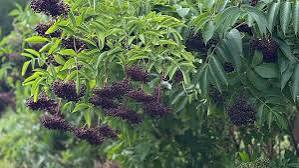
Everyone knows elderberry: The dark purple syrup that appears every autumn on pharmacy shelves, wellness blogs, and Instagram feeds. What most people don’t know is that the flower from the same plant has a longer, richer, and arguably more interesting history in European herbalism. The berries get the marketing, while the flowers built the reputation.
Sambucus nigra is a fast-growing deciduous shrub native to Europe, Northern Africa, and Western Asia. This article is for anyone who has spent years walking past the flowers to get to the fruit.
The Plant That Predates Most Herbal Traditions
The name “elder” likely derives from the Anglo-Saxon word æld, meaning fire, because the hollow stems of young branches were used to blow air into flames. In 1644, a book devoted entirely to the elder plant ran to 230 pages and went through multiple editions, and this is a level of dedicated documentation rare for any single herb of that era.
What the Flower Actually Contains
The key constituents of the Sambucus nigra flower are flavonoids, specifically isoquercetin, hyperoside, and rutin, alongside phenolic acids including chlorogenic acid, triterpenes, and a small quantity of essential oil. The British Pharmacopoeia requires not less than 0.8% flavonoids expressed as isoquercitroside in dried elderflower. This is a formal quality standard that reflects the flower’s long-standing in European pharmaceutical tradition.
Rutin, one of the principal flavonoids in the flower, is associated with capillary support. It may help maintain the flexibility of blood vessel walls and reduce the permeability that allows plasma to leak into surrounding tissue. The flower is classified in traditional European herbalism as diaphoretic, mildly diuretic, and anti-catarrhal. In Germany, elderflowers have been used as a standard diaphoretic agent for feverish colds,
A warm infusion of the flowers was the traditional preparation for fevers and respiratory congestion, while a cold infusion was used as a gentle diuretic.
Why the Flower Got Overshadowed
The commercial rise of elderberry syrup in the early 2000s pulled nearly all consumer attention toward the berry. The berry is easier to standardize, easier to brand, and easier to explain in a single sentence: “immune support.”
The flower’s traditional uses are more nuanced: Respiratory, circulatory, diaphoretic — and harder to reduce to a tagline. That nuance is precisely what makes it more interesting to anyone who actually studies botanical medicine rather than reads supplement packaging.
Hawaii Pharm’s elderflower extract uses dried Sambucus nigra flowers sourced from Hungary, extracted in a vegetable glycerin and water base. Hungary is one of the primary growing regions for commercial elderflower in Europe, which matters for botanical quality.
Takeaways
The berry has a well-documented place in herbal tradition and genuine research behind it. But reducing Sambucus nigra to its berries is like reading only the last chapter of a very long book. The flower blooms earlier, carries a distinct compound profile, has its own pharmacopeial standard, and occupied European herbalism for centuries before anyone thought to bottle the fruit. If you’ve only ever tried the syrup, the flower is worth getting to know.
