
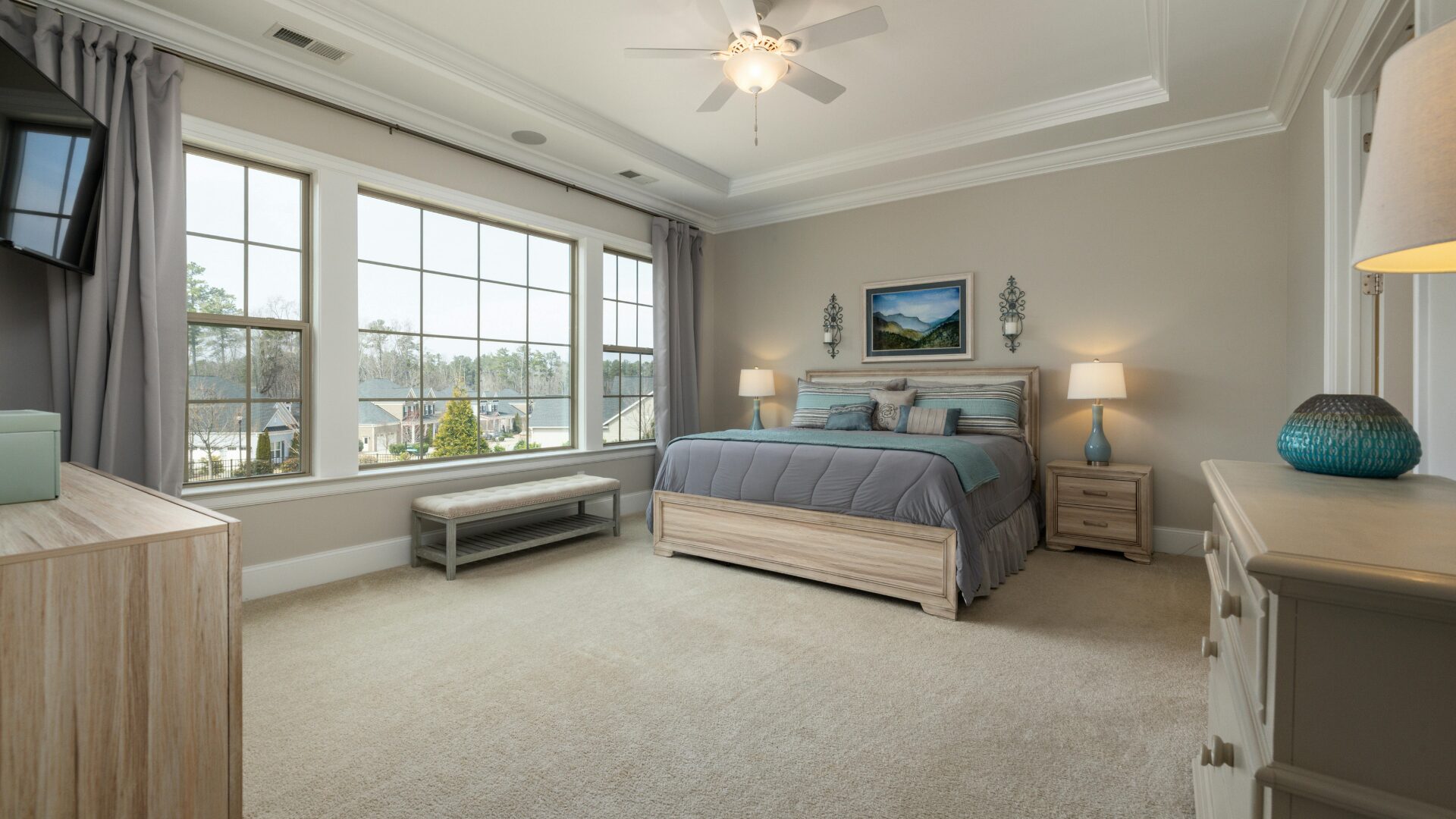
Let’s kill a myth right now: your bedroom furniture doesn’t have to match. Never did, actually. That outdated thinking gave us decades of stiff, soulless rooms that looked like every mid-range hotel you’ve ever forgotten. The real magic? Mix and match bedroom furniture gives you spaces that feel lived in, layered, and unmistakably yours. Whether you’re building a room from scratch or trying to make sense of what you’ve already got, these five tips will help you pull it all together without losing your mind or your budget.
Here’s something worth knowing: eclectic interiors actually correlate with higher reported well-being at home, because when you personally connect with each object in a space, it creates real emotional resonance. That’s not just a design trend. That’s a lifestyle upgrade.
Tip 1: Lead with a Statement Piece. Everything Builds from There
Every great mixed room has one thing in common: a hero piece. That’s your anchor. And figuring out how to mix bedroom furniture really does begin here, before you buy anything else, before you paint a wall. Before you dive in, it helps to browse a range of bedroom furniture sets, not to buy a whole set, but to scout standout individual pieces that could earn a place in your mix. Think of it as cherry-picking the best of each collection rather than accepting a room that looks like it came packaged together.
Pick the Piece You Actually Love Most
Your anchor could be an upholstered headboard with some serious personality, a vintage dresser with gorgeous proportions, or a sculptural bed frame that stops you mid-scroll when you see it online. Whatever it is, it should genuinely excite you. Not “it’s fine.” Excited.
Let It Do the Talking
Once you’ve got that piece, treat it like a creative brief. Its finish, tone, and material become your visual reference for everything that follows. Warm walnut bed frame? Pull warm undertones into your nightstand choices, your lamp bases, and your throw blanket. Let the anchor speak, and everything else becomes a response to it.
Center it prominently, usually against your main wall, so it leads the room without shouting over everything else around it.
Tip 2: Build a Furniture Scheme, Not a Matching Set
Here’s a reframe that changes everything: instead of hunting for a matching set, build a scheme. It’s the same principle designers use with color, not rigid rules, just intelligent guidelines that keep your choices feeling intentional even when they come from completely different places.
Answer These Before You Buy Anything
Light wood or dark? Matte metal or polished? Minimal lines or something with a bit more detail? A few minutes answering these questions honestly will save you hours of second-guessing later. Your answers become your filter. If a piece doesn’t fit, it doesn’t belong.
Cohesion Comes from Shared DNA
Your pieces don’t need to be twins. They just need to share something, a metal finish on the drawer pulls, a similar visual weight, or a consistent scale. That one shared trait is often enough to make wildly different pieces feel like they belong together.
Tip 3: Contrast Is the Point Balance Color, Texture, and Material
Now we’re getting into the fun part. Good mix and match bedroom furniture isn’t about making everything look alike. It’s about making different things work together, and contrast is your most powerful tool for doing that.
Mix at Least Three Materials
Wood, metal, rattan, and linen each bring something distinct to the table. And the pros are clearly on board with this approach. A recent survey by the American Society of Interior Designers found that over 65% of respondents planned to mix and match furniture styles in their upcoming projects. When the majority of designers are doing something, it’s worth paying attention.
Repeat, Don’t Just Scatter
The trick isn’t just introducing three materials; it’s echoing at least two of them throughout the room. Wood bed frame? Bring in another warm wood tone somewhere. Metal floor lamp? Repeat that finish on your curtain rod or picture frames. That repetition is what transforms a room from “random” to “intentional.”
Without a solid color strategy backing all of this up, even beautifully chosen pieces can start feeling chaotic.
Tip 4: Use Color as the Great Unifier
Out of all the mix bedroom furniture tips out there, this one is the most underutilized and the most powerful. Color can tie together pieces that have almost nothing else in common, as long as you’re deliberate about how you use it.
Keep Your Larger Pieces Neutral
Gray, cream, warm white, charcoal; these aren’t boring. On your bigger items, bed frame, dresser, and wardrobe, they’re strategic. Neutral large pieces create a calm foundation that lets everything else breathe. No fighting, no chaos.
The 60-30-10 Rule Is Your Friend
You’ve probably heard this one, and it works. Sixty percent of your room is a dominant neutral, thirty percent in a secondary tone, and ten percent in an accent. That ten percent is where the personality lives: dusty blue, terracotta, forest green echoed deliberately across your smallest objects. A ceramic lamp base. A throw pillow. A small framed print.
Two or three accent colors maximum. Repeat them with purpose. That repetition is what makes a mixed room feel designed rather than assembled by accident.
Tip 5: Scale and Visual Weight Are Non-Negotiable
Some genuinely creative mismatched bedroom furniture ideas collapse simply because of proportion issues. A towering armoire beside a low platform bed creates a kind of visual friction that no color palette can smooth over. Scale matters more than people realize.
Keep Heights in a Reasonable Range
For nightstands, especially try to stay within two to four inches of your mattress top. When heights swing wildly, the room feels off-balance even if everything else checks out. It’s subtle, but your eye will catch it every time.
Embrace Intentional Asymmetry
Here’s a move that feels counterintuitive but works beautifully: use one floating shelf on one side of the bed and a larger bedside table on the other. Different sizes, same finish. That reads as intentional asymmetry rather than an oversight, and it adds both visual interest and real function at the same time.
Bonus Trend Tip: Add Vintage or Artisan Finds for Real Depth
One or two well-chosen vintage pieces can take a room from “nicely put together” to genuinely memorable. A thrifted mid-century dresser paired with a clean modern bed frame has a kind of layered, collected quality that catalog rooms simply can’t replicate.
Don’t Go Overboard, Though
One signature vintage find is the sweet spot. Maybe two. Push it further, and the room starts feeling more like an antique shop than a bedroom. A beautifully aged chest and a handcrafted wooden stool surprise you in the best way, especially when you update their hardware to tie them into your overall scheme.
Small Styling Moves That Make a Big Difference
Honestly, these details are what separate a finished room from a polished one. And almost none of them require buying anything substantial.
Swap all your drawer hardware across every piece to a single unified metal finish. This is wildly underrated. Mismatched hardware is often what’s making a room feel scattered, and you can fix it for under fifty bucks. Repeat your accent elements in pairs: two matching lamps, two framed prints in similar styles, two throw pillows in the same fabric. Pairs create visual rhythm and make everything feel deliberately chosen. Then use small decorative objects, such as a ceramic bowl, a woven basket, in shared tones or materials to act as quiet bridges between pieces that don’t otherwise connect.
Frequently Asked Questions
What if my furniture feels mismatched, but I can’t replace anything?
Unify all the hardware to one metal finish, then add accessories in two repeated accent colors. You’ll be genuinely surprised by how connected everything starts to feel without touching the furniture itself.
Can I mix warm-toned and cool-toned woods?
You can, but it requires care. Try to lean into one temperature family, warm with warm, cool with cool. Intentional cross-temperature contrast can work, but only when other elements are doing real balancing work around it.
How many styles is too many in one bedroom?
One dominant style, one secondary, one accent. That three-layer structure gives a room personality and depth without tipping into visual noise.
Does bedding need to match the furniture?
Nope. Bedding’s real job is color cohesion; it should support your anchor piece and reinforce your palette, not mimic the material of your dresser.
Is mixing furniture from different eras actually a good idea?
Absolutely, when you’ve got a clear scheme and shared design elements guiding everything, blending eras creates exactly the kind of personal, layered character that makes a room feel real.
Bringing It All Together
Here’s the honest truth: mixing bedroom furniture isn’t just a trend you’re watching from the sidelines. It’s a smarter, more personal, and often more affordable way to create a space that actually reflects who you are.
Start with a bold anchor piece, define your furniture scheme, layer in contrasting textures and materials, unify everything with a deliberate color palette, and keep your proportions in check. Then hunt down one vintage find, swap the hardware, and repeat your accents in pairs.
You don’t have to do all five things at once. Pick one. Start there. A bedroom that feels genuinely curated and completely yours is a lot closer than you think and honestly? It’s way more satisfying than anything that came boxed as a set.
