
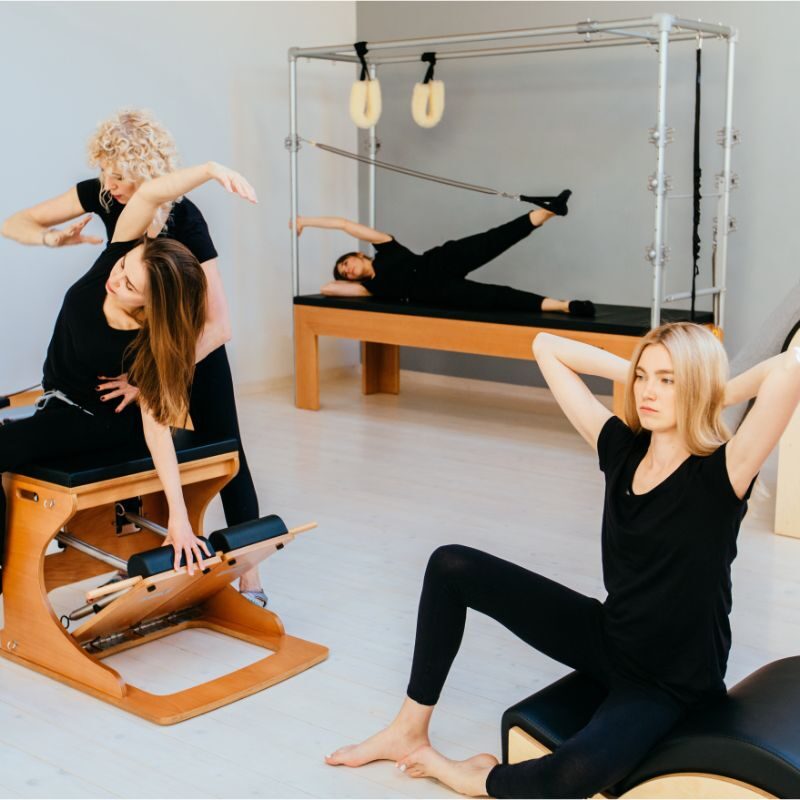
Walk into a Pilates studio for the first time, and you’ll see some strange-looking machines. With their sliding beds, springs, and straps, it can feel a little confusing. You just want to get stronger and more flexible, but where do you even start?
Let me make it simple for you. The only piece of Pilates exercise equipment you absolutely need to start is a good mat. That’s it. However, if you want to see faster results and really transform your body, the other machines (especially the Reformer) are where the magic happens.
For home practice, start with a mat and maybe a small prop or two. If you’re serious about investing in your health, the Reformer is the best all-in-one tool you can buy.
Do I Really Need All That Equipment?
This is always the first question people ask, and it’s a good one. The answer is no, you don’t need it to do Pilates. The original exercises were all designed to be done on a mat, using your own body weight for a tough workout. You can build amazing core strength with just a mat.
But the equipment, which the inventor Joseph Pilates designed himself, changes the game. In my experience, it helps you get more out of every movement.
The springs can either help you during a difficult exercise or add resistance to make you stronger. The machines guide your body into the right position, so you work the correct muscles and avoid injury.
The Main Pilates Equipment
Let’s break down the most common pieces of equipment.
The Pilates Mat: Where It All Begins
A Pilates mat is not a yoga mat. The most common mistake I see is people using a thin yoga mat for Pilates. A proper Pilates mat is much thicker to protect your spine and hips during rolling and floor exercises.
- What it’s for: All the foundational mat exercises that build your core strength.
- My Advice: Don’t go cheap on the mat. A good one makes exercises feel better and keeps you comfortable, which means you’ll stick with it.
The Reformer: The Famous Sliding Machine
The Reformer is that bed-like machine that slides back and forth. It has springs for resistance, straps for your hands and feet, and a bar to push off of. It’s the most popular piece of Pilates exercise equipment because it does everything.
- What it’s for: A full-body workout. It builds long, lean muscles and improves your flexibility, all without being hard on your joints.
- What Actually Works: If you buy a Reformer for your home, focus on quality. A smooth glide is everything, so it’s worth investing in a good one.
The Wunda Chair: The Secret Weapon for Balance
The Wunda Chair looks like a simple box with a pedal, but it is a beast for building strength. Because you’re often standing, kneeling, or balancing on one foot, it forces your core to work incredibly hard to keep you stable.
- What it’s for: Dramatically improving your balance and core stability. It’s also great for smaller spaces.
- My Take: The Chair shows you where you’re weakest, which is how you get stronger. It’s one of my favorite tools to help people build real-world strength.
Small Props: The Little Extras That Go a Long Way
These are smaller, cheaper items that add a little extra challenge and variety.
- The Magic Circle: A simple ring you squeeze between your hands or legs. It’s amazing for toning your inner thighs, arms, and hips.
- Light Weights: Usually 1-3 lb dumbbells to add a little arm work.
- Foam Roller: Perfect for exercises that help you move your spine, or just for rolling out tight muscles after a workout.
So, What Should a Beginner Buy?
Feeling overwhelmed? Don’t be. Here’s a simple plan. And you’re not alone in getting started. Pilates is more popular than ever. Here is your simple, two-step buying plan:
Step 1 (Start Here)
- A good, thick Pilates mat.
- A Magic Circle. For less than $100, these two items will give you a fantastic workout.
Step 2 (If You Get Serious)
- A quality Reformer. This is a big purchase, but it’s a machine that can truly give you a full-body workout for life.
Conclusion
The best Pilates equipment is the equipment you will actually use. Start with a mat, learn the basics, and feel your body start to change. From there, you can decide if you want to take the next step.
The goal is to feel stronger in your everyday life. Start simple, stay consistent, and you will be amazed at what your body can do.
