
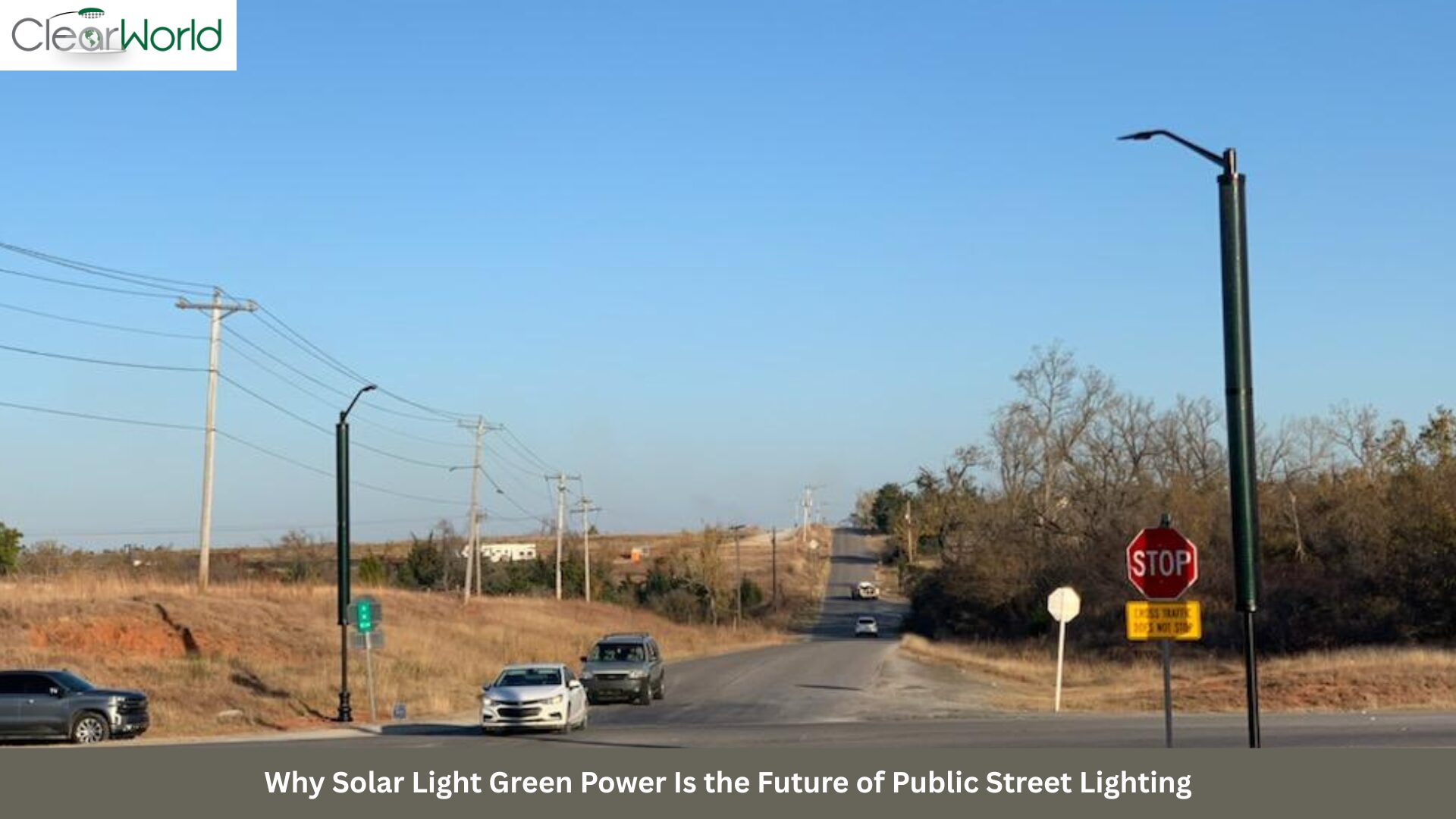
Why do so many public works budgets keep bleeding money into streetlights that fail exactly when a storm knocks out the grid? It’s a familiar cycle: a blackout hits, the lights go dark, crews get dispatched, and the bill for repairs lands on a desk that’s already stretched thin. Solar Light Green Power offers a way out of that cycle. Instead of pulling electricity from an already strained grid, it generates power on-site from sunlight, so the lights keep working precisely when the grid cannot be trusted to.
In practice, this means outdoor lighting systems built around solar panels, battery storage, and LED fixtures that never touch the traditional wiring at all. Sunlight gets captured during the day, held in advanced batteries, and released as steady light through the night, storms or no storms. That’s the core idea behind green power, and it’s worth understanding in more detail: how it supports green energy goals, how it stacks up financially against conventional grid lighting, and what it actually does for a city’s carbon footprint. Each of those questions gets answered below.
How does solar lighting support green energy goals?
The case for solar light green power starts with a hard truth: the grid is aging, expensive to maintain, and vulnerable to the exact weather events that are becoming more common. Solar-powered lighting sidesteps all of that by making its own electricity, with no fossil fuels burned and no emissions released during operation. For anyone chasing ESG or LEED targets, that’s not a vague promise; it’s a number that can actually be reported. Here’s what makes it work.
Sunlight converts directly into electricity.
Panels mounted on each fixture absorb daylight and turn it into current on the spot. Nothing is burned, nothing is piped in, nothing depends on an outside source. That simplicity is what makes the system dependable in almost any location with reasonable sun exposure.
Batteries store energy for nighttime.
Lithium-ion batteries hold what’s captured during the day and release it gradually once the sun sets, carrying the system through cloudy stretches without a flicker. Even a run of overcast days rarely leaves a well-sized system short on stored power.
Zero emissions during daily operation.
No combustion, no smokestack, no tailpipe. Once installed, the system simply runs clean for as long as it’s in service. That’s a meaningful difference from grid power, which still carries the emissions of whatever fuel mix generated it.
Reduces dependence on fossil fuels.
Every fixture powered this way is one less draw on a grid still leaning on coal or gas. Multiply that across a city’s lighting network, and the shift in the energy mix becomes real. Over time, that shift also lowers a city’s exposure to fuel-price swings tied to fossil energy markets.
Is Solar Light Green Power a better long-term investment than grid lighting?
Cost tends to be the question that decides everything else. Grid-powered lighting looks simple on paper, but it comes bundled with monthly utility bills, trenching for cable runs, and maintenance calls triggered by wiring that degrades with age. Solar street lighting cuts several of those costs out from the start, and the savings only grow the longer the system stays in service. Here’s where the numbers actually come from.
No trenching or wiring costs. Self-contained fixtures don’t need cable runs dug into the ground, which removes a major line item, especially in locations that are hard to access in the first place. That saved labor and material costs saved can be redirected toward more fixtures or faster project rollout.
Eliminates monthly electricity bills.
Once it’s up and running, the system pulls nothing from the utility company. Over ten or twenty years, that’s a cost that simply disappears from the budget. For a department managing dozens or hundreds of fixtures, that adds up to a predictable, permanent reduction in operating expenses.
Fewer maintenance callouts over time.
Sealed components and long-life LEDs mean fewer technician visits and less exposure to the weather-related wiring failures that plague buried cable systems. Fewer callouts also mean fewer disruptions to traffic and foot flow around each repair site.
Functions reliably during power outages.
Because each fixture makes and stores its own power, it keeps working when the grid around it does not, which matters most during storms or emergencies. That kind of uptime is hard to put a price on when public safety is on the line.
Higher upfront cost, longer payoff.
Installation does cost more at the outset than a standard grid-connected fixture. But between the eliminated bills and the lighter maintenance load, that gap usually closes well within the system’s working life. From that point forward, the system is effectively generating savings rather than accruing costs.
Can solar lighting reduce carbon emissions for public infrastructure?
Lighting is often one of the biggest ongoing energy draws in a municipal budget, and public infrastructure carries a real share of a city’s carbon footprint as a result. Bringing in solar light green power at scale cuts that footprint directly, since every fixture generates its own clean electricity instead of pulling from a grid still partly running on fossil fuels. Here’s what that looks like in practice.
Removes reliance on fossil-fuel grids.
Each unit operates on its own, drawing nothing from power plants still burning coal or natural gas. That independence holds steady whether the grid nearby is stable or already stretched thin.
Cuts carbon output per fixture.
Multiply that across hundreds or thousands of streetlights, and the emissions avoided by one unit scale into something that shows up citywide. Over a full lighting network, that reduction becomes large enough to matter in a city’s official emissions reporting.
Scales easily across large infrastructures.
The same modular approach works for a single parking lot or an entire road network, without redesigning the grid underneath it. That flexibility makes it just as practical for a phased rollout as it is for a full-scale citywide retrofit.
Aligns with municipal climate action plans.
Cities across the country have set formal carbon-reduction targets, and lighting retrofits give them something trackable to point toward those goals. Each installed fixture becomes a documented step toward whatever benchmark the city has committed to publicly.
Strengthens community resilience during disruptions.
Beyond the emissions math, lighting that stays on during a storm keeps roads and sidewalks safer exactly when it counts. That reliability builds public trust in a way that a lower utility bill alone never quite does.
Conclusion
Aging grids, rising utility bills, and more frequent storms are pushing cities, campuses, and developers toward something more dependable. Solar Light Green Power meets that need directly, cutting emissions, lowering long-term costs, and keeping lights on no matter what the grid is doing. As sustainability requirements keep tightening, it’s a solution that already works and is one worth considering for the next infrastructure project.
