
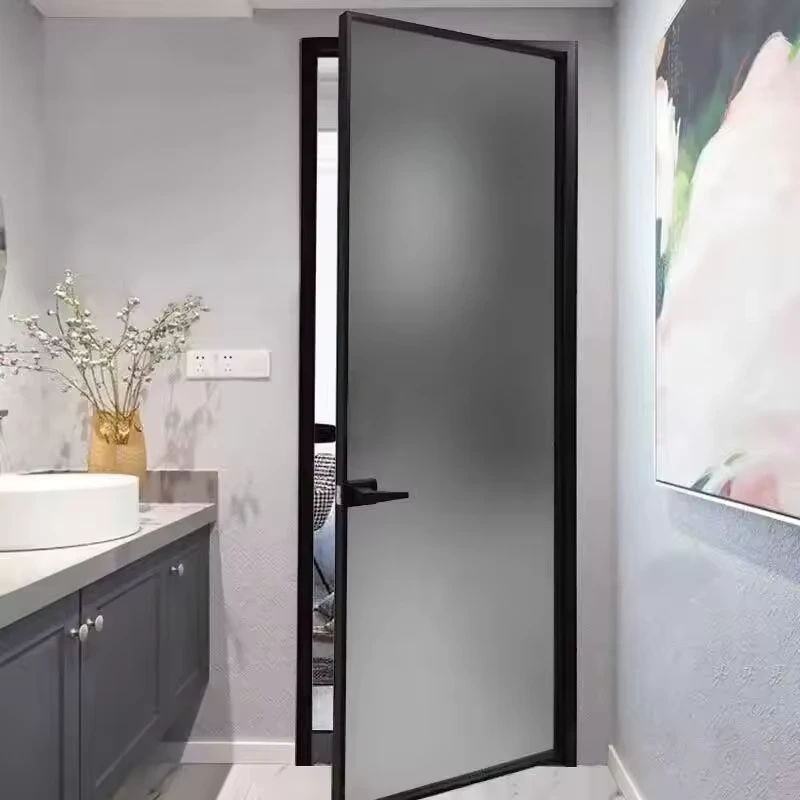
Bathrooms create one of the harshest environments inside any home. Constant steam, temperature fluctuations, and moisture can quickly damage the wrong interior door, causing swelling, peeling finishes, warped panels, and even mold growth. Choosing the right door from the beginning helps avoid expensive replacements while maintaining both appearance and functionality for many years.
If you’re looking for premium interior doors designed for modern homes, visit https://indigodoors.com/. The company offers a wide selection of contemporary interior doors with moisture-resistant finishes suitable for bathrooms and other demanding spaces. Their collection combines elegant design, durability, and reliable construction for long-term performance.
The biggest mistake homeowners make is assuming that every interior door can be installed in a bathroom. In reality, materials react very differently to moisture. While one door may remain perfectly stable after years of daily steam exposure, another can begin swelling within months.
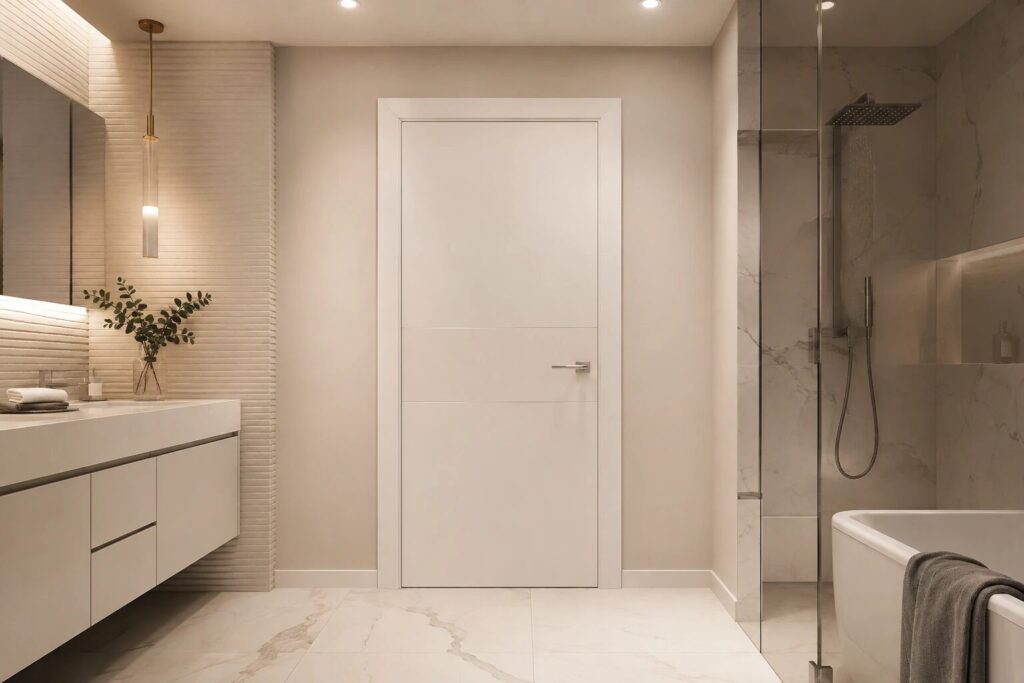
“The performance of a bathroom door depends far more on its material and edge protection than on its style or decorative finish.”
Manufacturers and industry specialists consistently emphasize that moisture resistance should be considered before appearance. Composite materials, fiberglass, engineered solid-core constructions, PVC, and properly protected eco veneer generally perform much better than untreated solid wood in humid environments.
Why humidity destroys ordinary interior doors
A bathroom experiences repeated cycles of warm steam followed by cooling. During every shower, moisture penetrates microscopic pores in finishing materials. Over time this process begins affecting the door itself.
Typical problems include swollen bottom edges, peeling veneer, cracked paint, warped frames, sticking locks, loose hinges, and mold developing inside porous materials. These issues rarely appear overnight. Instead, they gradually accumulate until the door no longer closes properly or begins looking noticeably worn.
Many homeowners believe the visible decorative coating provides complete protection. Unfortunately, even a small unsealed edge near the bottom or around the lockset may allow moisture to reach the core.
Comparison of the most popular bathroom door materials
| Material | Moisture Resistance | Durability | Maintenance | Recommended for Bathrooms |
| Fiberglass | Excellent | Excellent | Very Easy | ★★★★★ |
| WPC Composite | Excellent | Excellent | Very Easy | ★★★★★ |
| PVC | Excellent | Good | Very Easy | ★★★★☆ |
| Solid-Core Composite | Very Good | Excellent | Easy | ★★★★★ |
| Moisture-Resistant Eco Veneer | Very Good | Very Good | Easy | ★★★★☆ |
| Enamel-Coated Doors | Very Good | Very Good | Easy | ★★★★☆ |
| Solid Wood | Moderate | Excellent if maintained | High | ★★★☆☆ |
| Hollow-Core MDF | Poor | Low | Easy | ★☆☆☆☆ |
Industry guidance consistently recommends fiberglass, WPC, properly manufactured composite doors, and moisture-resistant engineered constructions for humid environments because they resist swelling far better than untreated wood or basic hollow-core products.
Fiberglass doors
Fiberglass has become one of the strongest performers in modern bathrooms.
Unlike natural wood, fiberglass does not absorb moisture. It remains dimensionally stable even after years of exposure to steam. It also resists dents, scratches, and daily cleaning products better than many traditional materials.
Another advantage is appearance. Modern fiberglass doors can realistically imitate painted wood while requiring almost no maintenance.
“A well-manufactured fiberglass door combines the appearance of premium wood with outstanding resistance to humidity, swelling, and daily wear.”
Although fiberglass often costs more initially, its long service life frequently makes it one of the best long-term investments.
WPC composite doors
Wood Plastic Composite, commonly called WPC, has become increasingly popular in modern construction.
Rather than relying on natural wood fibers alone, these doors combine engineered materials that virtually eliminate water absorption. This makes them especially suitable for bathrooms with poor ventilation or frequent steam exposure.
Among their biggest advantages are:
- Complete resistance to rot.
- No swelling from humidity.
- Excellent dimensional stability.
- Mold resistance.
- Long service life with minimal maintenance.
Professional installers increasingly recommend WPC whenever long-term moisture exposure is expected.
Solid-core composite doors
Many homeowners mistakenly assume every composite door performs equally well. That is not true.
High-quality solid-core engineered doors offer outstanding stability, improved sound insulation, and excellent resistance to seasonal humidity changes. However, the quality of manufacturing is extremely important.
The protective finish must completely seal every edge, lock opening, and hardware cutout. Poor sealing allows moisture to penetrate even premium materials.
Experts also note that solid-core doors provide significantly better privacy because they reduce sound transmission compared with hollow-core models.
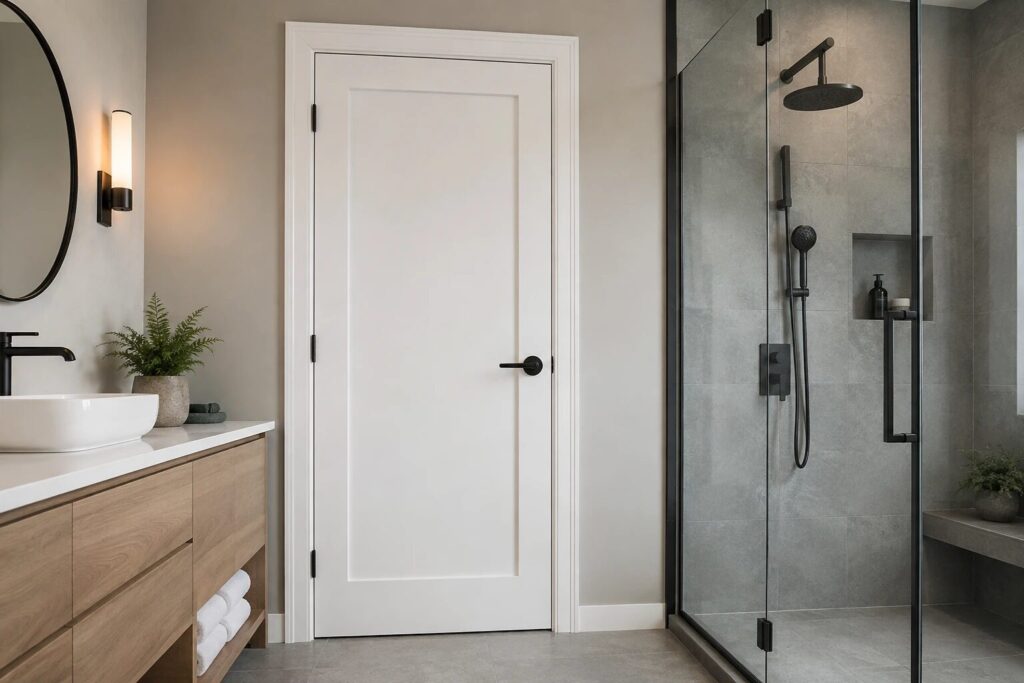
Eco veneer and enamel finishes
Modern eco veneer has improved dramatically over the past decade.
Premium manufacturers use advanced coatings that resist moisture surprisingly well while reproducing realistic wood textures. When combined with quality engineered cores, these doors perform successfully in most residential bathrooms.
Enamel-coated doors offer another excellent option. Their smooth protective coating creates an effective moisture barrier while remaining easy to clean and resistant to household chemicals.
These finishes are especially attractive for contemporary interiors because they provide clean, minimalist surfaces available in hundreds of colors.
“Even the best finish cannot compensate for poor manufacturing. Proper sealing around every edge remains essential for long-term durability.”
Should you choose solid wood?
Natural wood remains one of the most beautiful materials available.
However, beauty alone should not determine the purchase.
Real wood naturally expands and contracts as humidity changes. In bathrooms with limited ventilation, this movement can eventually produce cracks, sticking doors, or slight warping unless the door receives regular maintenance and professional sealing.
Solid wood may still perform well in luxury homes with excellent climate control and proper finishing, but it generally requires more attention than engineered alternatives.
Materials that should generally be avoided
Although budget doors may appear attractive in a showroom, some constructions simply are not designed for bathrooms with heavy moisture.
- Hollow-core doors without moisture protection.
- Standard untreated MDF.
- Poorly sealed veneer doors.
- Low-quality laminated products with exposed edges.
- Cheap doors using unprotected particleboard cores.
Most premature failures begin where moisture reaches exposed edges rather than the visible face of the door itself.
Don’t overlook the frame and hardware
Many buyers spend considerable time selecting the door slab while paying little attention to the frame.
This is a costly mistake.
Even the most moisture-resistant door may perform poorly if installed inside a low-quality frame that absorbs humidity.
Choose frames with engineered moisture-resistant construction and ensure all exposed surfaces receive proper finishing. Stainless steel hinges, corrosion-resistant screws, and quality lock mechanisms will also extend service life considerably.
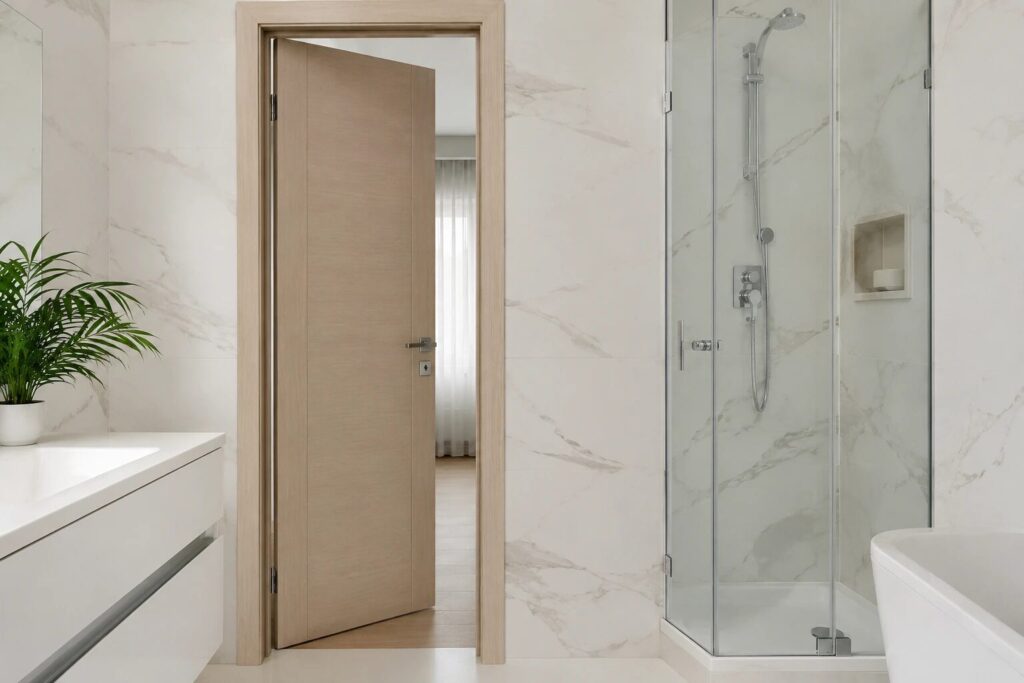
Professional installation is equally important because poor alignment often causes long-term problems that homeowners incorrectly blame on humidity.
Ventilation matters just as much as the door
No bathroom door can compensate for poor ventilation.
If steam remains trapped inside the room after every shower, moisture accumulates on every surface regardless of material quality.
Good bathroom ventilation should include an appropriately sized exhaust fan, adequate airflow under the door when required by local building practices, and regular removal of excess moisture after showering.
Improving ventilation may extend the life of both the door and the entire bathroom.
Expert recommendation
After reviewing manufacturer guidance, construction practices, and material performance, one conclusion becomes very clear.
For most homeowners, the best balance of durability, appearance, maintenance, and long-term value comes from high-quality solid-core composite doors finished with moisture-resistant eco veneer or enamel. These products offer excellent stability while fitting nearly every interior style.
Where humidity is especially high or bathrooms have limited ventilation, fiberglass and WPC doors provide the highest level of protection and the longest expected lifespan.
Solid wood remains a premium aesthetic choice, but it should only be selected when buyers understand the additional maintenance it requires.
Ultimately, choosing a bathroom door is not about following trends. It is about selecting materials engineered to withstand years of moisture while continuing to look as attractive as the day they were installed. A well-built, properly sealed, professionally installed door will deliver reliable performance for many years, making it a far better investment than replacing a cheaper alternative every few seasons.
