
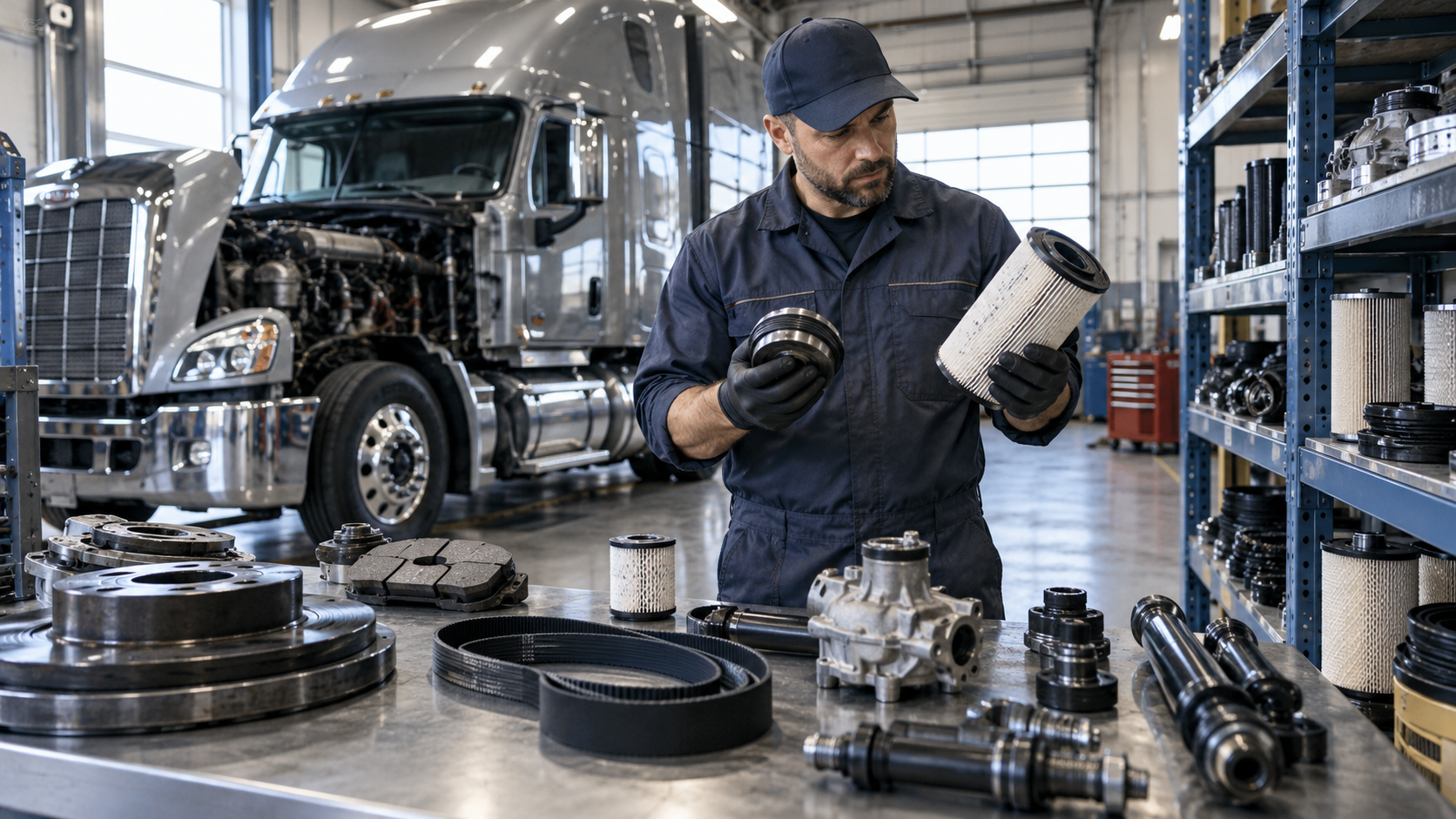
The wrong part can do more than drain your wallet. It can sideline a loaded truck, delay a route, frustrate a driver, and turn a simple repair into a long afternoon no one asked for. If you own trucks, manage a fleet, or run a repair shop, heavy-duty truck parts are tied directly to safety, uptime, braking, handling, fuel economy, and profit. Smartly choosing truck parts is not about buying the fanciest option every time. It is about knowing what fits, what lasts, and what makes sense for the work your truck actually does. Combined parts and labor costs fell 1.3% in Q4 2025, which is a useful reminder that smarter buying decisions can make a real difference over time. The best truck parts for heavy-duty use also make heavy-duty truck maintenance easier to plan, which keeps budgets calmer and trucks earning instead of waiting.
Essential Factors for Selecting Reliable Heavy-Duty Truck Parts
After you know the performance standards you need, it helps to look at where the parts market is going. When you want better value on semi truck parts, before you even talk price, start with the boring stuff that saves you headaches: fit, quality, supplier trust, and documentation.
OEM vs. Aftermarket
OEM parts are built to match the original factory specifications, so fitment and warranty support are usually strong. Aftermarket parts can be a good choice too, especially when cost matters or when a reputable brand offers equal or better performance. The right call depends on how the truck is used, how critical the component is, and what kind of warranty protection you need.
Certifications, Warranties, and Fitment
A dependable supplier should help confirm the details before the truck is already pulled apart in the bay. If you are comparing parts for a semi truck, do not guess on compatibility. Warranty terms, part numbers, axle ratings, engine family, and make-model matching all matter. One tiny mismatch can turn into a very expensive “well, that’s annoying” moment.
Once the basics are confirmed, the next question is simple: can the part survive real work?
Performance Criteria for Best Truck Parts for Heavy-Duty Operations
Fitment gets the part on the truck. Performance keeps it there. A component that behaves nicely in light-duty service may not hold up under heavy loads, heat, vibration, long routes, stop-and-go deliveries, or rough jobsite conditions.
Durability Comes First
The best truck parts for heavy-duty jobs are made from quality materials and backed by proper testing. Look for clean machining, solid construction, corrosion resistance, and proven performance in demanding applications. Cheap parts can look tempting on the invoice, but downtime has a way of making “cheap” feel painfully expensive.
Total Cost Beats Sticker Price
A low price does not automatically mean a good deal. You have to think about service life, labor time, related wear, replacement frequency, and even fuel impact. If a bargain part fails early and forces a second repair, you did not save money. You bought the same problem twice.
Strong performance still matters, of course. But technology is changing what a “good” truck part can do.
Advanced Technology Trends in Heavy-Duty Truck Parts
Today’s trucks are more connected, more sensor-driven, and more sensitive to the quality of replacement components than many older models.
Smart Components and Sensors
Modern parts can help report heat, pressure, wear, and fault data before a failure leaves you stranded. That is great when it works. But it also means quality matters even more. Sensors in exhaust emission control systems break sooner than expected, lasting less than half as long as managers expected.
Fuel and Emissions Upgrades
Engine, exhaust, and drivetrain components now influence more than raw performance. They can affect fuel spending, emissions compliance, and inspection outcomes. So when you choose the best truck parts for heavy-duty fleets, judge them by more than the box they come in. Look at service data, regulations, supplier support, and how the part performs under your specific workload.
Technology helps, but let’s be honest: inspections still catch a lot of problems before software does.
Key Areas to Inspect for Optimal Heavy-Duty Truck Maintenance
Knowing what parts are capable of is useful. Still, your maintenance plan only works if your team regularly checks the systems that take the hardest beating. This is where heavy-duty truck maintenance becomes practical instead of theoretical.
Brakes, Suspension, and Steering
Brake pads, drums, shocks, bushings, tie rods, and steering components work hard every mile. They deal with weight, vibration, weather, and driver habits. Uneven wear, looseness, pulling, grinding, clunking, or odd steering feel should never be brushed off. These are safety systems, not “we’ll get to it someday” items.
Lighting, Mirrors, Cameras, and Compliance
Visibility parts are safety parts. Full stop. Lights, mirrors, cameras, and related wiring deserve regular checks because drivers rely on them constantly. Emissions parts also need close review, since state and regional rules can affect which replacements are acceptable.
Once your inspection priorities are clear, the next challenge is controlling cost without cutting corners.
Insider Tips for Saving Money and Maximizing Value on Semi Truck Parts
Buying gets much easier when you know the weak spots in your operation. The goal is not always to grab the cheapest item on the shelf. The goal is to buy the right part for the truck, the job, and the risk level.
New, Remanufactured, or Used?
New parts are usually the safest choice for high-risk systems and warranty-sensitive repairs. Remanufactured parts can be a smart option for components like engines, starters, and alternators, especially when budgets are tight. Used parts may work for cab, trim, or non-critical needs, but inspect them carefully. Unknown wear history can be a sneaky little problem.
| Option | Best Use | Main Watchout |
| New | Safety and warranty-sensitive repairs | Higher upfront price |
| Remanufactured | Engines, starters, alternators | Core return rules |
| Used | Cab, trim, non-critical items | Unknown wear history |
Discounts, Rebates, and Vendor Support
If you are trying to learn how to select the best semi truck parts on a limited budget, ask about fleet pricing, rebates, core credits, and in-stock availability. A strong supplier does more than sell you a box. They help you avoid delays, confirm fitment, and keep repairs moving. That kind of support saves money in a way a cheap part never can.
Savings are good. Shortcuts that create repeat repairs? Not so much.
Mistakes to Avoid When Choosing Truck Parts
Even experienced buyers can make bad calls when a truck is down, and everyone wants it fixed yesterday. Pressure is real. But the most expensive mistake is assuming “close enough” will work.
Red Flags in Sourcing
Watch out for vague listings, missing part numbers, weak return policies, and sellers who cannot verify fitment. Be especially careful with prices that seem wildly low compared with the market. Good truck part shopping means slowing down just enough to check the essentials before money changes hands.
Real Customer-Style Lessons
One shop saved a little on bargain brake parts, then lost far more when uneven wear forced the job to be redone. Another buyer ordered the right part category but the wrong axle spec, turning a routine repair into a scheduling mess. Painful? Yes. Avoidable? Also yes.
Better tools and better habits make those mistakes much less likely.
Recommended Resources and Tools for Heavy-Duty Truck Parts Selection
If you want fewer surprises, do not rely on memory alone. Even skilled mechanics double-check details, because modern trucks have too many variations for guesswork.
Catalogs and Cross-Reference Tools
Use VIN-based catalogs, manufacturer diagrams, and cross-reference databases before placing an order. These tools help confirm fitment, identify superseded part numbers, and reduce the risk of ordering something that looks right but does not belong on your truck.
Peer Reviews and Fleet Apps
Mechanic forums, fleet groups, and inventory apps can reveal repeat issues before they hit your shop. If other buyers keep seeing the same failure pattern, pay attention. Beltway-style support, with strong stock depth and fast fulfillment, is especially valuable when downtime is the enemy.
Good information helps. A repeatable process makes it stick.
Expert Checklist for How to Select Truck Parts the Right Way
Now bring the buying process into one routine your team can actually follow. Simple beats complicated, especially when the phones are ringing, and a truck needs to leave by morning.
Confirm Before You Order
Match the VIN, part number, axle rating, engine family, application, and warranty terms. For heavy-duty truck parts, small mismatches can create big problems fast. If anything feels unclear, call the supplier before ordering.
Install, Track, and Review
Record install dates, mileage, failure notes, brand names, and supplier details. Over time, those notes become gold. You will see which parts last, which vendors deliver, and which “deals” quietly drain the budget.
Final Thoughts on Choosing the Right Heavy-Duty Truck Parts
The right parts decision starts with fitment, proof, and real workload needs. From brakes and steering to emissions systems and smart sensors, every choice affects uptime, safety, and long-term cost. Use trusted catalogs, keep clean records, and do not let bargain pricing replace good judgment. When heavy-duty truck maintenance is tied to data, supplier support, and careful buying habits, your trucks stay safer, more dependable, and more profitable. The smartest repair is still the one you do not have to repeat.
Common Questions About Heavy-Duty Truck Parts
Real-world truck repair is not always neat. These quick answers cover common questions buyers often ask before spending money.
What is the most common frame design for heavy-duty trucks?
The ladder frame is the most common design because it is strong, simple, and easier to service. Its two long rails and crossmembers handle heavy loads well, which is why it is widely used in commercial trucks.
What’s the most reliable truck to buy?
Reliability depends on maintenance history, engine choice, parts support, and workload. Many buyers favor brands with strong dealer networks, proven diesel engines, and easy access to replacement parts, but a well-maintained truck usually beats a neglected famous name.
How do I verify the authenticity of parts online?
Buy from known suppliers, check part numbers, compare packaging, and confirm warranty terms before checkout. If a listing has blurry photos, strange pricing, or missing fitment details, call and verify before buying.
