
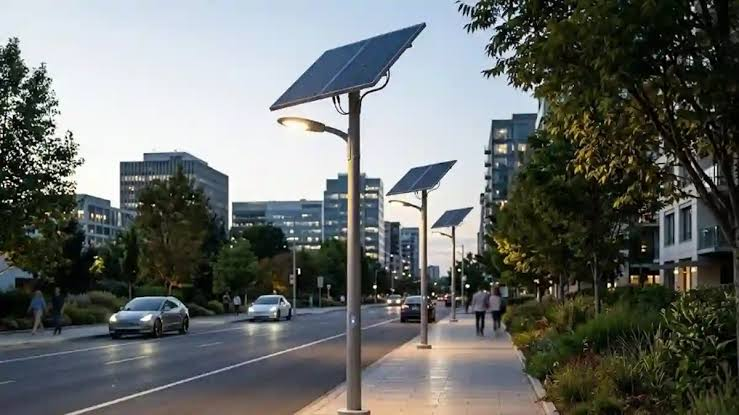
Digging up a working parking lot to run new electrical conduit is expensive, and it doesn’t stop there. Every trench means torn-up asphalt, a longer construction schedule, and tenants who aren’t happy about the noise or the closed spaces outside their storefronts. Solar Pole Lighting has become one answer to that problem, since it removes the wiring step from the equation entirely. It’s not a fit for every property, but for a growing number of commercial developments, it’s changing how lighting gets budgeted from the start, especially on sites where every week of downtime carries a real cost.
For asset managers and operations teams juggling multiple properties, this isn’t just a lighting decision; it’s a line item that touches construction costs, monthly operating expenses, and how much disruption tenants have to put up with during install. Getting that combination right can be the difference between a project that finishes on schedule and one that drags into a second phase of permitting and repairs, especially across a portfolio where every extra week of downtime adds up across several sites at once.
Commercial Properties Choose Solar Pole Lighting Over Trenched Wiring
Trenching is usually the most expensive part of any outdoor lighting project, not the pole or the fixture itself. Concrete cutting, conduit runs, and coordinating with a utility company all add weeks to a timeline and thousands of dollars to a budget before a single light turns on. Solar pole lighting skips that step because each unit generates and stores its own power, so there’s no cable to bury and no utility connection to schedule around.
For a shopping center or industrial park trying to keep a project on budget, that avoided cost often shows up before construction even starts, and it keeps showing up every time a future repair doesn’t require cutting into asphalt that was only recently repaved.
How Much Can Solar Pole Lighting Reduce Long-Term Operating Costs?
Upfront savings are only part of the picture. The bigger shift happens over the years a property actually operates.
Zero Utility Bills
A grid-tied lighting system comes with a monthly electric bill for as long as the lot stays open, and that cost climbs every time utility rates go up. A property that switches to solar pole lighting removes that expense entirely, turning a variable cost that finance teams have to forecast every year into one that simply doesn’t exist anymore.
Lower Maintenance Overhead
Underground wiring fails quietly, usually showing up as a flickering pole or a dead section of parking lot that someone has to dig up to diagnose. Standalone solar units sidestep that failure point altogether, since there’s no buried line to develop a fault in the first place. Maintenance mostly comes down to occasional panel cleaning and a battery check every few years, work that a single maintenance crew can usually handle across an entire property in an afternoon.
Fewer Insurance and Liability Concerns
Damaged conduit or exposed wiring after a storm can turn into a liability issue fast, especially in a parking lot full of tenants and customers. Since solar poles have nothing running underground, there’s no buried infrastructure to worry about after heavy rain, ground settling, or a stray piece of construction equipment nearby. That’s a smaller detail, but it’s one that risk managers tend to appreciate once it’s pointed out to them.
Can You Retrofit Existing Light Poles With Solar Pole Lighting?
This is often the question that decides whether a property moves forward at all. Replacing every pole across a large lot is a significant expense, and many property managers understandably want to know if there’s a way around it. In a growing number of cases, existing poles that are still structurally sound can be fitted with a solar retrofit kit rather than pulled out and replaced.
A vertical solar array wraps around the pole itself, paired with a battery and an LED fixture, which means the foundation and the pole stay exactly where they are. For a property manager trying to avoid a full teardown, that option can turn a multi-week replacement project into something closer to a weekend job, and it sidesteps the disposal cost of hauling away poles that were never actually broken to begin with.
How Does Solar Pole Lighting Speed Up Commercial Construction Timelines?
Construction delays cost money in more ways than one, especially when they keep parking spaces or storefronts closed longer than planned. This is where the timeline advantage becomes hard to ignore.
- No trenching means no waiting on permits tied to underground utility work
- Poles can be installed one section at a time without shutting down an entire lot
- There’s no dependency on a utility company’s own connection schedule
- Retrofitted poles can often be completed without closing more than a few parking spaces at once
- Tenant disruption drops significantly since crews aren’t cutting through active drive lanes
What Else Should Property Managers Weigh Before Committing to a Solar Setup?
Cost and timeline usually drive the initial decision, but a few other factors tend to matter just as much once a property actually moves forward.
Wind and Weather Ratings
Not every pole is engineered the same way, and a unit rated for a quiet suburban lot won’t necessarily hold up in an area that sees regular high winds or severe storms. It’s worth confirming the wind load rating on any pole before it goes into a coastal or storm-prone region.
Warranty Coverage on Batteries and Panels
Batteries and panels degrade slowly over time, and a shorter warranty on either component can turn into an unplanned expense years down the line. Asking for warranty terms upfront, rather than after installation, avoids a surprise repair bill later.
Reduced Exposure to Peak Demand Charges
Commercial utility accounts often carry demand charges tied to a property’s highest usage spike during the month. Removing outdoor lighting from that load entirely can quietly lower a bill in ways that don’t always show up as a single obvious line item.
Scalability Across a Portfolio
A single successful install on one property is useful proof, but the real value shows up when a lighting approach can be repeated across a dozen sites without reinventing the plan each time. Standardized poles make that kind of rollout simpler for teams managing several locations at once.
Support for Sustainability Reporting
Many commercial landlords now report on energy use as part of broader ESG commitments to lenders, investors, or corporate tenants. Off-grid lighting removes a measurable chunk of a property’s electricity consumption, which can make those reports a little easier to put together.
If you’re weighing Solar Pole Lighting against a traditional install for an upcoming project, it’s worth looking at how a retrofit or new installation has actually performed on a comparable commercial property before finalizing a budget.
