
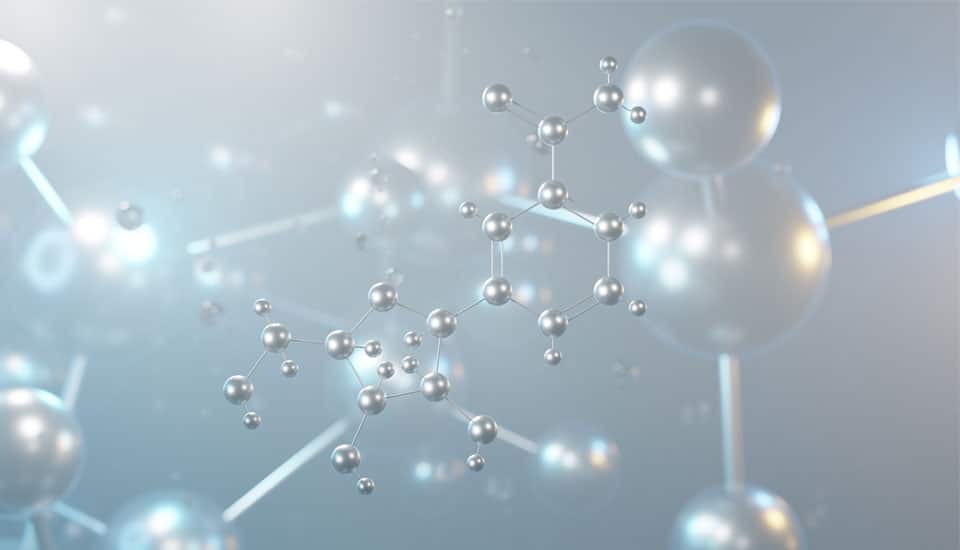
My neighbor Dana turned sixty in March, and the thing she mentioned over the fence was not her knees or her eyesight. It was the middle of the afternoon. Somewhere around two o’clock, she said, the lights dimmed, and no amount of coffee brought them back up. Her doctor ran the usual panel and found nothing wrong.
So she did what a lot of people do, which is start reading. Within a week her browser was full of tabs about mitochondria, and one molecule kept surfacing: nicotinamide riboside. It sounded technical enough to be serious and obscure enough to be suspicious, and she could not tell which.
That tension is worth sitting with, because the molecule is real, the biochemistry behind it is well described, and the marketing around it frequently runs ahead of the evidence. Understanding what nicotinamide riboside actually does inside a cell, and what the research has and has not shown, separates an informed choice from an expensive guess.
A Small Molecule in the Vitamin B3 Family
Nicotinamide riboside is a form of vitamin B3. It sits alongside nicotinic acid, nicotinamide, and the amino acid tryptophan as one of the dietary precursors the body uses to build nicotinamide adenine dinucleotide, better known as NAD+. The Linus Pauling Institute’s Micronutrient Information Center lays out that family clearly, which matters: this is a naturally occurring relative of a long-studied vitamin, not an exotic new compound.
Dietary amounts are small, nowhere near the quantities used in research, which is why supplemental forms exist at all. Companies such as Elysium Health build products around nicotinamide riboside precisely because ordinary eating does not deliver the doses studies have examined.
The NAD+ Connection and Cellular Energy
NAD+ is a coenzyme, a helper molecule that other proteins cannot work without. More than four hundred enzymes depend on NAD or its phosphorylated cousin NADP, and that list includes the machinery pulling energy out of food. When cells run short, many unrelated processes slow at once, which is part of why fatigue feels general rather than specific.
The path from nicotinamide riboside to NAD+ is short. Enzymes called nicotinamide riboside kinases convert it into nicotinamide mononucleotide, and a second family of enzymes finishes the job. Fewer steps can mean a more efficient route, and that efficiency is the core of the argument for the molecule.
Researchers have reported that NAD+ availability declines with age in a range of tissues, and that finding is what moved this compound out of biochemistry journals and into wellness conversations.
What the Human Studies Have Shown So Far
Human data exists, and it is more modest than the headlines suggest. A study in twelve healthy volunteers found that single doses of 100, 300, and 1,000 mg raised blood NAD+ safely. A randomized, placebo-controlled trial of 120 adults aged 60 to 80 tested 250 or 500 mg daily with pterostilbene for eight weeks and reported a favorable side effect profile.
Raising NAD+ in blood is a measurable, replicable result, and tolerating a dose well for eight weeks is reassuring. Neither shows that a person will age more slowly, recover faster, or stop hitting a wall at two in the afternoon. One more caveat: the Linus Pauling Institute discloses that its niacin update was funded by a company with a commercial stake in the molecule, so lean on that page for biochemistry, not efficacy.
The honest summary is that the mechanism is well characterized, short-term safety looks reasonable at studied doses, and long-term outcome data in humans remains thin.
Buying Supplements With Clear Eyes
If Dana decides to try it, the shelf is where things get slippery. The National Center for Complementary and Integrative Health points out that evidence quality varies widely between products, that supplement manufacturing rules are looser than those for drugs, and that the FDA does not review a supplement for safety and effectiveness before it reaches the market. Labels sometimes misstate what is inside the bottle, and a store-bought version may differ from the one a study tested.
Interactions are the other quiet risk, since supplements can change how prescription medications behave, which makes a conversation with a physician practical rather than merely polite. The same caution runs through metabolic research more broadly, where promising early findings routinely outpace confirmed results.
A Measured Way to Think About It
The reasonable takeaway sits between the extremes. Nicotinamide riboside is a legitimate NAD+ precursor with a clean, well-mapped route into cellular metabolism, and that alone makes it more interesting than most things sold under the word wellness. The chemistry is not hype.
What remains unsettled is the leap from a molecule doing its job in an assay to a person feeling different on a Tuesday. Those are separate questions, and only one of them has good answers right now.
Dana printed the NCCIH page and took it to her next appointment, which strikes me as the right instinct. Treat a supplement as a decision with tradeoffs rather than a purchase, ask what the evidence supports, and keep the afternoon slump on the list of things worth investigating.
