
Sensitive skin is already challenging to manage, but adding large pores to the mix complicates things. Proper exfoliation and active skincare ingredients help, but overly aggressive treatments can irritate the skin and compromise its protective barrier.
So, the key here is understanding how to minimize pores without triggering redness, dryness, or discomfort.
At the same time, you should also know that pore size is influenced by genetics, oil production, age, and sun exposure. So, you cannot permanently reduce it. But the right skincare routine can keep pores clean, improve skin texture, and make them appear less prominent.
For sensitive skin, this means prioritizing barrier health and choosing treatments that deliver gradual results without unnecessary irritation.
What Makes Pores Look Larger
The American Academy of Dermatology (AAD) points to four causes:
- Congestion
- Excess oil
- Inflammation
- Lost firmness
Now, a topical routine can address the first three reasonably well, and the fourth only partly.
Where Sensitivity Complicates Things
Now, it is crucial to understand that inflammation is the trap. How? A product strong enough to scour out congestion can inflame skin that’s already reactive. As a result, inflamed skin makes pores look more pronounced, which tempts you to scour again.
Hot water also feeds the same loop, since the AAD notes it can irritate skin and make pores look larger.
So, if you have been through this cycle, remember that pores aren’t the issue; it’s the routine you follow.
A Gentle Framework for Reactive Skin
When it comes to minimizing pores for reactive skin, the goal is texture without over-treatment. However, it comes with one rule: make changes, but wait long enough to see the effects before drawing a conclusion.
Cleanse With Lukewarm Water
When figuring out how to minimize pores, start with a cleansing routine. The American Academy of Dermatology (AAD) recommends washing your face twice a day with lukewarm water. You can also use a non-comedogenic cleanser. Also, use your fingertips instead of a washcloth or scrub. Because rubbing too hard can irritate the skin.
Pick One Exfoliating Active
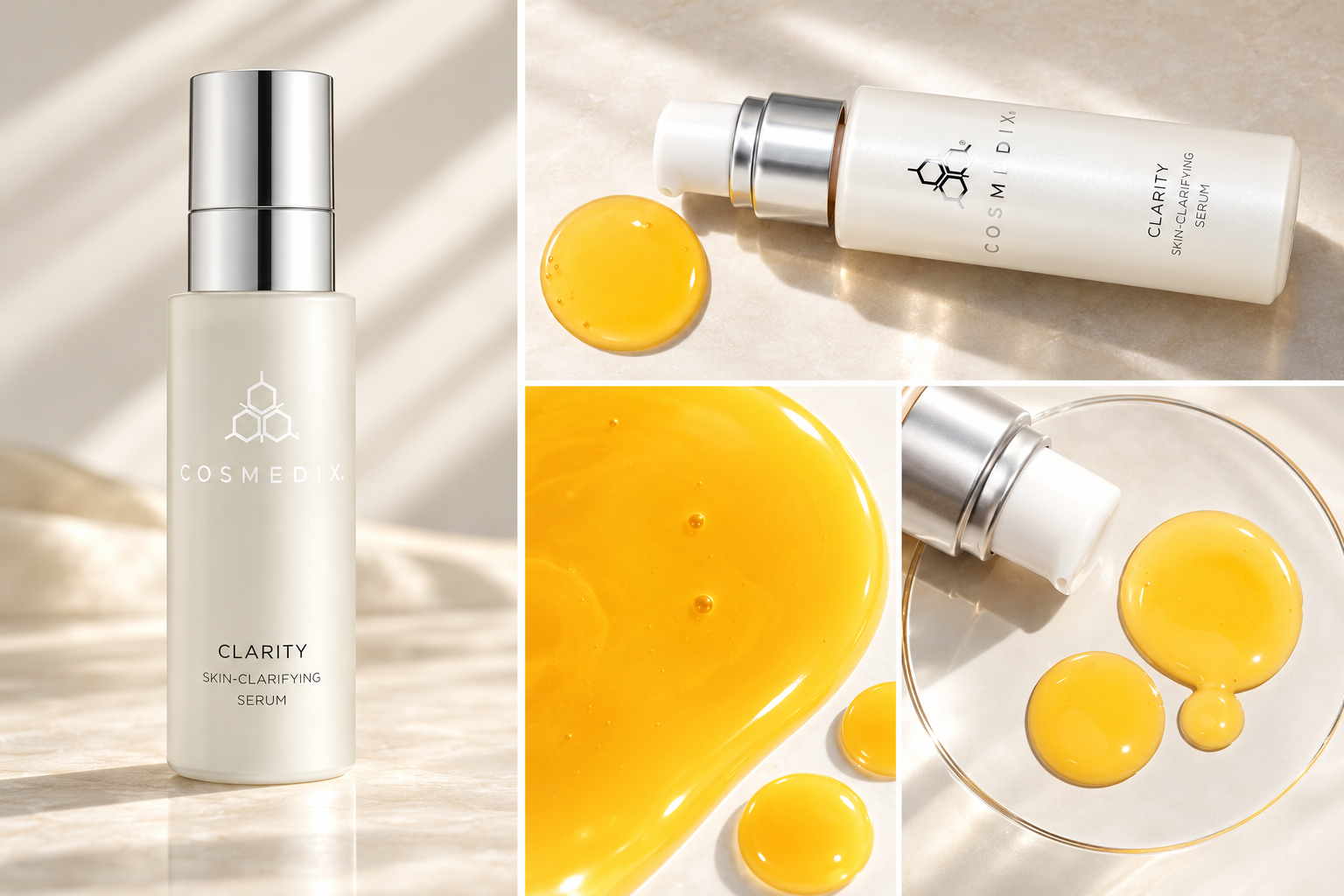
Next, choose the right exfoliating active. Here, you can look at Cosmedix’s Clarity / Define solutions. They, however, represents two different routes:
- Clarity Skin-Clarifying Serum: It combines salicylic acid and retinol. You can use this every day to tackle clogged pores and blemishes. It suits oily and combination skin, but for sensitive skin, do a patch test.
- Define Age-Defying Treatment: A nighttime cream made with hydroxy acids and retinol. It focuses on smoothing rough skin texture and softening the appearance of fine lines.
Salicylic acid has studies confirming its ability to unclog pores. Cosmedix’s Clarity serum pairs it with retinol and calming botanicals such as willow herb and aloe. This combination makes it ideal for oily and combination skin.
The Define, on the other hand, takes the cream route. Cosmedix describes it as a first step into retinol, applied a few nights a week as tolerated.
However, like every other product, you must patch the test behind the ear or along the jaw for several days. If it suits your skin, then start at twice a week. And if that goes quietly for a fortnight, increase the usage.
Now, the most important question: How soon should pores look different?
Well, the answer is more nuanced than straightforward. Congestion-related changes, like fewer visible blackheads and a less bumpy surface, can show up within several weeks if you are consistent.
However, changes from sun damage or loss of skin firmness take time. In these cases, you will also need professional treatment to achieve the desired outcome.
Moisturize And Protect
The last part of this framework regarding how to minimize pores is moisturizing the skin properly. Contrary to the opinion, it helps more than it seems. Why? Because a calm barrier tolerates exfoliating actives better.
Also, applying daytime sunscreen is non-negotiable. Retinol and exfoliating acids increase sun sensitivity, and UV exposure undermines the collagen that keeps pores looking neat in the first place.
What to Skip
- Pore strips and at-home extraction. Cosmedix’s own pore guidance advises leaving extractions alone or to a professional, and the AAD says squeezing irritates skin.
- Hot steam and very hot rinses
- Gritty scrubs, especially alongside an acid or retinol
- Stacking an acid, a retinol, and a clay mask in a single night, a combination that feels productive and tends to look like windburn by morning
- Daily clay masks
But none of this means exfoliation is off the table. It means the dose and the frequency decide whether it helps.
When Consulting a Professional Makes Sense
Some pore concerns won’t budge with skincare, and they need a closer look. That’s why you need to consult with a professional. So, here are the scenarios where you should consider this option:
- Pores remain prominent despite regular care
- Skin loses firmness with age
- Redness or irritation persists
- To choose the right exfoliating treatment
- The pores are naturally large
Smoother Skin Without the Setback
Chasing how to minimize pores with the wrong tools carries a real cost. You spend months dealing with irritation, a barrier that never recovers, and pores that look worse than before. Because the skin underneath is now inflamed. That means the money spent on each product in the meantime feels like a waste.
Also read: Navigating Retirement: Practical Advice for Your Golden Years
So, a slower plan is less satisfying but more reliable. Lukewarm cleansing, one exfoliating active introduced carefully, a steady moisturizer, daily sunscreen, and a professional opinion when the basics aren’t enough. For anyone working out how to minimize pores on easily irritated skin, this sequence protects the barrier first and lets texture improve on its own schedule.
