
A PSL rating evaluates facial attractiveness based on features such as symmetry, proportions, bone structure, and facial harmony. Originally popularized in online looksmaxxing communities, the scale has attracted people curious about how their facial characteristics influence perceived attractiveness.
Today, AI facial analysis tools provide another way to explore these characteristics without relying entirely on subjective opinions from strangers.
However, understanding your appearance involves more than receiving a numerical score. Personal style, grooming, confidence, and individual preferences also influence how you present yourself.
This guide explains PSL ratings, their limitations, and how to use facial analysis constructively without allowing a beauty score to define you.
What Is a PSL Rating?
A PSL rating is a numerical system used in looksmaxxing communities to assess facial attractiveness.
The term PSL comes from three online forums: PUAHate, Sluthate, and Lookism. These communities popularized facial evaluations emphasizing physical proportions and structure.
Unlike conventional attractiveness ratings, which commonly use a 1–10 scale, PSL discussions often use a narrower scale reaching approximately 8.
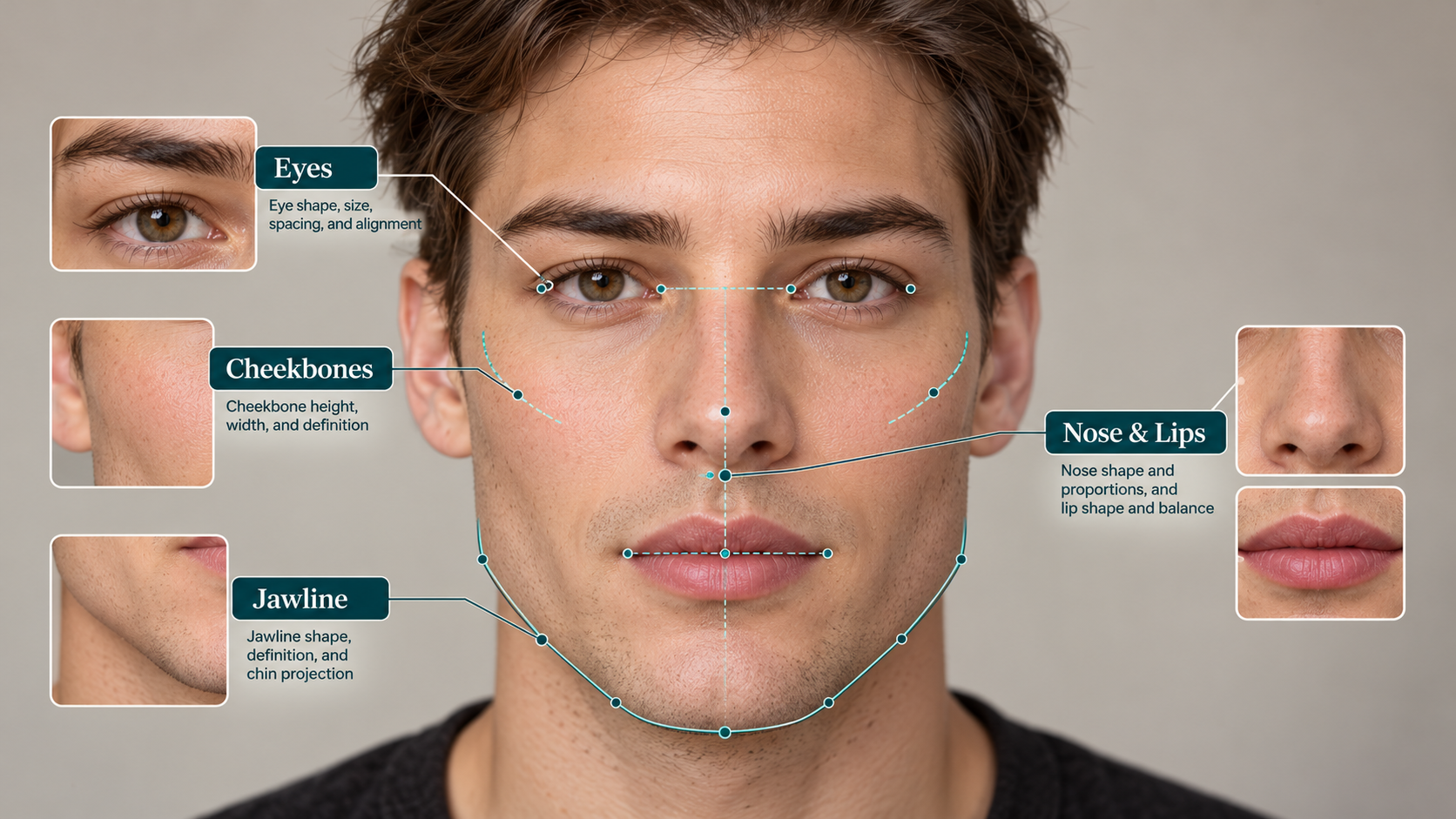
Commonly evaluated characteristics include:
- Facial symmetry and proportional balance.
- Jawline definition and chin projection.
- Eye shape, positioning, and canthal tilt.
- Cheekbone structure and facial width.
- Nose and lip proportions.
- Overall facial harmony.
Although these features influence appearance, no universally accepted scientific PSL scoring standard exists.
Where the PSL Scale Came From
PSL scoring gained popularity through looksmaxxing discussions during the 2010s.
Participants developed terminology for describing facial characteristics and assigning attractiveness tiers.
Terms such as low-tier normie, high-tier normie, Chad, and Stacy became associated with these discussions.
Over time, online calculators and AI-powered tools began offering PSL-style assessments.
However, the original scale reflects community conventions rather than scientifically validated measurements of beauty.
Explore Your PSL Rating With Facefy
For readers curious about their facial proportions, Facefy offers a practical starting point for exploring PSL-style facial analysis.
Its AI-powered PSL rating tool allows users to examine visible facial characteristics through a structured photo-based assessment.
Rather than depending entirely on anonymous opinions, Facefy provides an accessible way to explore facial proportions, symmetry, and overall appearance.
The results are best understood as informational estimates rather than objective measurements of attractiveness.
What Facial Features Influence a PSL Rating?
PSL assessments generally consider the overall impression created by several facial characteristics together rather than focusing on a single feature, which is why people land in different tiers based more on balanced proportions than one standout trait.
Eye Shape and Canthal Tilt
Eye spacing, eyelid exposure, and canthal tilt frequently appear in PSL discussions.
Canthal tilt describes the angle between the inner and outer eye corners.
A positive tilt means the outer corner sits higher, while a negative tilt means it sits lower.
Preferences for particular eye shapes are not universal beauty standards.
Jawline and Chin Structure
Jaw width, chin projection, and mandibular angles influence lower-face proportions.
A defined jawline may complement certain facial structures, while softer contours can also create attractive, balanced appearances.
Cheekbones and Midface
Cheekbone projection and midface proportions affect how facial features relate visually.
The midface includes the central region around the nose and cheeks.
Nose, Lips, and Forehead
Nose shape, lip proportions, forehead height, and hairline structure contribute to facial balance.
Their relationship with surrounding features matters more than any single measurement.
The Facial Metrics Behind AI PSL Analysis
AI facial analysis may use computer vision to identify landmarks and examine relationships between visible features as AI evaluates them against the PSL rating scale. It then compares bone structure, facial harmony, feature quality, and sexual dimorphism, or how masculine or feminine a face appears.
Facial Symmetry
Symmetry describes similarities between the left and right sides of the face, and higher scores are often associated with high symmetry.
Minor differences are natural, and perfect symmetry is not necessary for attractiveness.
Facial Harmony
Facial harmony describes how individual features work together.
Distinctive eyes, a prominent nose, or a wider jaw can contribute to a balanced appearance.
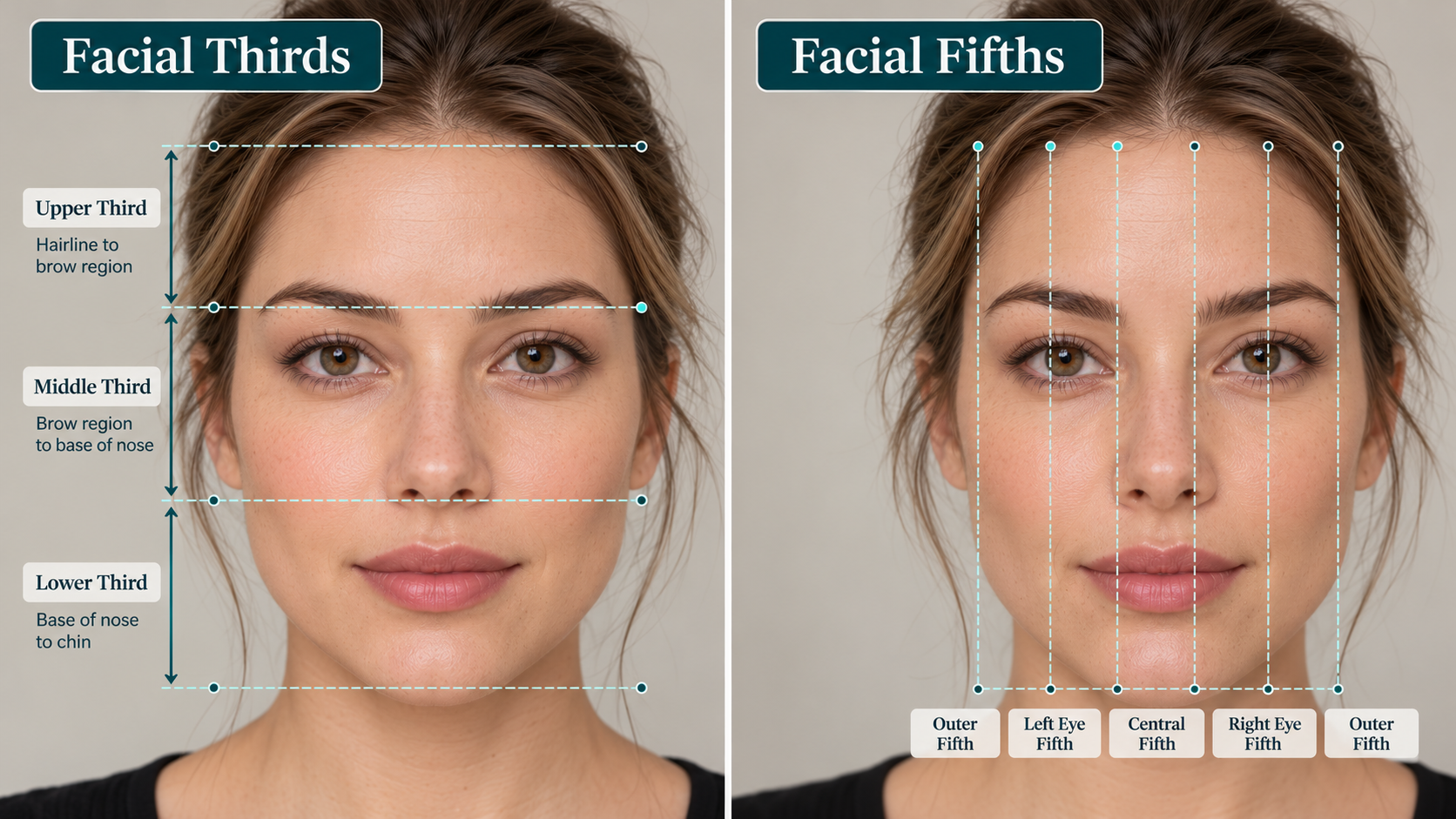
Facial Thirds and Fifths
Facial thirds divide the face into approximate upper, middle, and lower sections.
Facial fifths divide facial width into five approximate sections.
These measurements describe proportions rather than establish strict beauty requirements.
Golden Ratio Proportions
The golden ratio sometimes appears in facial aesthetics discussions.
However, no single mathematical proportion reliably determines attractiveness.
PSL Scale: Understanding the Different Rating Tiers
PSL communities commonly describe several informal rating ranges.
1.0–2.9: Lower attractiveness tiers.
3.0–3.9: Below-average community ratings.
4.0–4.9: Mid-range or normie tiers.
5.0–5.9: High-tier normie.
6.0–6.9: Very attractive community ratings.
7.0–8.0: Exceptionally high community ratings.
These categories are informal and do not represent scientifically established population percentiles.
What Is Considered a Good PSL Score?
In many PSL discussions, a score around 5 is viewed favorably, while ratings of 6 or higher are considered particularly strong.
However, scoring conventions vary between communities and tools.
A rating from one platform may not be directly comparable with another.
How Facefy’s AI PSL Analysis Works in Practice
Facefy provides an accessible way to explore facial characteristics through AI-assisted appearance analysis.
For a more useful assessment, upload a clear, front-facing photograph taken under even lighting.
Avoid beauty filters, exaggerated expressions, and camera angles that distort facial proportions.
Review the results as a broader assessment of your visible features rather than concentrating exclusively on the final number.
Facefy also offers related appearance-analysis features, including facial symmetry exploration, which can provide additional context for understanding your natural characteristics.
Remember that photographs cannot fully capture three-dimensional facial structure, expressions, movement, or real-world presence.
How to Use Your PSL Score Constructively
A PSL rating can provide information about visible facial characteristics, but it should never determine your self-worth.
More constructive uses of facial analysis include understanding facial proportions, exploring hairstyles, and experimenting with grooming choices.
For example, someone with a rounder face might prefer hairstyles that create visual length.
Someone with a prominent jawline might explore styles that emphasize or soften that feature.
Avoid repeatedly testing photographs to achieve a perfect score. Lighting and camera position can influence results without meaningful changes in appearance.
How to Improve Your Personal Style Beyond a PSL Rating
Choose a Flattering Hairstyle
Hair length, volume, and shape influence facial balance.
Choose styles that complement your face shape, hair texture, and personal preferences.
Maintain a Consistent Skincare Routine
Gentle cleansing, moisturizing, and daily sun protection support healthier-looking skin.
Focus on products appropriate for your skin rather than complicated routines.
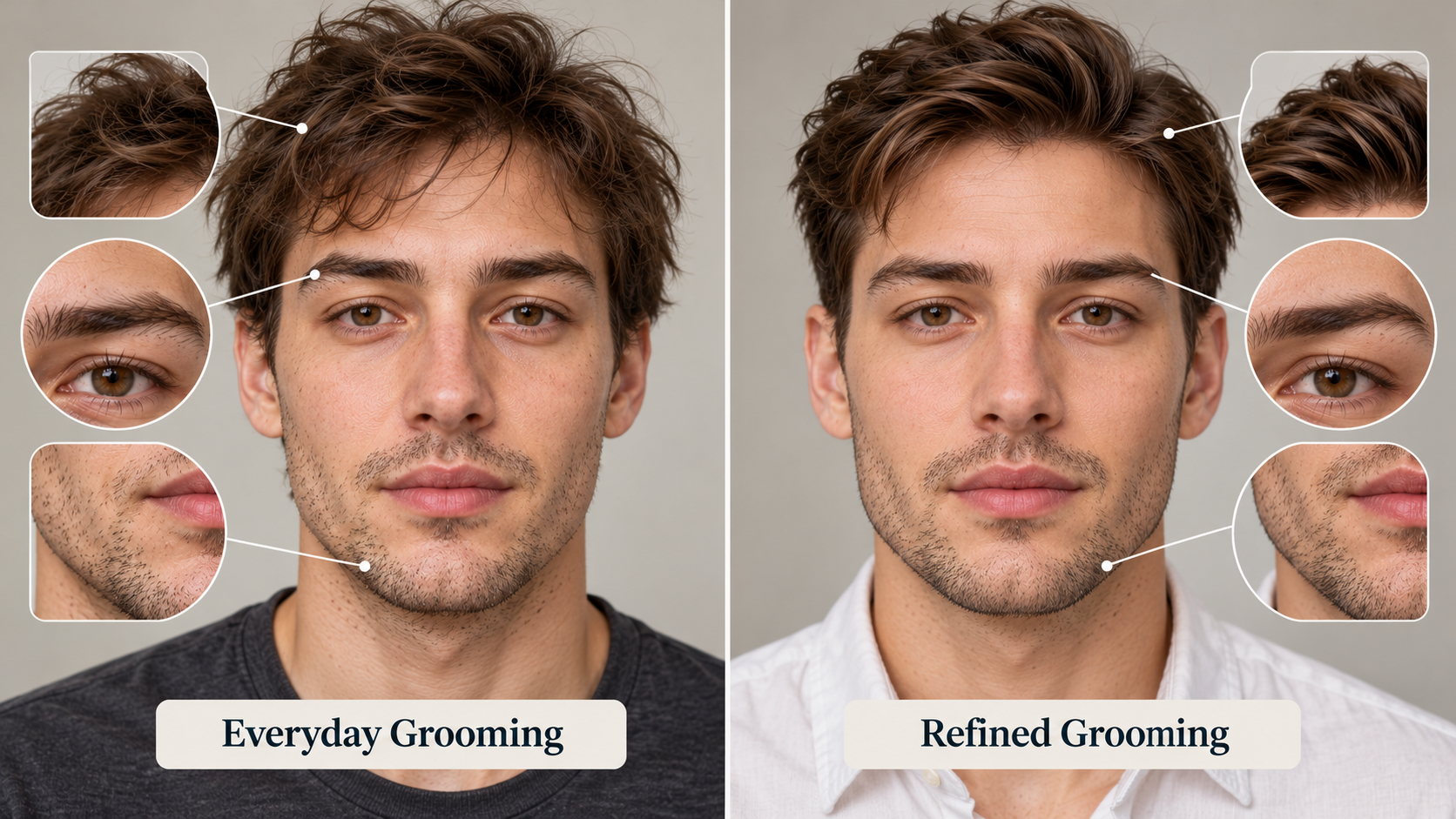
Pay Attention to Grooming
Eyebrow shaping, facial hair maintenance, and thoughtful hair styling can frame your features.
These adjustments may influence appearance without changing your natural facial structure.
Improve Photo Lighting and Positioning
Soft, even lighting reduces harsh shadows.
Positioning your camera near eye level can minimize perspective distortion.
Approach Cosmetic Procedures Carefully
Cosmetic procedures sometimes appear in looksmaxxing discussions under the term hardmaxxing.
Any medical intervention should be considered independently of an online attractiveness rating and discussed with a qualified professional.
FAQ: Common Questions About PSL Ratings
Is Facefy’s AI PSL rating free?
Facefy offers a free PSL rating option through its PSL calculator. Users typically only need a clear front-facing photo to get an instant PSL rating.
Why do different PSL tests give different scores?
Different tools use different models, scoring criteria, and image-processing methods.
Lighting, camera angle, grooming, and facial expressions can also influence results.
Is AI more accurate than human PSL raters?
AI can apply computational methods consistently, but attractiveness remains subjective.
Its assessments depend on training data and scoring assumptions.
Is there a PSL scale for women?
Yes. PSL terminology is applied to different genders, although community preferences and evaluation criteria may vary.
Can my PSL score change over time?
Yes. Grooming, aging, facial appearance, and photography conditions may affect results.
How often should I retake a PSL test?
There is no recommended frequency.
Occasional comparisons may be useful, but frequent retesting rarely provides meaningful information.
Understanding Your PSL Rating Beyond the Number
A PSL rating offers one interpretation of facial aesthetics based on visible proportions and structure.
AI facial analysis can help you explore these characteristics, but numerical scores cannot capture personality, expression, confidence, or the full experience of human attraction.
Use facial insights to guide styling choices, appreciate your distinctive features, and develop an appearance that reflects your individuality.
You may also like: CaeloraGroup.com Review 2026: Is There Substance to the Hype?
Your confidence and personal value extend far beyond any beauty score.
