
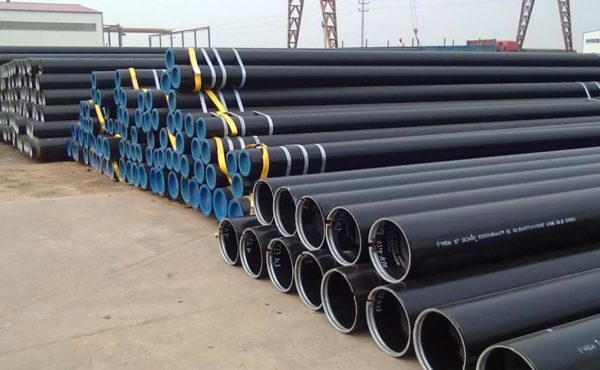
When a pipe system fails in a high-temperature situation, the effects are generally far-reaching. A broken pipe in a power station or oil refinery can result in a shutdown of the facility for weeks and cost millions of dollars to fix. This is why engineers in hostile environments are so concerned with the materials they use. Chrome pipe is the material of choice in these situations, and there are several reasons why this is the case.
What Chrome Moly Pipe Actually Is
Chrome moly is short for chromium-molybdenum alloy steel. It belongs to a family of low-alloy steels where chromium and molybdenum are added to improve performance under heat and pressure, making chrome pipe one of the most practical applications of this material. Chromium content typically ranges from 1% to 9%, while molybdenum sits between 0.5% and 1%. These two elements change how the steel behaves when conditions get extreme.
Chromium adds oxidation resistance. Molybdenum strengthens the steel at elevated temperatures. Without molybdenum, carbon steel loses strength fairly quickly once temperatures climb past 400°C (750°F). Chrome moly holds up much better in that range.
Why High Temperature Is a Problem for Regular Steel
Carbon steel is fine for most everyday piping applications. Push it past its thermal limits, though, and it starts to creep. Creep is the slow, permanent deformation of metal under sustained stress at high temperatures. It does not happen overnight, but over time it leads to thinning walls, dimensional changes, and eventually failure.
This is not a theoretical concern. Creep failures have been documented in boiler tubing, superheater lines, and refinery piping. They tend to develop gradually, which makes them harder to catch before something goes wrong. If your system operates above 400°C regularly, creep resistance is something you need to plan for, not react to.
Chrome moly pipe resists this kind of degradation. The molybdenum in the alloy stabilizes the microstructure at high temperatures, which slows creep considerably.
The Grades You Will Come Across
Not all chrome moly pipe is alike, and the grade selected will depend upon your temperature, pressure, and standard requirements.
- P11 (1.25Cr-0.5Mo): It has widespread use in power plants, particularly in moderate temperature steam piping applications. It has good resistance to temperatures up to 540°C (1000°F) and is relatively easy to weld.
- P22 (2.25Cr-1Mo): It has higher chromium and molybdenum content, making it more suitable for creep resistance. It has applications in high-pressure steam piping and hydroprocessing units in oil refineries.
- P91 (9Cr-1Mo-V): This is where things get serious. P91 is a modified chrome moly grade with added vanadium and niobium. It performs at temperatures up to 625°C (1155°F) and carries much higher allowable stresses than P22. Power plants running at ultra-supercritical conditions often specify P91.
- P92: Similar to P91 but with tungsten added to improve creep rupture strength further. It appears in the most demanding steam circuits.
Each grade carries specific ASTM and ASME designations. Pipes commonly fall under ASTM A335 for seamless ferritic alloy-steel pipe intended for high-temperature service.
Pressure Ratings and Mechanical Properties
Chrome moly pipe is often found in applications where high allowable stress is required, especially at high temperatures. At 540 degrees C, P91 has an allowable stress rating of 94 MPa, or 13,600 psi, per the ASME B31.1 power piping code. P22, on the other hand, only reaches 55 MPa at the same temperature. The difference is important when you are calculating the thickness required for a steam header.
Tensile strength at room temperature for P91 runs around 620 MPa minimum, with a yield strength of 415 MPa. These figures come directly from ASTM A335 Grade P91 specifications. Real-world procurement decisions often start with these numbers.
Where Chrome Moly Pipe Gets Used
Power generation is probably the most common application. Boiler tubing, main steam lines, hot reheat piping, and feedwater heater connections are areas where chrome moly grades appear regularly.
Refineries use it in hydrocracking and hydrotreating units, where hydrogen service at high temperatures and pressures demands materials that resist both creep and hydrogen embrittlement. P22 and P91 are both found in these environments. Petrochemical plants use it in reforming units and cracking furnaces, where the temperature exceeds the safe temperature of carbon steel.
What to Watch Out For
Chrome molybdenum pipe demands more attention during fabrication than carbon steel pipe. Pre-heating before welding is a necessity rather than a suggestion. In the case of P91 materials, a temperature of 200-300 degrees Celsius is standard, and PWHT is a necessity rather than a suggestion. Skipping this process can result in hard heat-affected areas of the material, which can fail catastrophically.
read more : https://fullblessings.com/
Matching the Grade to the Job
If you are dealing with a system at moderate temperatures, you can get away with P11 or P22 materials. If you are dealing with ultra-supercritical steam or high-pressure hydrogen service, you would use P91 or P92 materials. Picking a lower grade to cut costs is a risk that tends to show up later, usually at the worst possible time.
Chrome moly pipe is not the cheapest option, and it demands skilled fabrication. But in high-temperature, high-pressure service, the material earns its place.
