
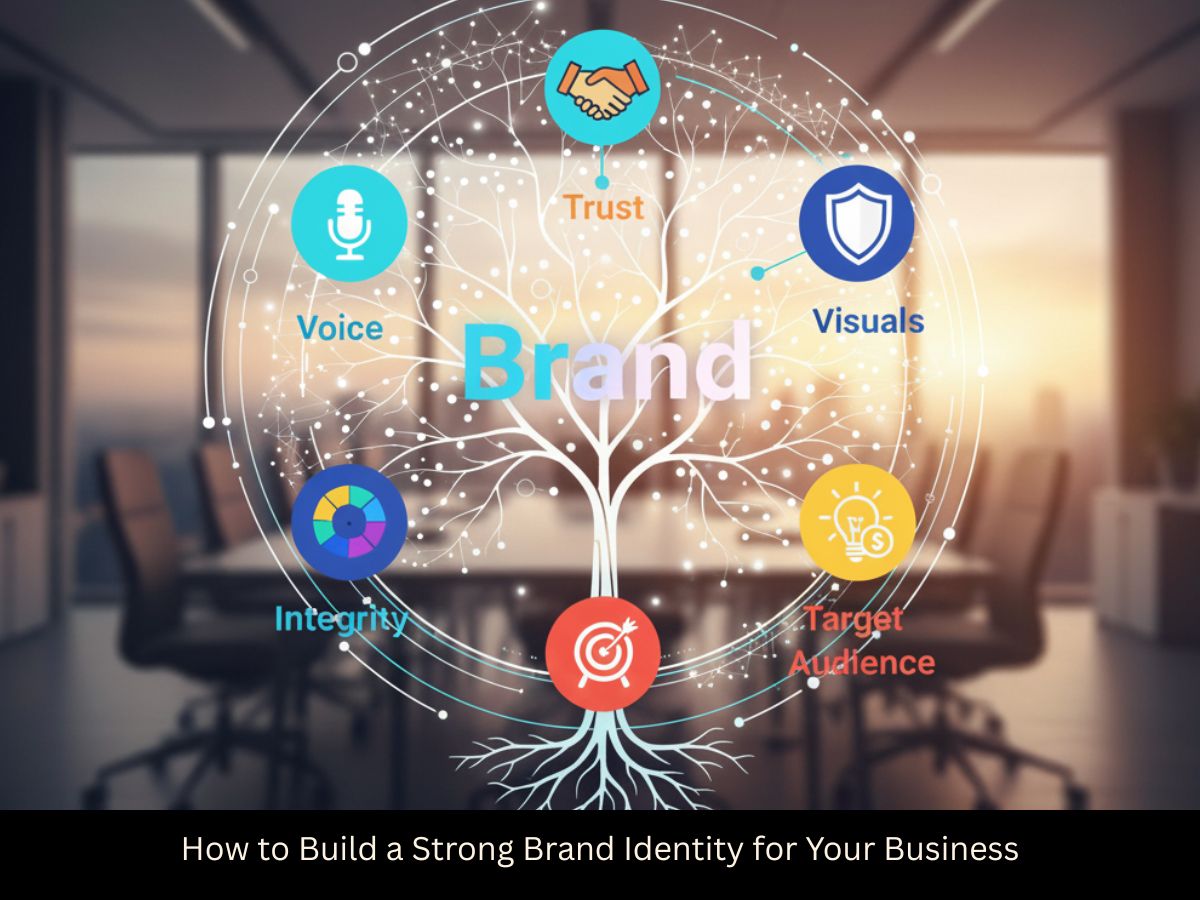
Starting a small business is exciting. But somewhere between registering your business name and launching your first product, many people skip one of the most important steps: building a real brand identity.
And no, brand identity is not just a logo. It’s the full picture of how your business looks, sounds, and feels to the people you’re trying to reach.
At GrowthPulse, we help businesses build a strong brand identity from day one.
Here’s how to build it properly, even if you’re starting from zero.
Start With Your Brand Foundation
Before you open any design tool or pick a color palette, you need to get clear on three things:
Who are you? What does your business actually stand for? What problem do you solve, and who do you solve it for?
What’s your tone? Are you friendly and casual, or professional and authoritative? The way you write a caption, answer an email, or describe your product should all sound consistent.
Who’s your audience? A brand built for teenagers looks and sounds completely different from one built for corporate clients. Know your people before you design anything.
These answers become your brand foundation. Everything you create, visual and verbal, should connect back to them.
Create a Logo That Actually Represents You
Your logo is usually the first thing people see. It shows up on your website, your packaging, your social media, your invoices, everywhere. So getting it right matters.
Many new business owners try to cut corners here by using free tools or generic templates. The result usually looks like a dozen other businesses. Professional logo design services give you something built specifically for your brand, the right style, the right colors, the right feel, instead of something that just fills the space.
Your logo doesn’t need to be complicated. Simple, clean, and memorable beats elaborate every time.
Pick a Color Palette and Stick to It
Colors carry meaning. Blue builds trust. Red creates urgency. Green feels natural and calm. Yellow feels optimistic. This isn’t a hard rule, but it’s a useful starting point.
Pick two to four colors that reflect your brand personality and use them consistently. On your website, in your social posts, and on your packaging, same colors every time.
Consistency is what makes a brand feel professional. When everything matches, people start recognizing you without even reading your name.
Choose Typography That Fits Your Brand
Fonts matter more than most people realize. A handwritten script font feels warm and personal. A sharp sans-serif feels modern and clean. A classic serif feels established and trustworthy.
You don’t need more than two fonts: one for headings and one for body text. The key is that they complement each other and align with your brand’s overall personality.
According to Canva’s design principles, font pairing is one of the most overlooked aspects of brand identity for small businesses. Get it right, and everything feels more polished.
Define Your Brand Voice
Your brand voice is how you communicate across blog posts, social captions, emails, product descriptions, and everything else.
Are you witty and playful? Straightforward and no-nonsense? Warm and encouraging?
Write it down. Create a simple one-page guide that describes your tone with a few examples of what you would and wouldn’t say. This keeps things consistent, whether it’s you writing the content or someone you hire later.
Build a Website That Reflects Your Brand
Once your visual identity is in place, logo, colors, and fonts, your website needs to bring it all together.
A lot of small business owners either delay building a website or rush it with a generic template that doesn’t really reflect who they are. Both are mistakes.
Your website is your most important piece of owned real estate online. It’s where people go to decide if they trust you enough to buy from you. Investing in proper web design services for small business means your site doesn’t just look good, it’s built to convert visitors into customers, load quickly, and work properly on mobile.
According to Google’s research on mobile usability, over half of all web traffic comes from mobile devices. A site that doesn’t work well on a phone is losing business every single day.
Stay Consistent Across Every Touchpoint
This is where most small businesses fall apart. They have a decent logo and a nice website, but then their Instagram looks completely different, their email signature uses a random font, and their packaging uses different colors.
Brand identity only works when it’s consistent. Every place a customer interacts with your business should feel like it belongs to the same family.
Create a simple brand style guide, even a one-page document, that covers your logo usage, colors, fonts, and tone. Share it with anyone who creates content or materials for your business.
Give It Time to Connect
Building a brand isn’t a one-day job. It takes time for people to recognize and trust you. The businesses that feel iconic didn’t get there overnight; they showed up consistently, looked the same every time, and said the same things in the same way until it stuck.
Start with a strong foundation, keep everything consistent, and be patient. Your brand will build itself through repetition.
Businesses that invest in their brand identity early almost always outperform those that treat it as an afterthought. It doesn’t require a massive budget, just clear thinking, smart choices, and the discipline to stay consistent once those choices are made.
