
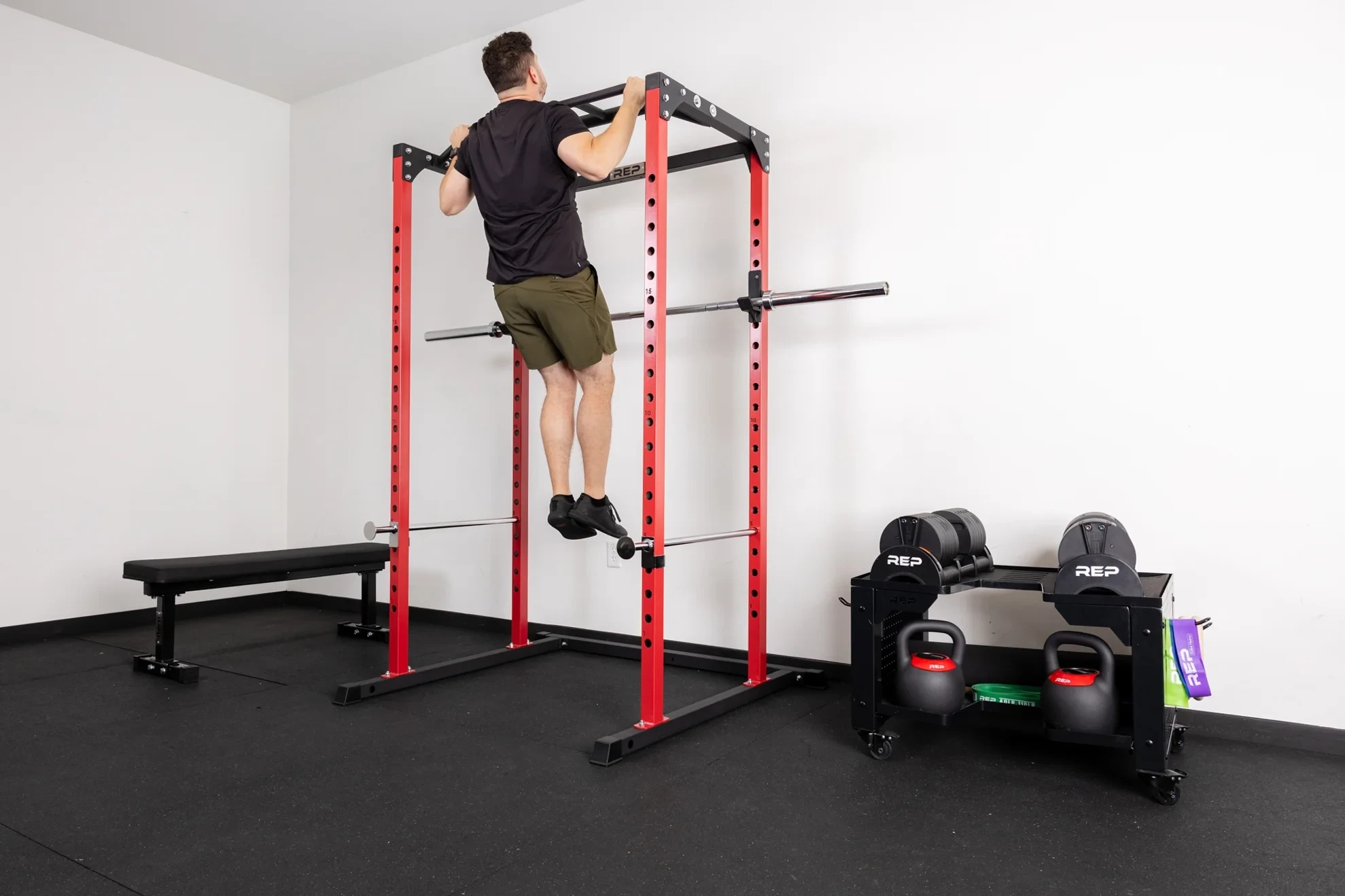
Building a serious home gym usually starts with one big decision: where are you going to squat, bench, press, and pull safely?
For many lifters, the answer is a power rack. But buying the rack by itself isn’t always the smartest move. Once you add a bench, barbell, plates, storage, and attachments, a simple purchase can turn into a surprisingly long shopping list.
That’s why rack packages have become such a practical option. The trick is knowing what you actually need before paying for equipment you’ll barely use.
Start With the Exercises You Actually Do
It’s easy to shop with your eyes.
A huge rack loaded with attachments looks impressive, but your training routine should decide what goes into your gym. If most of your workouts revolve around squats, bench presses, overhead presses, and barbell rows, you don’t necessarily need every cable attachment and accessory available.
Write down the exercises you perform during a normal training week.
Then separate the equipment into two groups: essentials and nice-to-haves.
Your essentials might include:
- Power rack
- Barbell
- Weight plates
- Adjustable bench
- Safety arms or straps
A pull-up bar may already be built into the rack. Storage pegs, dip handles, landmine attachments, and cable systems can be useful, but they shouldn’t automatically become part of your initial purchase.
This simple exercise can stop a $2,000 gym setup from quietly becoming a $4,000 one.
Measure Your Training Space Twice
Rack dimensions on a product page don’t tell the whole story.
Suppose a rack technically fits inside your garage. Great. Can you comfortably load plates onto a seven-foot barbell once it’s inside?
That’s a different question.
You need clearance around the equipment, not merely enough floor space for its footprint. Consider where you’ll stand while changing plates and whether doors, shelves, cars, or storage cabinets could interfere.
Ceiling height matters too.
If the rack includes a pull-up bar, you need enough clearance above it for your head. Some attachments also increase the rack’s effective height or depth.
Before ordering anything, mark the proposed footprint on your floor with painter’s tape. Put a barbell or something of similar length across the space.
Walk around it.
You’ll quickly discover whether the setup feels comfortable or cramped.
Decide Between a Full Rack and a More Open Design
A traditional power rack surrounds the lifting area with four uprights, giving you multiple options for setting safety bars or straps.
That enclosed design appeals to people who regularly train alone because the safeties can catch a failed squat or bench press when properly positioned.
Half racks and squat racks use less space and provide easier access from the front. Depending on the model, they can still support safety arms and other accessories.
Neither design automatically suits everyone.
Someone building a garage gym in a single-car space may value a smaller footprint more than additional attachment points. Someone with a dedicated training room may prefer a larger cage with storage and expansion options.
Think about how you’ll use the space three years from now, not only during your first week.
Check the Rack’s Capacity and Construction
Maximum weight capacity gets plenty of attention, but don’t stop there.
Look at the construction of the uprights, hardware, safety system, and adjustment points. The rack should be suitable for the loads you intend to use, with enough capacity left above your current numbers.
You probably don’t need equipment designed for an 800 kg squat if you’re lifting a fraction of that. At the same time, buying something that’s already close to your working weight leaves little room for progression.
Stability deserves attention as well.
Some racks are designed to be bolted to the floor. Others have wide bases or rear extensions that allow them to remain stable without permanent installation. That’s particularly relevant if you’re renting or don’t want to drill into a garage floor.
Look at What the Package Really Includes
The word “package” can describe very different combinations of equipment.
One bundle might include a rack and bench. Another could add a barbell and several hundred kilograms of plates. Larger packages may include storage systems or specialised attachments.
That means comparing package prices alone isn’t very useful.
When evaluating the best power rack packages Australia shoppers can consider, look at each component individually and ask whether you’d have purchased it anyway.
If you need everything in the package, bundling can make a lot of sense. If three of the six included items will sit untouched in the corner, the apparent value starts disappearing.
Don’t Treat the Bench as an Afterthought
People can spend hours comparing racks and five minutes choosing a bench.
That’s backwards if bench pressing is a major part of your program.
Your bench needs to feel stable under load and fit comfortably inside the rack. Check its overall dimensions and pad height, particularly if you’re buying an adjustable model.
An adjustable bench offers more exercise options, including incline pressing and supported rows. A flat bench is simpler and may cost less.
Neither is automatically better.
If you rarely perform incline work, you may prefer putting that money toward better plates or a higher-quality barbell.
Think About Plate Storage Early
Weight plates somehow seem to multiply.
A few pairs might sit neatly against the wall when your gym is new. Add more plates over time, and suddenly you’re stepping around stacks of iron or bumper plates every workout.
Integrated storage can solve that problem, but check where the storage pegs are positioned. Poorly positioned plates can interfere with certain exercises or reduce the usable space around the bar.
A separate storage tree is another option.
It occupies additional floor space, but it allows you to position your plates exactly where they’re easiest to reach.
Consider Future Attachments
One advantage of some rack systems is that they can grow with your training.
You might start with a basic cage and later add dip handles, a landmine, cable attachments, storage, or specialised safety equipment.
Before assuming you’ll be able to expand later, check attachment compatibility.
Hole spacing, upright dimensions, hardware sizes, and mounting systems aren’t universal. An accessory that looks like it should fit may not.
If future expansion matters to you, choosing a rack with a broad range of compatible attachments can save headaches later.
Don’t Forget the Floor
Heavy equipment and bare concrete aren’t always good partners.
Proper gym flooring helps protect the floor, reduces noise, and gives equipment a more suitable surface. This becomes particularly important if you’ll be deadlifting or handling heavy plates regularly.
Rubber gym mats are common because they’re durable and relatively easy to replace.
Measure the entire training zone rather than placing a tiny mat beneath the rack. You want stable footing wherever you’re likely to lift, load plates, or move a bench.
Calculate the Real Cost of Your Setup
Your budget shouldn’t end at the advertised package price.
Depending on what you buy and where you live, you may also need to account for flooring, delivery, assembly, extra plates, collars, storage, and accessories.
Create a complete budget before ordering.
For example, spending slightly more on a package that already contains your required bench, barbell, and plates may cost less than buying a cheaper rack and adding everything separately.
The opposite can also happen. A basic rack plus carefully chosen individual components may make more sense if you already own some equipment.
Build the Gym Around Your Training
The best rack setup isn’t necessarily the biggest one or the package containing the most equipment.
It’s the setup that matches your training, available space, expected progression, and budget.
Measure carefully. Decide which exercises matter most. Check what each package genuinely includes, and pay attention to compatibility if you expect to expand later.
A well-planned rack setup can become the centre of a home gym for years. That’s a much better goal than filling the room with equipment simply because it came in the box.
