
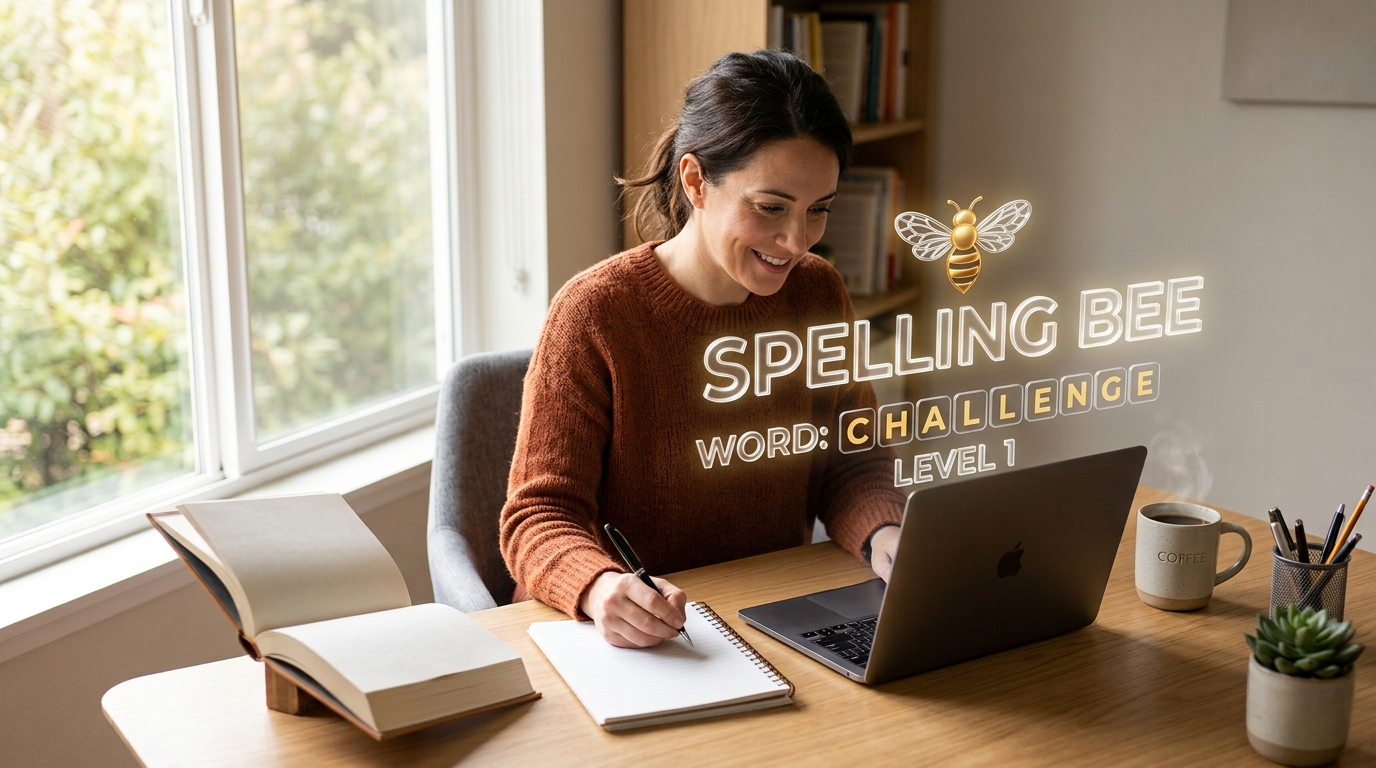
Keeping your mind active does not always require a complicated routine. You do not need to spend hours learning a new skill or following a strict mental training program. Often, the simplest activities can give your brain something interesting to work on.
Reading a few pages, writing in a journal, learning an unfamiliar word, or solving a short puzzle can turn an ordinary part of the day into a useful mental break. These activities are easy to fit around work, family, and other responsibilities.
The key is not doing everything at once. It is choosing a few activities that you genuinely enjoy and making them part of your regular routine.
Reading: A Simple Way to Keep Your Mind Engaged
Reading is one of the easiest ways to give your mind a little exercise. Whether you prefer novels, news articles, biographies, magazines, or essays, reading requires you to follow ideas, understand language, and connect information.
You do not necessarily need to read for an hour. Even ten or fifteen minutes can provide a welcome change from passive screen time.
Try switching between different types of reading. A novel can introduce you to storytelling and unfamiliar vocabulary, while a nonfiction article may teach you something completely new.
Make Reading More Active
Instead of simply moving your eyes across the page, occasionally stop and think about what you have read.
Ask yourself:
- What was the main idea?
- Did I learn anything new?
- Was there a word I did not recognize?
- Do I agree with the writer?
- Can I explain the idea in my own words?
These small questions turn reading into a more active experience.
Journaling Gives Your Thoughts Somewhere to Go
Writing is another simple activity that can keep your mind engaged. You do not need to write a detailed diary or produce polished paragraphs.
A few lines about your day can be enough.
You might write about something that went well, something that frustrated you, an idea you had, or something you would like to accomplish tomorrow. The process encourages you to organize your thoughts instead of allowing them to remain a collection of unfinished ideas.
Keep Your Journal Simple
A useful daily journal can be as short as five minutes.
For example:
- Write one thing you enjoyed today.
- Write one thing you learned.
- Write one task you want to complete tomorrow.
- Write down an interesting thought or question.
There is no need to worry about perfect grammar or impressive writing. The purpose is to think, reflect, and put ideas into words.
Learning New Words Keeps Language Interesting
Words are everywhere, but we often stop noticing them once we become comfortable with everyday vocabulary.
Making a habit of learning a few new words can change that.
You might encounter an unfamiliar word while reading a book, watching a documentary, having a conversation, or solving a puzzle. Instead of immediately skipping past it, take a moment to find out what it means.
You can record:
- The new word
- Its definition
- A similar or related word
- An example sentence
- Where you encountered it
You do not need to memorize dozens of words every day. One interesting word that you actually remember is more useful than a long list that you never review.
Use New Words Naturally
Once you learn a word, try using it in your own sentence.
Suppose you discover the word resilient. After learning that it describes someone or something able to recover from difficulty, you might write:
“The small business proved resilient after a difficult year.”
Creating your own example helps turn a dictionary definition into something meaningful.
Puzzles Give Your Brain a Small Problem to Solve
Puzzles are popular for a simple reason: they give you a problem with a clear goal.
Crosswords, Sudoku, riddles, logic puzzles, anagrams, and word searches all require different types of thinking. Some depend heavily on memory, while others involve patterns, reasoning, or language.
You do not need to solve difficult puzzles to benefit from the experience. In fact, a puzzle that takes five or ten minutes can be a perfect mental break during a busy day.
Choose Puzzles That Are Challenging but Enjoyable
A puzzle should make you think without making you want to throw your phone across the room.
If something feels too easy, try a harder version. If it feels impossibly difficult, choose something simpler.
The sweet spot is somewhere in the middle: you understand the rules, but you have to think to reach the solution.
Word Games Add a Playful Challenge
Word games are particularly useful for people who enjoy language.
They can involve spelling, definitions, letter combinations, synonyms, anagrams, or word associations. Unlike traditional studying, there is usually a clear objective and an element of discovery.
You might spend several minutes trying to find one missing word and suddenly realize that the answer was hiding in front of you.
That moment is part of the appeal.
Word games also encourage you to look at familiar letters and words from different angles. A combination that appears meaningless at first may suddenly become recognizable when you rearrange it or approach it differently.
Daily Spelling Challenges Keep the Routine Fresh
A daily spelling challenge can be a particularly convenient activity because there is usually a new problem waiting for you each day.
Spelling Bee-style puzzles, for example, ask players to create words from a limited collection of letters while following specific rules. The challenge is simple to understand but can become surprisingly difficult once the obvious words have been found.
The best part is that you can approach the challenge at your own level.
Some people enjoy finding enough words to complete a quick session. Others want to discover every possible answer and reach the highest rank they can.
For anyone who wants to check the complete solution after making a genuine attempt, Spelling Bee Answers with the full list can provide a useful reference for reviewing the daily puzzle. Instead of treating the answers as something to copy immediately, use them to identify words you overlooked and understand how they could have been found.
What to Do After Finding an Answer
When you discover a word you missed, ask yourself why.
Was it unfamiliar? Did you overlook a letter combination? Were you focused too heavily on longer words?
That small reflection can make the next puzzle more interesting because you start recognizing patterns that previously escaped your attention.
The Benefits of Having a Small Mental Challenge
Modern life contains plenty of activities that require very little active thinking. Scrolling through social media, watching short videos, or repeatedly checking notifications can fill spare minutes without giving you much of a challenge.
There is nothing wrong with relaxing, but occasionally replacing passive entertainment with an activity that requires attention can make your free time feel more rewarding.
A small mental challenge can encourage:
- Focused attention
- Pattern recognition
- Vocabulary recall
- Problem-solving
- Memory and concentration
- Curiosity
- Patience when a solution is not immediately obvious
These are not reasons to turn every spare minute into a productivity exercise. Rest matters too. The idea is simply to give your mind some variety.
When a Puzzle Becomes Difficult
Getting stuck is part of solving puzzles. In fact, a puzzle that never makes you pause is probably not much of a challenge.
The important thing is knowing when to keep trying and when to ask for help.
If you have explored several possibilities and cannot find the remaining words, a Spelling Bee Solver tool can be useful as a learning aid. You can use it to investigate possible combinations, compare them with your own attempts, and understand what you missed.
The best approach is to use assistance after making a real effort.
A Better Way to Use a Solver
Instead of entering everything immediately, follow this process:
- Read the puzzle rules carefully.
- Find the obvious words yourself.
- Try different letter combinations.
- Think about common prefixes and suffixes.
- Give yourself a reasonable amount of time.
- Use a solver only when you genuinely need another perspective.
- Review the words you did not find.
This keeps the challenge intact while preventing frustration from ending the activity altogether.
Small Activities Can Fit Into Almost Any Schedule
One of the biggest advantages of these activities is their flexibility. You can choose something based on how much time you have.
| Available Time | Activity | What It Gives You |
| 5 minutes | Word puzzle | A quick focused challenge |
| 10 minutes | Reading | New information and vocabulary |
| 10 minutes | Journaling | Reflection and organized thoughts |
| 15 minutes | Daily word game | Language practice and problem-solving |
| 20–30 minutes | Crossword or logic puzzle | A deeper mental challenge |
| 30+ minutes | Reading and writing | Extended concentration and creativity |
Turn Mental Activities Into Natural Habits
The easiest habit is usually the one attached to something you already do.
For example, you could:
- Read while having your morning coffee.
- Solve a word puzzle during lunch.
- Learn one new word before going to bed.
- Write a few lines in a journal after dinner.
- Do a crossword at the weekend.
You do not need to perform all five activities every day.
Choose one or two that fit naturally into your schedule and start there.
Attach a New Habit to an Existing Routine
This simple approach can make consistency easier.
If you already check your phone in the morning, spend the first five minutes on a puzzle before opening social media. If you normally drink tea in the evening, use that time to read a few pages.
The activity becomes associated with something familiar, so you are less likely to forget it.
Make the Challenge Just Difficult Enough
A useful mental activity should require some attention, but it should not become a source of unnecessary frustration.
If you are solving word puzzles, gradually increase the difficulty. If you are reading, occasionally choose something outside your usual subject. If you are learning vocabulary, look for words that are slightly beyond your everyday language.
The goal is gentle progression.
You want to finish an activity thinking, “That made me think,” rather than, “I never want to do that again.”
Combine Different Activities Instead of Repeating One
Variety can keep your routine interesting.
One day might involve reading. Another might involve a puzzle. On a busy day, learning one new word may be enough.
You can also combine activities.
For example, while reading an article, you might notice an unfamiliar word. Write it in your journal, look up its meaning, and then try to use it in a sentence.
That turns one small discovery into several connected activities.
Why Enjoyment Matters
It is easy to turn useful habits into chores.
The moment something feels like another obligation on an already busy schedule, motivation can disappear. That is why enjoyment matters.
If you like puzzles, solve puzzles. If you prefer reading, read. If writing helps you organize your thoughts, keep a journal.
There is no single correct way to keep your mind engaged.
The best activity is often the one you look forward to doing.
Do Not Turn Every Free Minute Into Productivity
Keeping your mind active does not mean you have to be mentally productive all day.
Sometimes the right thing to do is absolutely nothing.
Rest, entertainment, socializing, exercise, and quiet time all have their place. A healthy routine should contain both activity and recovery.
Think of these small challenges as an option for the moments when you want something more engaging than simply scrolling through a screen.
Five minutes of focused attention can be refreshing precisely because it is different from what you were doing before.
A Simple Weekly Routine to Try
If you are unsure where to begin, keep it simple.
Monday: Read for 15 minutes and note one unfamiliar word.
Tuesday: Solve a short word puzzle.
Wednesday: Write five lines in a journal.
Thursday: Try a daily spelling challenge.
Friday: Review the interesting words you collected during the week.
Saturday: Attempt a more difficult crossword, riddle, or logic puzzle.
Sunday: Read something purely for enjoyment.
The schedule is flexible. Swap activities around, skip a day when you are busy, or repeat the ones you enjoy most.
What matters is creating regular opportunities to think, learn, and explore.
Conclusion
You do not need an elaborate routine to introduce more mental activity into your day. A few pages of reading, a short journal entry, one new word, or a quick puzzle can be enough to break up a repetitive routine.
The most important thing is to choose activities that feel interesting rather than forced. When learning and curiosity become part of ordinary moments, you are more likely to keep doing them.
So the next time you have five quiet minutes, consider giving your mind something small to solve. You might discover a new word, finish a puzzle, or simply return to your day feeling a little more engaged.
FAQs
What are some simple activities that keep the mind active?
Reading, journaling, learning new vocabulary, solving puzzles, playing word games, and working through daily spelling challenges are all simple options. The best choice depends on what you find interesting.
How much time should I spend on mental activities each day?
There is no required amount. Even five to ten minutes can provide a focused change of pace. If you enjoy an activity, you can naturally spend longer without turning it into a strict obligation.
Are word games useful for improving vocabulary?
They can be. Word games expose you to spelling patterns, unfamiliar words, meanings, and different combinations of letters. Reviewing words you did not recognize can make the activity even more useful.
What should I do if I cannot solve a word puzzle?
Give yourself time to explore different possibilities first. If you remain stuck, using a solver or checking answers can help you understand what you missed. The important part is learning from the solution rather than simply copying it.
Is journaling useful even if I do not write very much?
Yes. Journaling does not have to involve long entries. A few sentences about your thoughts, experiences, or plans can be enough to make the activity worthwhile.
Can reading help expand vocabulary?
Yes. Reading exposes you to words in context, which can make their meanings and usage easier to understand. When you encounter an unfamiliar word, looking it up and creating your own example can reinforce what you learned.
Are difficult puzzles better than easy ones?
Not necessarily. A good puzzle should be challenging enough to make you think but not so difficult that you lose interest. As your skills improve, you can gradually choose more demanding challenges.
