
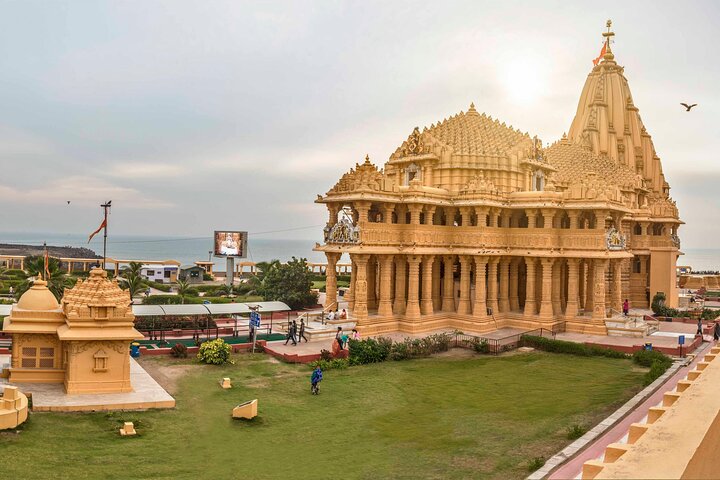
Experience a profound journey through the sacred lands of Gujarat, where devotion meets the timeless echoes of ancient legends. Our meticulously planned somnath dwarka tour offers a seamless blend of spiritual enrichment and cultural immersion. This pilgrimage takes you to the western coast of India, visiting the eternal Somnath Temple and the kingdom of Lord Krishna in Dwarka. By choosing this somnath dwarka tour, you ensure a well-organized visit to some of the most revered shrines in the Hindu faith, allowing for quiet reflection and heartfelt prayers amidst the rhythmic sounds of the Arabian Sea.
Significance of the Dwarkadhish Temple in Dwarka
The Dwarkadhish Temple, also known as Jagat Mandir, stands as the crown jewel of Dwarka. This five-storied structure, supported by 72 pillars, is a masterpiece of ancient architecture. It is believed to have been built by Vajranabh, the great-grandson of Lord Krishna, over the original residence of the deity.
As you walk through the Swarga Dwar (Gate to Heaven) and exit through the Moksha Dwar (Gate to Liberation), the spiritual energy is palpable. The black marble idol of Lord Krishna, depicted as the King of Dwarka, radiates a calming presence. Devotees often participate in the flag-changing ceremony (Abhoti), where a massive 52-yard flag is hoisted atop the temple five times a day, symbolizing the 52 sub-castes of the Yadava clan or the 52 gates of ancient Dwarka.
Exploring the Legends of Beyt Dwarka
A short drive followed by a ferry ride leads to Beyt Dwarka, an island situated at the mouth of the Gulf of Kutch. This was the actual residence of Lord Krishna during his reign. The journey across the sea is often accompanied by flocks of seagulls, creating a serene atmosphere before you reach the island.
The main temple at Beyt Dwarka is over 500 years old and houses an idol sanctified by Rukmini Devi. Legend has it that this is where Sudama, Krishna’s childhood friend, met him and offered him “poha” (beaten rice). Following this tradition, many pilgrims still carry rice to offer at the temple. The island also features shrines dedicated to various consorts of Krishna, making it a comprehensive site for understanding the Lord’s life as a householder and a ruler.
The Architectural Grandeur of Somnath Mahadev
The Somnath Temple is the first among the twelve Jyotirlinga shrines of Shiva. Located on the Prabhas Patan coast, it is known as the “Shrine Eternal.” Having survived numerous destructions throughout history, the current temple stands in the Chalukya style, reflecting the resilience of Indian culture and spirituality.
The temple’s position is unique; the “Baan Stambh” (Arrow Pillar) on the sea protection wall indicates that there is no land in a straight line from that point to the South Pole. Watching the sunset behind the temple spires while the evening “Aarti” drums resonate across the shore is a transformative experience. The light and sound show in the evening narrates the history of the temple’s reconstruction, providing deep insights into the site’s historical and religious importance.
Sacred Sites of the Prabhas Kshetra
Beyond the main Mahadev temple, the Prabhas Kshetra is dotted with locations of immense theological value. The Bhalka Tirth marks the spot where Lord Krishna was mistakenly struck by an arrow, leading to his departure from the earthly realm. A beautiful temple stands here with a reclining idol of Krishna.
Nearby, the Triveni Sangam represents the confluence of three rivers—Hiran, Kapila, and Saraswati—as they meet the Arabian Sea. Taking a holy dip here is believed to cleanse the soul of sins. Adjacent to the confluence is the Gita Mandir and the Lakshminarayan Temple, as well as the Dehotsarg Tirth, where the final rites of Lord Krishna were performed. These sites collectively offer a narrative of the transition from the Dwapara Yuga to the Kali Yuga.
Rituals and Festivals: Connecting with the Divine
Timing your visit to coincide with local festivals can greatly enhance the spiritual depth of your trip. In Dwarka, Janmashtami is celebrated with unparalleled fervor, as thousands gather to witness the birth of the Lord. The entire city is illuminated, and the air is filled with bhajans and chants.
In Somnath, Maha Shivratri is the most significant event. Devotees wait in long queues for hours to perform “Abhishek” on the Lingam. Kartik Purnima is another major festival marked by a large fair. Participating in these rituals provides a glimpse into the living traditions that have sustained these holy sites for millennia. The daily “Sringar Aarti” and “Bhasma Aarti” are also essential experiences for those seeking a closer connection to the rituals of Sanatana Dharma.
The Serenity of Nageshwar Jyotirlinga and Gopi Talav
Located on the route between Dwarka and Beyt Dwarka, the Nageshwar Temple is another of the twelve Jyotirlingas. It is home to a massive outdoor statue of Lord Shiva that can be seen from miles away. The temple faces South, and the Lingam itself is unique in its shape and orientation.
A short distance away is Gopi Talav, the lake where the Gopis of Vrindavan are said to have met Lord Krishna one last time. The soil here is yellowish and smooth, known as “Gopi Chandan.” Many devotees take a small amount of this sacred clay back home, as it is considered holy and used in daily worship marks on the forehead. The stillness of the pond and the surrounding trees offer a moment of quietude away from the bustling temple crowds.
Practical Considerations for the Pilgrimage
Planning a trip to the western tip of Gujarat requires attention to weather and logistics. The period from October to March offers the most pleasant climate for temple visits and outdoor sightseeing. Summers can be quite warm, while the monsoon adds a different charm to the coastal landscape, though sea travel to Beyt Dwarka may be restricted during heavy rains.
Both Dwarka and Somnath are well-connected by rail and road. The nearest airport to Dwarka is Jamnagar, while Somnath is easily accessible from Diu or Rajkot. Staying in guest houses managed by the temple trusts (Devesthan) can offer a more traditional and immersive experience, though several modern hotels are available for those seeking additional comforts.
Cultural Heritage and Local Flavors of Saurashtra
A journey through Saurashtra is incomplete without experiencing its vibrant culture and cuisine. The local food is primarily vegetarian, focusing on flavors that are both sweet and savory. A traditional Gujarati Thali featuring “Dhokla,” “Thepla,” “Khandvi,” and “Shrikhand” is a culinary delight that sustains pilgrims during their travels.
The local markets in Dwarka are famous for Patola silk sarees, bandhani fabrics, and handcrafted jewelry. In Somnath, you can find beautiful items made of seashells and intricate woodwork. Supporting local artisans not only provides you with authentic souvenirs but also helps preserve the traditional crafts of the region that have been passed down through generations.
Porbandar: A Glimpse into History
Situated between Dwarka and Somnath is the coastal city of Porbandar, the birthplace of Mahatma Gandhi. A visit to Kirti Mandir, the ancestral house of the Gandhi family, offers a reflective pause in the spiritual itinerary. The museum houses a library and exhibits related to the life of the Father of the Nation.
Porbandar is also home to the Sudama Temple, the only temple in the world dedicated to Lord Krishna’s loyal friend. The architecture is simple yet elegant, and the temple stands as a testament to the value of true friendship and humility. Including Porbandar in your travel plans adds a layer of modern history to the ancient mythological landscape of the region.
Designing a Balanced Itinerary
A well-structured plan typically spans 4 to 5 days. Starting at Dwarka allows you to settle into the spiritual rhythm, visiting the main temple on the first day and Beyt Dwarka and Nageshwar on the second. The drive to Somnath via Porbandar takes about 4 to 5 hours, offering views of the rugged coastline and windmills.
The final days are best spent in Somnath, allowing enough time for the evening light show and morning prayers at the Triveni Sangam. This pace ensures that you are not rushed and can spend adequate time in meditation at each site. It also allows for flexibility to attend specific temple timings or spend extra time at the beachside, watching the waves of the Arabian Sea crash against the temple foundations.
Integration of Modern Amenities in Holy Cities
In recent years, the infrastructure around these pilgrimage sites has seen significant improvement. Broad roads, clean walkways, and organized queue management systems have made the visit more accessible for elderly pilgrims and families with children. Digital information centers provide history and timings in multiple languages.
Despite these modern updates, the core essence of the towns remains deeply traditional. The sound of temple bells, the smell of incense, and the sight of saffron-clad monks still dominate the landscape. This balance of convenience and tradition ensures that the spiritual seeker can focus on their internal journey without the distractions of logistical hurdles.
Preparing for the Spiritual Transition
As you conclude your visit to the western shores, the sense of peace gained from the darshan of Dwarkadhish and Somnath Mahadev remains with you. These sites are not just tourist destinations; they are energy centers that have drawn seekers for thousands of years. The transition back to daily life is often marked by a renewed sense of purpose and calm.
For those who find themselves drawn to high-altitude spiritual quests after this coastal experience, planning a kailash mansarovar tour package from kolkata could be the next step in a lifelong devotional path. Just as the somnath dwarka tour anchors the soul in the legends of the sea, the journey to the Himalayas offers a different kind of transcendence. Carrying the blessings of the Jyotirlinga and the King of Dwarka, one is well-prepared for the rigors and rewards of the world’s most sacred mountain treks, continuing the eternal cycle of pilgrimage and self-realization.
