
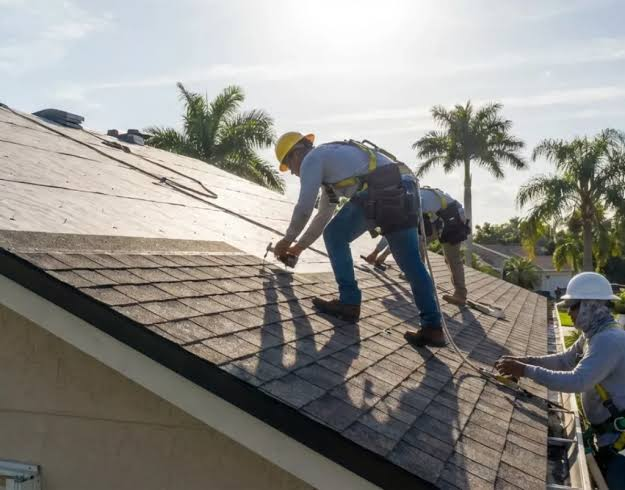
Replacing a roof in Wellington costs real money, and the worst version of that story is paying for one twice in six years. That second bill almost always traces back to a roof installed for a calm climate. Wellington does not have a calm climate.
Palm Beach County sits in one of the most active lightning corridors in the country, and the wind that arrives with a summer squall does not care what your shingle warranty says. Your roof is the only part of the house that takes every bit of that weather directly, with nothing between it and the sky. So if you are weighing a replacement, treat it as a wind and water project first and a cosmetic project second. A roofer in Wellington, FL, who understands that order of operations will build you a roof that outlasts the financing on it.
Here is what actually determines whether your new roof survives the next ten summers, and what you should ask before anyone climbs a ladder.
What Storm Season Really Does to a Roof
Three forces do the damage, and they fail the roof in sequence.
Wind gets underneath first. It pries at the edge, the ridge, and any lifted shingle tab, then peels backward like a zipper. Once a field of shingles is open, the underlayment becomes your only defense. Rain is the second hit, and it rarely arrives alone. A slow, steady drizzle is easy on roofs. A wind driven wall of water is not, because it pushes moisture sideways and upward into seams that gravity would normally keep dry. Heat works quietly all year, cooking the adhesive on shingle edges until they no longer seal, which is exactly what makes the wind’s job easier.
Lightning deserves its own mention. According to the National Weather Service, Florida sees more lightning than any other state, and a strike near your roofline can crack a pipe boot or char a ridge cap without starting a fire you would notice. That kind of damage is invisible from the driveway and obvious from the attic.
Wind Rating, Nailing Pattern, and the Details Nobody Photographs
The shingle brand matters far less than how it is attached. Two crews can install identical materials on identical houses and get wildly different results, because the difference lives in the details a homeowner never sees once the job is done.
Ask about the nailing pattern. Florida codes call for a specific number of fasteners per shingle in high wind zones, placed in the manufacturer’s nail line, not above or below it. Ask about the starter course at the eaves and the hip and ridge treatment, since those are the areas wind attacks first. Ask whether the installer uses a peel and stick underlayment at the edges and valleys. These are cheap upgrades in the middle of a replacement and expensive repairs afterward.
Then ask about uplift. The National Institute of Standards and Technology has studied wind damage after major storms for decades, and its recurring finding is that failures cluster at roof edges, corners, and openings rather than across the middle of the field. If a contractor talks only about shingle color and warranty length, you are hearing a sales pitch, not a plan.
A Three Part Framework: Seal, Shed, Vent
I use a simple test when I look at a completed roof, and you can too. Call it Seal, Shed, Vent. Every roof that lasts in South Florida passes all three, and every premature failure I have seen breaks at least one.
| Layer | What it means | What fails when it is skipped |
| Seal | Fasteners, adhesive strips, and edge underlayment hold the covering down | Wind lifts a corner and peels the field backward |
| Shed | Flashing, valleys, and drip edge move water off and away | Water backs under the covering and rots the deck |
| Vent | Intake and exhaust move hot attic air out | Heat cooks the deck from below and shortens covering life |
Vent is the one homeowners ignore, and it is the one that quietly costs the most. A hot attic bakes the underside of your roof deck all summer. The U.S. Environmental Protection Agency runs a program built around attic sealing and ventilation for exactly this reason, and the logic holds whether you are chasing energy savings or roof lifespan. A replacement is the cheapest moment you will ever get to fix ventilation, because the deck is already exposed.
A Walkthrough You Can Do This Weekend
You do not need a ladder for most of this. Binoculars and a phone camera will do more than you think.
- Stand across the street and photograph the roofline. Look for a wavy ridge, which usually means the deck underneath is moving.
- Check the attic after a heavy rain. Dark streaks on the underside of the deck tell you water is getting in somewhere above.
- Look at your ceiling for faint brown rings. A stain that shows up weeks after a storm means slow intrusion, not a one time leak.
- Inspect the gutters for granules. A handful after a storm is normal on an old roof. A steady accumulation on a new one is not.
- Walk the yard and pick up anything the wind can throw: loose fence boards, unsecured patio furniture, a tarp left on the lawn.
If two or more of those turn up something, get an inspection before the next named storm, not after. Scheduling pressure in this county gets ugly in June, and the good crews book out first.
Two Things That Kill a Replacement
The first is a cheap deck. If the plywood under your old covering is soft or delaminated, no premium shingle will save it. Replacement decking is not glamorous, and a bid that magically excludes it is either guessing or planning to hide the cost later. Ask what happens if they pull the old roof and find rot. The answer you want is a per sheet price agreed on in writing before work starts.
The second is skipped permits. A roof is one of the few home projects where the inspection record follows the house. Unpermitted work can surface during a sale, an insurance review, or a claim after a storm, and untangling it costs more than the permit ever would have. Make sure the contractor pulls the permit and that you receive the final inspection paperwork.
Choosing Well in a Crowded Market
Get three bids, but read them for what is missing, not for the bottom line. A bid that specifies underlayment brand, nailing pattern, deck pricing, and cleanup tells you the crew thinks about the parts you cannot see. A one line quote with a lump sum tells you the opposite.
Ask for a local address and a recent job nearby. Roofing is regional work, and a company that has spent a decade climbing roofs within twenty minutes of your street knows which neighborhoods drain poorly and which ones face the afternoon wind. That knowledge is worth more than a slightly lower number from someone passing through.
Expect the job to take a few days, expect noise, and expect your driveway to be a staging area. A crew that protects your landscaping and sweeps for nails with a magnet at the end is telling you how they treated the parts of the roof you will never inspect.
Your roof is a ten to twenty five year decision with a five year payment plan attached. Build it for the worst week of August, and the other fifty one weeks take care of themselves. Ask one more question of every bid you receive: what would you do differently if this roof had to survive a direct hit? The contractor who has a real answer is the one you want on your house.
