
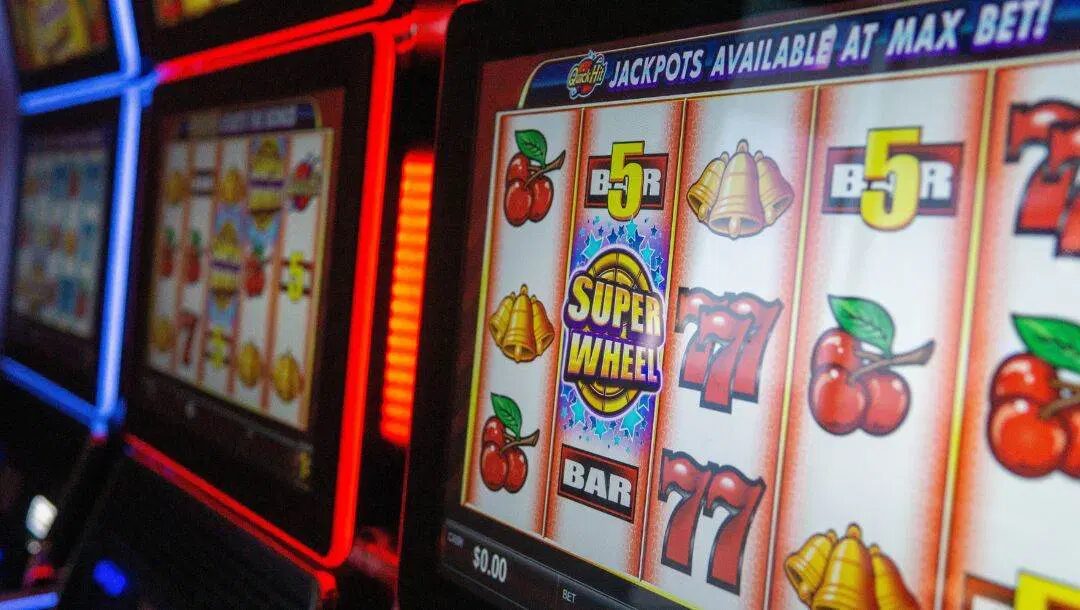
Spend enough time on gaming forums or video platforms, and you will inevitably encounter someone claiming they have cracked the code to beat slot machines. They pitch complex betting progressions, rhythmic clicking techniques, or tracking patterns across different machines. Humans possess an innate psychological urge to control randomized environments, and applying a structured betting system feels like bringing a weapon to a knife fight against the house.
However, when you pull back the curtain on casino software architecture—whether you play at a land-based venue or use mobile platforms when you Access UFA Website (เข้าเว็บยูฟ่า) —the reality is governed by cold, unbreakable probability. Software code doesn’t care about your betting system, and it certainly doesn’t care if you just doubled your wager.
The Absolute Math: Why Slots Resist Betting Systems
The fundamental reason that betting systems collapse when applied to slot machines comes down to one core concept: Independent Events.
In games like blackjack, the math shifts continuously. As cards are dealt from the shoe, the composition of the remaining deck changes. If all the aces and ten-value cards are gone, the player’s odds drop; if the deck is rich in high cards, the math tilts in the player’s favor. This is a dependent system, which is why card counting works.
Slot machines are entirely different. Every single spin is run by a server-side Random Number Generator (RNG) that treats each pull as an isolated, independent event. The machine holds no memory of whether the last spin was a massive jackpot or a complete blank.
Because of this, your bet sizing has a 0% impact on shifting the baseline Return to Player (RTP) percentage. If a game is programmed with a 96% RTP, that mathematical distribution applies to every single spin individually. Raising your bet after a loss doesn’t make a winning combination any more likely to appear on the next turn; it simply increases the amount of money you are risking against an unyielding house edge.
Fact-Checking the Top 3 Slot Betting Systems
To understand why traditional betting systems fail, we need to analyze how their underlying logic completely falls apart when exposed to real slot machine telemetry.
| Betting System | Player Logic | The Mathematical Reality |
| The Martingale System | Double your wager after every loss. A single win will recover all past losses and yield a one-unit profit. | Slots can go on dry streaks of 30+ spins. Exponential bet scaling will trigger a rapid bankroll depletion or hit the software’s maximum bet limit within minutes. |
| The Paroli System | Double your wager after every win. This harnesses “hot streaks” using the casino’s money instead of your own. | “Hot streaks” do not exist mathematically. By raising your stakes after a win, you are simply exposing a larger amount of capital to the house edge at the peak of standard variance. |
| The Zig-Zag Method | Look for physical or digital patterns on the reels (like V-shapes or lines of matching symbols) to find a machine “due” to hit. | The symbols on the screen are purely an aesthetic representation of a number already chosen by the RNG millisecond ago. Visual layouts hold zero predictive value. |
When analyzing these frameworks across major digital distribution servers, including high-volume architecture like the ufa infrastructure, engineers verify that no structural betting progression can ever outrun or modify the game’s internal volatility indexing. The math remains static.
The Real Metrics: How to Actually Maximize Your Slot Play
If progressive betting systems are a mathematical dead end, how do you actually improve your position? While you cannot eliminate the house edge, you can use strict data analysis and volatility management to optimize your capital efficiency and extend your playtime.
- Filter Games Strictly by RTP Metrics: Stop choosing games based on their theme or visual graphics. Look deep into the software’s help menu to locate the exact theoretical Return to Player percentage. Never spin on a game with an RTP lower than 96.5%. Sourcing high-RTP variations directly slashes the bookmaker’s mathematical advantage.
- Align Your Unit Size with Volatility Indexing: A slot’s volatility index tells you how its payouts are distributed. High-volatility games feature massive variance, meaning they can stay completely dry for dozens of spins before releasing a large payout. If you are playing a high-volatility slot, your total session bankroll must be large enough to survive at least 150 to 200 units at your current bet size.
- Harvest Structural Bonuses and Multipliers: The closest you can get to shifting the mathematical baseline is by squeezing value out of loyalty points, welcome bonuses, and cash-back offers. By playing with house credits or earning rebates on your total handle, you offset a portion of the inherent transaction cost of the game.
The ultimate strategy for slots isn’t discovering a secret sequence of button presses or a magical wagering pattern. It is recognizing that the game is an exercise in pure probability distribution, managing your bankroll like a risk analyst, and knowing exactly when to walk away. Players using Access UFA Website (เข้าเว็บยูฟ่า) should approach every session with the same disciplined mindset, focusing on risk management rather than chasing patterns or guaranteed wins.
